Encyclopedia › The seven deadly sins
The seven deadly sins
Sins forgiven
“White as snow” · the paralyzed man forgiven · “Father, forgive them”
The prophets and psalms found pictures for what it means to be forgiven. “Though your sins are like scarlet, they will be as white as snow” (Isaiah 1:18). “As far as the east is from the west, so far has He removed our transgressions from us” (Psalm 103:12). Micah says God will “cast out all our sins into the depths of the sea” (Micah 7:19). Every year on the Day of Atonement the high priest laid Israel’s sins on the head of a goat, and it was led away into the wilderness (Leviticus 16:21–22).
In the Gospels Jesus forgave sins Himself. When four men let a paralyzed man down through a roof, He said first, “Son, your sins are forgiven”; some scribes thought, “Who can forgive sins but God alone?” and Jesus healed the man so they would know “that the Son of Man has authority on earth to forgive sins” (Mark 2:5–10). He told a woman who wept at His feet, “Your sins are forgiven” (Luke 7:48). On the cross He prayed for those who crucified Him: “Father, forgive them, for they do not know what they are doing” (Luke 23:34). He taught His disciples to pray, “Forgive us our debts, as we also have forgiven our debtors” (Matthew 6:12). The first letter of John says: “If we confess our sins, He is faithful and just to forgive us our sins” (1 John 1:9).
In art
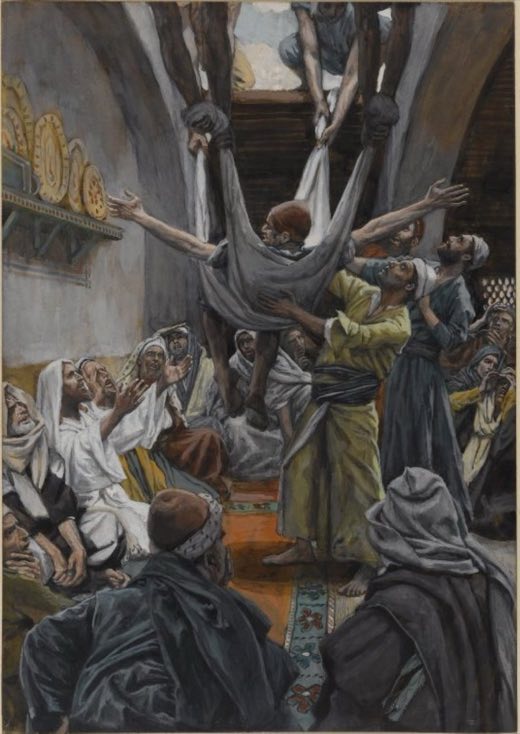 The Palsied Man Let Down through the Roof (Le paralytique descendu du toit)James Tissot
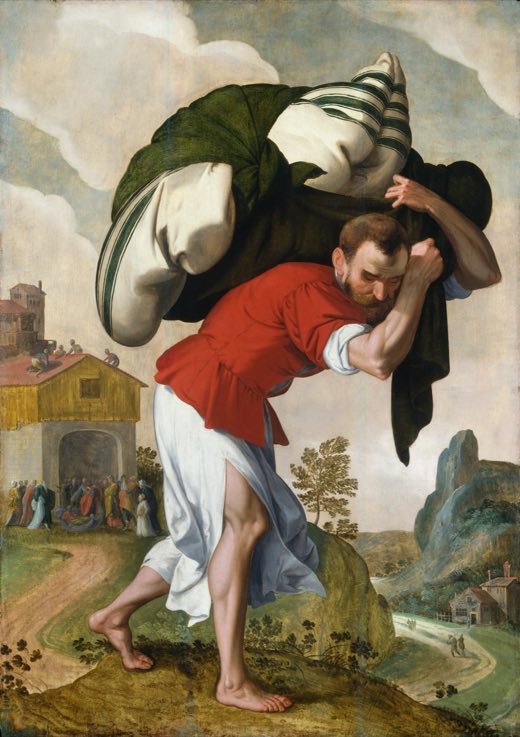 The Healing of the ParalyticNetherlandish painter
See also
- RepentanceThe seven deadly sins
- Peter’s denialThe seven deadly sins
- Day of AtonementFeasts and festivals
- Forgiving othersVirtues
Sources: Tyndale Open Bible Dictionary © 2023 Tyndale House Publishers, CC BY-SA 4.0 — adapted and shortened; the original work is available for free at tyndaleopenresources.com · Sources and rights