Encyclopedia › How the Bible’s world is studied
How the Bible’s world is studied
Seeds, charcoal and the Masada date palm
Charred seeds float when soil is poured into water · a 2,000-year-old seed sprouted in 2005
Burnt grain, seeds and fruit stones do not rot, and every hearth, oven and burnt storeroom leaves them behind. Archaeobotanists pour excavated soil into water; the light charred seeds float to the top, are skimmed off, and are counted and named under the microscope. They show what was sown and eaten in each age: wheat and barley above all, lentils, chickpeas and peas, olives, grapes, figs, dates and pomegranates — the crops of “a land of wheat, barley, vines, fig trees, and pomegranates; a land of olive oil and honey” (Deuteronomy 8:8). Charcoal shows which trees were burned for fuel and used for beams; in the hills it is very often olive wood from the pruning of the groves.
Some seeds survive dry and unburnt in the desert. Date stones found at Masada in the 1960s were kept in a drawer for some forty years. In 2005 one of them, dated by radiocarbon to about 2,000 years ago, was planted and grew into a palm that the researchers named Methuselah; later several more ancient seeds from Masada and the caves of the Judean Desert were brought to life. The dates of Judea were famous in Roman times, and the Judean palm appears on the coins of the Jewish revolts. “The righteous will flourish like a palm tree” (Psalm 92:12).
In art
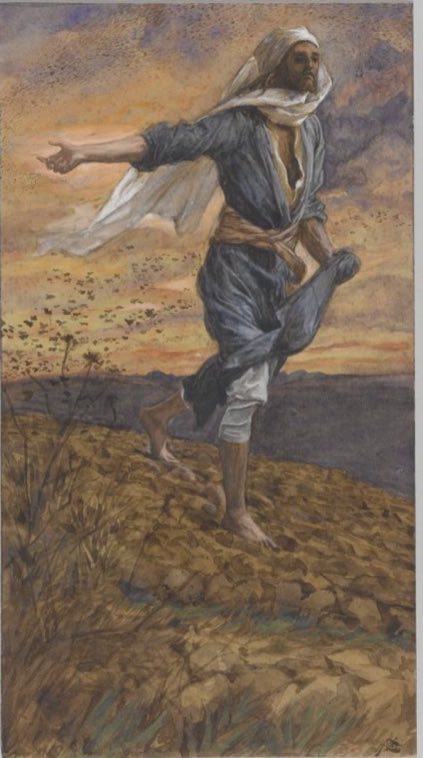 The Sower (Le semeur)
Key verses
a land of wheat, barley, vines, fig trees, and pomegranates; a land of olive oil and honey;But take wheat, barley, beans, lentils, millet, and spelt; put them in a single container and make them into bread for yourself. This is what you are to eat during the 390 days you lie on your side.The righteous will flourish like a palm tree, and grow like a cedar in Lebanon.See also
- Date palmPlants of the Bible
- Wheat and barleyPlants of the Bible
- Ancient DNA of plants and animalsHow the Bible’s world is studied
- Tree ringsHow the Bible’s world is studied
Sources: Tyndale Open Bible Dictionary © 2023 Tyndale House Publishers, CC BY-SA 4.0 — adapted and shortened; the original work is available for free at tyndaleopenresources.com · Sources and rights