Encyclopedia › Plants of the Bible
Plants of the Bible
Saltwort and the food of the hungry
Hebrew malluach · KJV “mallows” · Atriplex halimus, shrubby orache · eaten in hard times
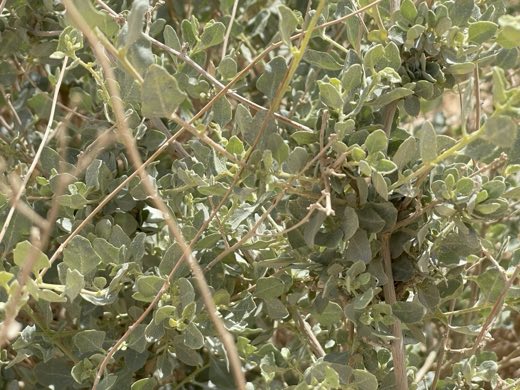
Job describes outcasts living on the edge of the desert: “They plucked mallow among the shrubs, and the roots of the broom tree were their food” (Job 30:4). The Hebrew malluach comes from the word for salt, and the Greek Bible has a word for a salt plant, so most botanists think it was shrubby orache, or saltbush. This is a bushy shrub up to two meters tall with small silvery gray leaves, abundant around the Dead Sea and in the salty soils of the Negev and the coast. Its leaves are edible but sour and salty, and it belongs to the same family as spinach.
Such plants were eaten only when nothing else was left. The roots of the white broom are bitter and hardly edible, and some think the verse means the roots were burned for warmth. In another speech Job asks whether there is any taste in “the white of an egg” (Job 6:6); the rare Hebrew words may instead mean the slimy juice of a plant, by one view the mallow or the purslane, both wild greens that poor people cooked.
In nature
All verses with this plant (3)
Where the Hebrew, Aramaic or Greek word for it stands in the text.
Job3
Is tasteless food eaten without salt, or is there flavor in the white of an egg?They are exalted for a moment, then they are gone; they are brought low and gathered up like all others; they are cut off like heads of grain.They plucked mallow among the shrubs, and the roots of the broom tree were their food.See also
- Caper bushPlants of the Bible
- Lye, soap and the launderer’s fieldPlants of the Bible
- Locusts, wild honey and food from the wildFood and drink
Sources: Tyndale Open Bible Dictionary © 2023 Tyndale House Publishers, CC BY-SA 4.0 — adapted and shortened; the original work is available for free at tyndaleopenresources.com · Plants and Trees in the Bible © United Bible Societies 2025, adapted from R. Koops, Each According to its Kind © 2012 UBS, CC BY-SA 4.0 · Sources and rights