Encyclopedia › Plants of the Bible
Plants of the Bible
Dove’s dung
Hebrew chare-yonim · perhaps a wild bulb, the Star of Bethlehem · sold in a famine
During the Aramean siege of Samaria the famine was so great that “a donkey’s head sold for eighty shekels of silver, and a quarter cab of dove’s dung sold for five shekels of silver” (2 Kings 6:25) — a quarter cab is roughly a third of a liter. What was being sold is uncertain. By one view the words are literal, and dung was bought as fuel for cooking, or even as food in the worst hunger.
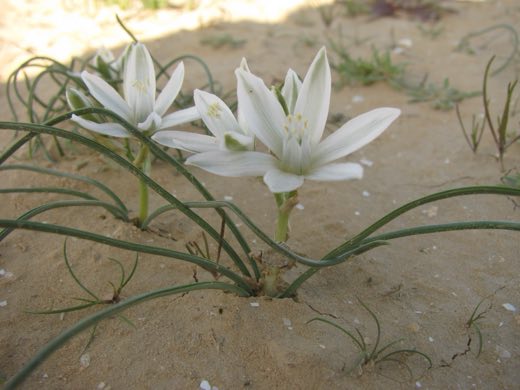
By another view “dove’s dung” was the popular name of a plant, as English has names like “hen-and-chickens”. The usual candidate is the Star of Bethlehem, Ornithogalum, a small plant of the lily family with a cluster of white starry flowers that grows from an edible bulb; its Greek name means “bird’s milk”, and its bulbs were roasted or dried and eaten. Some scholars think a copyist changed a similar Hebrew word for wild onions. In any case the story shows prices driven to madness, and the next chapter tells of the siege lifted and food cheap again.
In nature
All verses with this plant (1)
Where the Hebrew, Aramaic or Greek word for it stands in the text.
2 Kings1
So there was a great famine in Samaria. Indeed, they besieged the city so long that a donkey’s head sold for eighty shekels of silver, and a quarter cab of dove’s dung sold for five shekels of silver.See also
Sources: Tyndale Open Bible Dictionary © 2023 Tyndale House Publishers, CC BY-SA 4.0 — adapted and shortened; the original work is available for free at tyndaleopenresources.com · Plants and Trees in the Bible © United Bible Societies 2025, adapted from R. Koops, Each According to its Kind © 2012 UBS, CC BY-SA 4.0 · Sources and rights