Encyclopedia › Plants of the Bible
Plants of the Bible
Lilies of the field
Greek krina tou agrou · wildflowers of Galilee; the exact flower is unknown
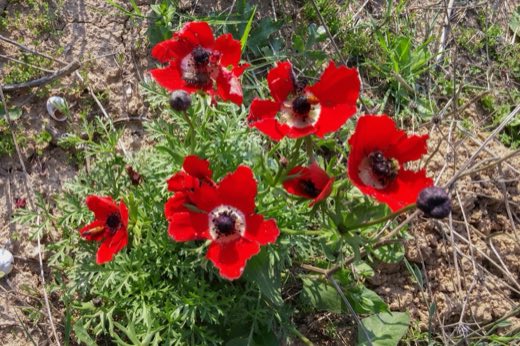
“Consider how the lilies of the field grow: They do not labor or spin” (Matthew 6:28). “Yet I tell you that not even Solomon in all his glory was adorned like one of these” (Matthew 6:29). Which flower did Jesus mean? The Greek krinon can name a lily, but the white lily was rare and is not a flower of open fields, so many scholars think the word was used loosely for the wildflowers of the hills and plains of Galilee. Each spring, after the winter rains, these slopes are covered with color for a few short weeks before the summer heat dries them up.
By one view the flower is the crown anemone, which carpets fields in red, purple, pink and white from February to April, with six large petals and lacy leaves; by another it is a group of flowers — anemones, poppies, buttercups, crocuses, wild tulips and others — seen together. Some have suggested the purple Syrian iris or the gladiolus. The next verse speaks of “the grass of the field, which is here today and tomorrow is thrown into the furnace”: dry plants were gathered as fuel for the clay ovens.
In nature
All verses with this plant (2)
Where the Hebrew, Aramaic or Greek word for it stands in the text.
Matthew1
And why do you worry about clothes? Consider how the lilies of the field grow: They do not labor or spin.Luke1
Consider how the lilies grow: They do not labor or spin. Yet I tell you, not even Solomon in all his glory was adorned like one of these.All verses on this topic
See also
- LilyPlants of the Bible
- GrassPlants of the Bible
- Weather in the sayings of JesusWeather and the forces of nature
Sources: Tyndale Open Bible Dictionary © 2023 Tyndale House Publishers, CC BY-SA 4.0 — adapted and shortened; the original work is available for free at tyndaleopenresources.com · Plants and Trees in the Bible © United Bible Societies 2025, adapted from R. Koops, Each According to its Kind © 2012 UBS, CC BY-SA 4.0 · Sources and rights