Encyclopedia › Human life in Bible times
Human life in Bible times
Coming of age
Twenty for the census and the army · Levites from 25 or 30 to 50
The Law has no ceremony for growing up, but it has ages. A man was counted in the census and served in the army from “twenty years of age or older” (Numbers 1:3). Levites began their work at thirty (Numbers 4:3) or twenty-five (Numbers 8:24), later at twenty (1 Chronicles 23:24), and “at the age of fifty, they must retire” (Numbers 8:25). When a vow put a value on a person, the scale went by age: five to twenty, twenty to sixty, over sixty (Leviticus 27:3–7).
When Jesus “was twelve years old, they went up according to the custom of the Feast” (Luke 2:42), and he stayed behind in the temple with the teachers. The Mishnah later set thirteen as the age for keeping the commandments; the ceremony of bar mitzvah, “son of the commandment”, took shape much later, in the Middle Ages. The parents of the man born blind say of their son, “He is old enough to speak for himself” (John 9:21). A Roman boy put on the white toga of a man at about fifteen, and until then a father could name guardians for his heir, as in Paul’s words (Galatians 4:2).
In art
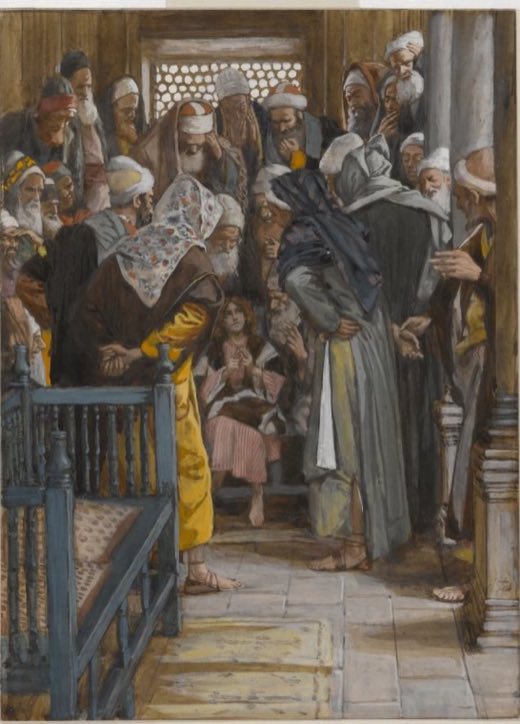 Jesus Among the Doctors (Jésus parmi les docteurs)
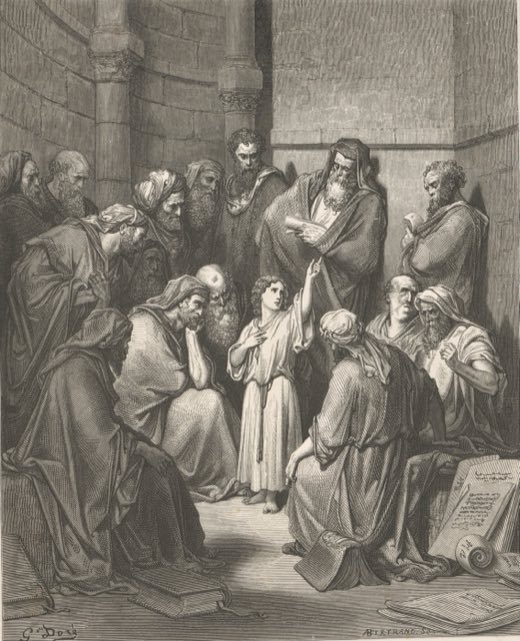 Jesus Among the Teachers
See also
- ChildrenHome and family
- Children’s games and toysHuman life in Bible times
- Old ageHuman life in Bible times
- Priests and LevitesTabernacle and temple
- Counting people: censusesHuman life in Bible times
- How children learnedHuman life in Bible times
Sources: Tyndale Open Bible Dictionary © 2023 Tyndale House Publishers, CC BY-SA 4.0 — adapted and shortened; the original work is available for free at tyndaleopenresources.com · Sources and rights