Encyclopedia › The Bible in culture
The Bible in culture
Melville’s Moby-Dick
1851 · “Call me Ishmael” · Captain Ahab · Father Mapple’s sermon on Jonah
Herman Melville’s novel of whaling, Moby-Dick (1851), is crowded with Bible names, and its readers knew what they meant. It opens with the narrator’s words “Call me Ishmael”: Abraham’s son by Hagar, sent into the desert, of whom it was said, “his hand will be against everyone, and everyone’s hand against him” (Genesis 16:12) — a wanderer and outsider, as the narrator is. His captain is Ahab, named for the king of Israel who “did evil in the sight of the LORD, more than all who were before him” (1 Kings 16:30); a character in the book remarks that the name is that of a “crowned king”, and that dogs licked his blood. Before they sail, a ragged stranger called Elijah utters dark warnings, like the prophet who foretold Ahab’s end.
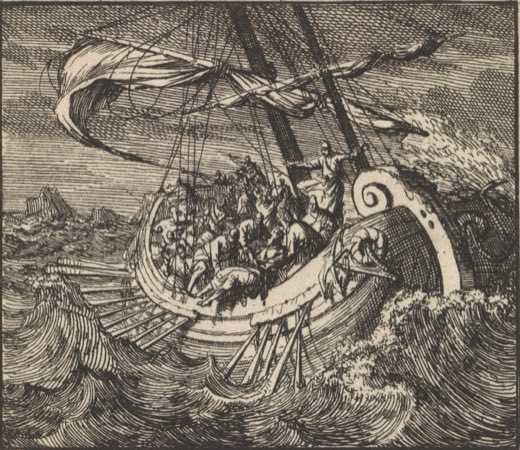
In chapter 9 Father Mapple, once a harpooner, climbs into a pulpit shaped like a ship’s bow by a rope ladder and preaches on Jonah, the man who tried to flee God by sea and was swallowed by “a great fish” (Jonah 1:17). At the end of the book a ship named the Rachel, searching for the captain’s lost son, picks up the only survivor — the ship like Rachel “weeping for her children” (Jeremiah 31:15). The book sold poorly in Melville’s lifetime; it is now counted among the great American novels.
 Jonah Is Thrown into the Sea