Encyclopedia › The Bible in culture
The Bible in culture
Book titles taken from the Bible
Hemingway, Faulkner, Steinbeck and others · a phrase of the King James Bible
Many novels of the 20th century took their titles from a phrase of the King James Bible. Ernest Hemingway’s first novel, The Sun Also Rises (1926), quotes Ecclesiastes 1:4–7 as its epigraph, “One generation passeth away, and another generation cometh … The sun also ariseth”. William Faulkner’s Absalom, Absalom! (1936) is named after David’s cry for his son (2 Samuel 18:33), and his Go Down, Moses (1942) after the spiritual. John Steinbeck’s The Grapes of Wrath (1939) took its title from “The Battle Hymn of the Republic”, which echoes “the great winepress of God’s wrath” in Revelation 14:19.
Others followed: Lillian Hellman’s play The Little Foxes (1939), from Song of Songs 2:15; A. J. Cronin’s The Keys of the Kingdom (1941), from Matthew 16:19; James Baldwin’s Go Tell It on the Mountain (1953), from a spiritual about the birth of Jesus; William E. Barrett’s The Lilies of the Field (1962), from Matthew 6:28. Most take only the words, not the story: The Little Foxes is a drama about a family in the American South, and The Lilies of the Field tells of a traveler who builds a chapel for a group of nuns in Arizona.
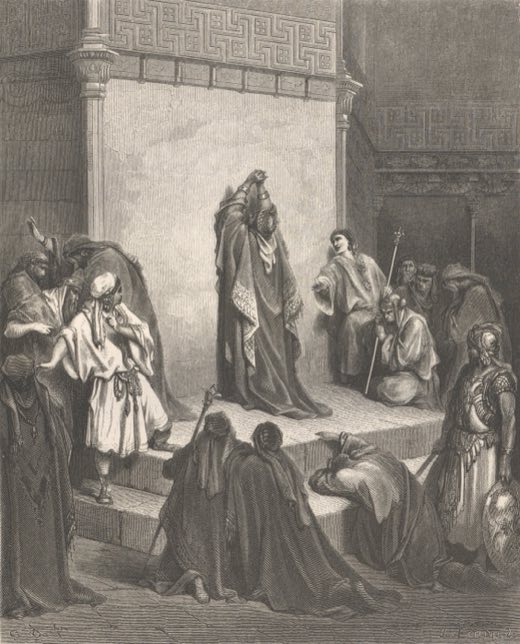 David Mourns for Absalom