Encyclopedia › The Bible in culture
The Bible in culture
Bulgakov’s The Master and Margarita
Novel by Mikhail Bulgakov · written 1928–1940 · first published 1966–1967
Mikhail Bulgakov worked on The Master and Margarita from 1928 until his death in 1940; it could not be published in his lifetime. A shortened text came out in the Moscow magazine Moskva in 1966–1967, the full text abroad in 1967 and in the Soviet Union in 1973. The novel weaves two stories together: a visit of the devil to the Moscow of the 1930s, and a novel within the novel, written by the Master, about Pontius Pilate in Jerusalem, which Bulgakov calls Yershalaim.
The Pilate chapters follow the outline of the Gospel account of the trial — the prisoner brought before the procurator, his questioning, the release of Bar-Rabban, the execution on a hill outside the city — but Bulgakov tells it in his own way and on purpose departs from the Gospels in many details. His prisoner is a wandering philosopher named Yeshua Ha-Notsri; he has a single follower, Levi Matvei, who writes down his words; Judas is a young man from Kiriath. Bulgakov read historical works and travelers’ descriptions to bring the city, its heat and its streets to life. Pilate asks the prisoner what truth is, as in John 18:38.
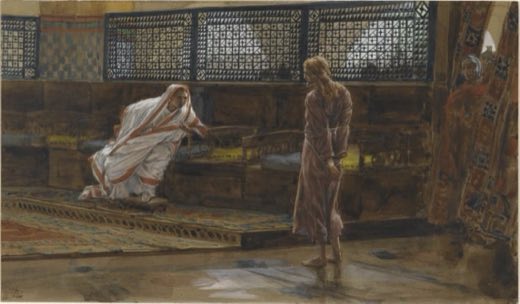 Jesus Before Pilate, First Interview (Jésus devant Pilate. Premier entretien)