Encyclopedia › Cities of the Bible
Cities of the Bible
Samaria: a royal city on a hill
Capital of Israel about 880–722 BC · Samaria ostraca · Herod’s Sebaste
Omri chose a hill that no town had occupied before, and his builders shaped its summit into a royal enclosure with walls of finely dressed stone, laid with a skill that recalls Phoenician work. In the palace storerooms excavators found about a hundred potsherds of the eighth century BC written in ink — the Samaria ostraca — recording jars of aged wine and fine oil sent to the court from villages around. Many of the senders’ names are built on the name of Israel’s God, others on Baal.
Sargon II of Assyria claimed in his inscriptions to have taken Samaria and carried off 27,290 people; in the sources both he and Shalmaneser V appear as its conqueror, and which one took it is debated. After Alexander the Great Macedonian settlers held it behind round stone towers. Herod the Great rebuilt it as Sebaste, in honour of Augustus, with a temple to the emperor on the summit, a colonnaded street and a theatre, whose ruins stand among olive groves above the village of Sebastia.
In art
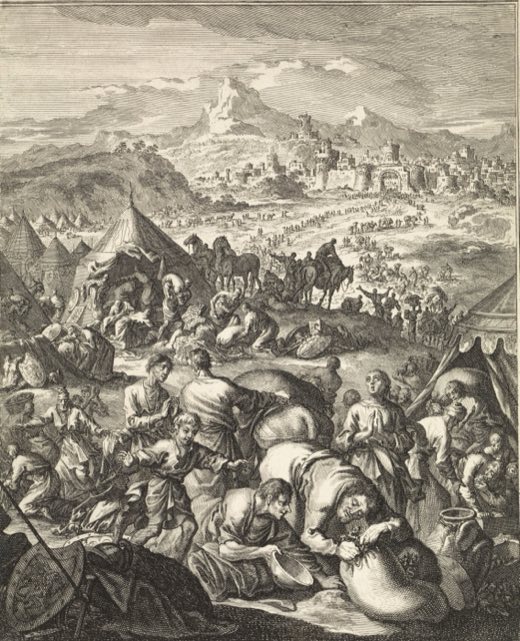 Samaria Plunders the Empty Camp
See also
- Shalmaneser V and the fall of SamariaRulers around the Bible
- Sargon IIRulers around the Bible
- Shechem: the city between two mountainsCities of the Bible
- Samaria: the open hills of the northThe land of the Bible
- Buying a fieldHuman life in Bible times
- The fall of SamariaWeapons and warfare
- Houses of ivory and summer housesBuildings and structures
- Omri (1 Kings)People
- AhabPeople
- SamariaPlaces
Sources: Tyndale Open Bible Dictionary © 2023 Tyndale House Publishers, CC BY-SA 4.0 — adapted and shortened; the original work is available for free at tyndaleopenresources.com · Sources and rights