Encyclopedia › Cities of the Bible
Cities of the Bible
Magdala: Mary Magdalene’s town
On the lake north of Tiberias · Migdal, “tower” · a 1st-century synagogue · the Magdala stone
Mary “called Magdalene, from whom seven demons had gone out” (Luke 8:2), took her name from her town, Magdala, on the western shore of the Sea of Galilee about five kilometers north of Tiberias. Its Hebrew name, Migdal, means “tower”; Jewish sources call it Migdal Nunayya, “tower of the fish”, and Josephus knows it by the Greek name Taricheae, from the salting of fish, its main trade. Matthew says that after feeding the four thousand Jesus went by boat “to the region of Magadan” (Matthew 15:39), and many think this is the same place.
In the revolt of AD 66–67 Josephus fortified the town, and the Romans took it after a battle on the lake that Josephus describes as so bloody that the water ran red. For centuries only a small Arab village, al-Majdal, stood there. In 2009, digging for a pilgrim center, archaeologists found a synagogue of the 1st century, one of the few known from before AD 70 — Jesus “went throughout Galilee, teaching in their synagogues” (Matthew 4:23). In it lay a carved stone block, the Magdala stone, showing a seven-branched lampstand, one of the earliest carved images of the temple lampstand. Streets, a harbor, fish-salting pools and ritual baths of the same town have been uncovered around it.
In art
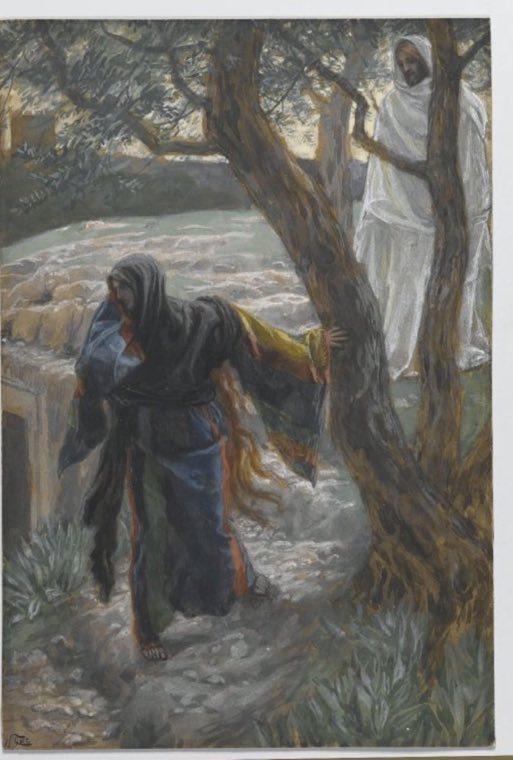 Jesus Appears to Mary Magdalene (Apparition de Jésus à Madeleine)
See also
- The women who followed JesusJewish groups and the Roman world
- Synagogues of Jesus’ day in GalileeThe Bible in stone
- The Sea of GalileeThe sea
- Tiberias: Herod Antipas’s new cityCities of the Bible
- Capernaum: a fishing town on the lakeCities of the Bible
- FishFood and drink
- Bethsaida and ChorazinCities of the Bible
- Mary (Matthew 27:56)People
- MagadanPlaces
Sources: Tyndale Open Bible Dictionary © 2023 Tyndale House Publishers, CC BY-SA 4.0 — adapted and shortened; the original work is available for free at tyndaleopenresources.com · Sources and rights