Encyclopedia › Cities of the Bible
Cities of the Bible
Bethsaida and Chorazin
“Woe to you, Chorazin! Woe to you, Bethsaida!” · et-Tell or el-Araj · black basalt synagogue
With Capernaum, these two towns at the north end of the Sea of Galilee formed the small triangle where Jesus did much of His work, and all three were named in His lament: “Woe to you, Chorazin! Woe to you, Bethsaida! For if the miracles that were performed in you had been performed in Tyre and Sidon, they would have repented long ago” (Matthew 11:21). Bethsaida, “house of fishing”, was the hometown of Philip, Andrew and Peter (John 1:44). Near it Jesus fed the five thousand (Luke 9:10) and healed a blind man by stages (Mark 8:22–25). Philip the tetrarch rebuilt it as a city and named it Julias, after a woman of the emperor’s family.
Where Bethsaida stood is not certain. From 1987 excavations at et-Tell, a mound two kilometers from today’s shore, uncovered a large Iron Age city gate and Roman remains; since 2016 a second team at el-Araj, right by the lake, has found Roman-period buildings and a Byzantine church that may be the one pilgrims saw over the house of Peter and Andrew. Chorazin, about three kilometers north of Capernaum in the basalt hills, is surer: its ruins at Khirbet Kerazeh include houses and a synagogue of black basalt of the 3rd–4th century, with a carved stone seat inscribed in Aramaic, often compared to “Moses’ seat” (Matthew 23:2).
In art
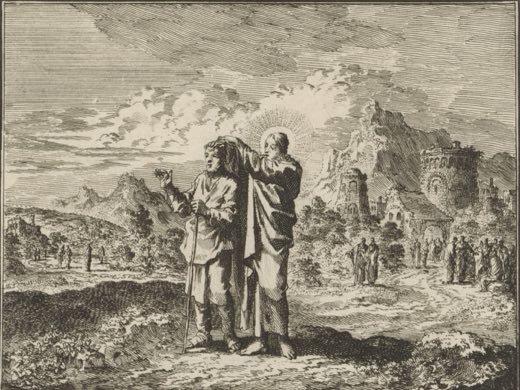 The Blind Man at BethsaidaJan Luyken
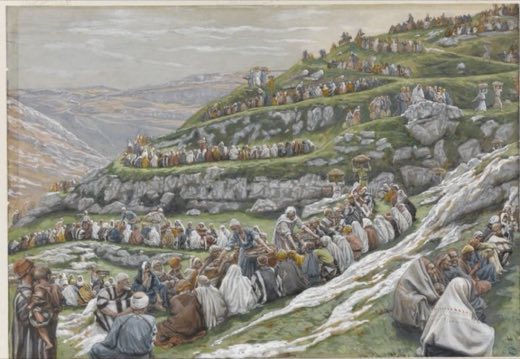 The Miracle of the Loaves and Fishes (La multiplication des pains)James Tissot
See also
- Capernaum: a fishing town on the lakeCities of the Bible
- The Sea of GalileeThe sea
- Philip the tetrarchRulers around the Bible
- Magdala: Mary Magdalene’s townCities of the Bible
- Synagogues of Jesus’ day in GalileeThe Bible in stone
- Philip (John)People
- AndrewPeople
- PeterPeople
- Philip (Luke)People
- BethsaidaPlaces
- ChorazinPlaces
Scholars disagree
Sources: Tyndale Open Bible Dictionary © 2023 Tyndale House Publishers, CC BY-SA 4.0 — adapted and shortened; the original work is available for free at tyndaleopenresources.com · Sources and rights