Encyclopedia › Ancient texts beside the Bible
Ancient texts beside the Bible
Enuma Elish, the Babylonian creation poem
Seven tablets · named after its first words, “When on high” · recited at Babylon’s New Year
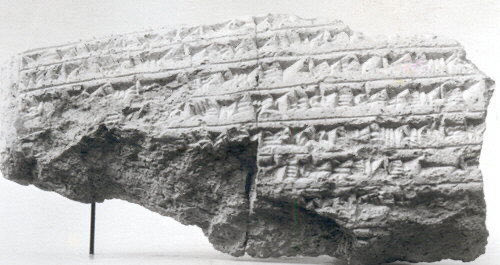
Enuma Elish is named, as Hebrew books are, after its first words: “When on high”. On seven tablets it tells how, when only the waters existed — sweet Apsu and salt Tiamat — the gods were born; how Tiamat made war on them; and how the young god Marduk defeated her, split her body in two and made the sky from one half and the earth from the other. From the blood of Tiamat’s ally Kingu humans were made to serve the gods, and Babylon was built as Marduk’s city. The poem was recited at the New Year festival in Babylon. When it was composed is debated; many scholars think of the late 2nd millennium BC.
Since its publication in 1876 it has been compared with Genesis 1. Both begin with dark waters, and the Hebrew word for “the deep” in Genesis 1:2, tehom, is related to the name Tiamat. In Genesis, though, the deep is no enemy; God speaks and separates the waters. Some poems of the Bible speak of God’s victory over the sea and its dragons (Psalm 74:13), and scholars discuss how far such pictures are shared with the myths of the neighbors.
See also
- The Atrahasis epicAncient texts beside the Bible
- Marduk (Bel) and NeboPeoples and gods around Israel
- Leviathan and BehemothAnimals of the Bible
- How the books got their namesLanguages of the Bible
- BabylonPlaces
Sources: Tyndale Open Bible Dictionary © 2023 Tyndale House Publishers, CC BY-SA 4.0 — adapted and shortened; the original work is available for free at tyndaleopenresources.com · Sources and rights