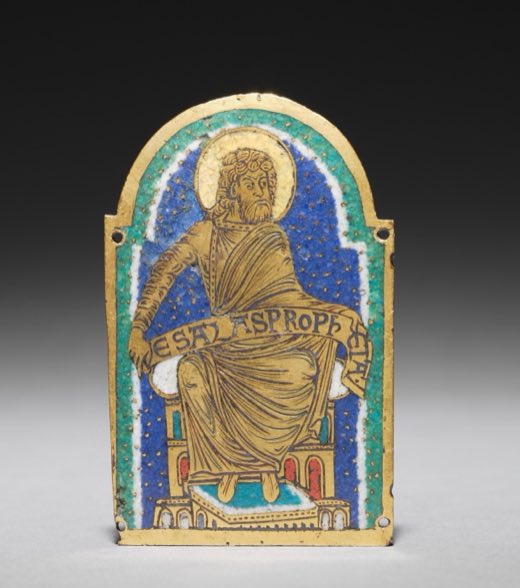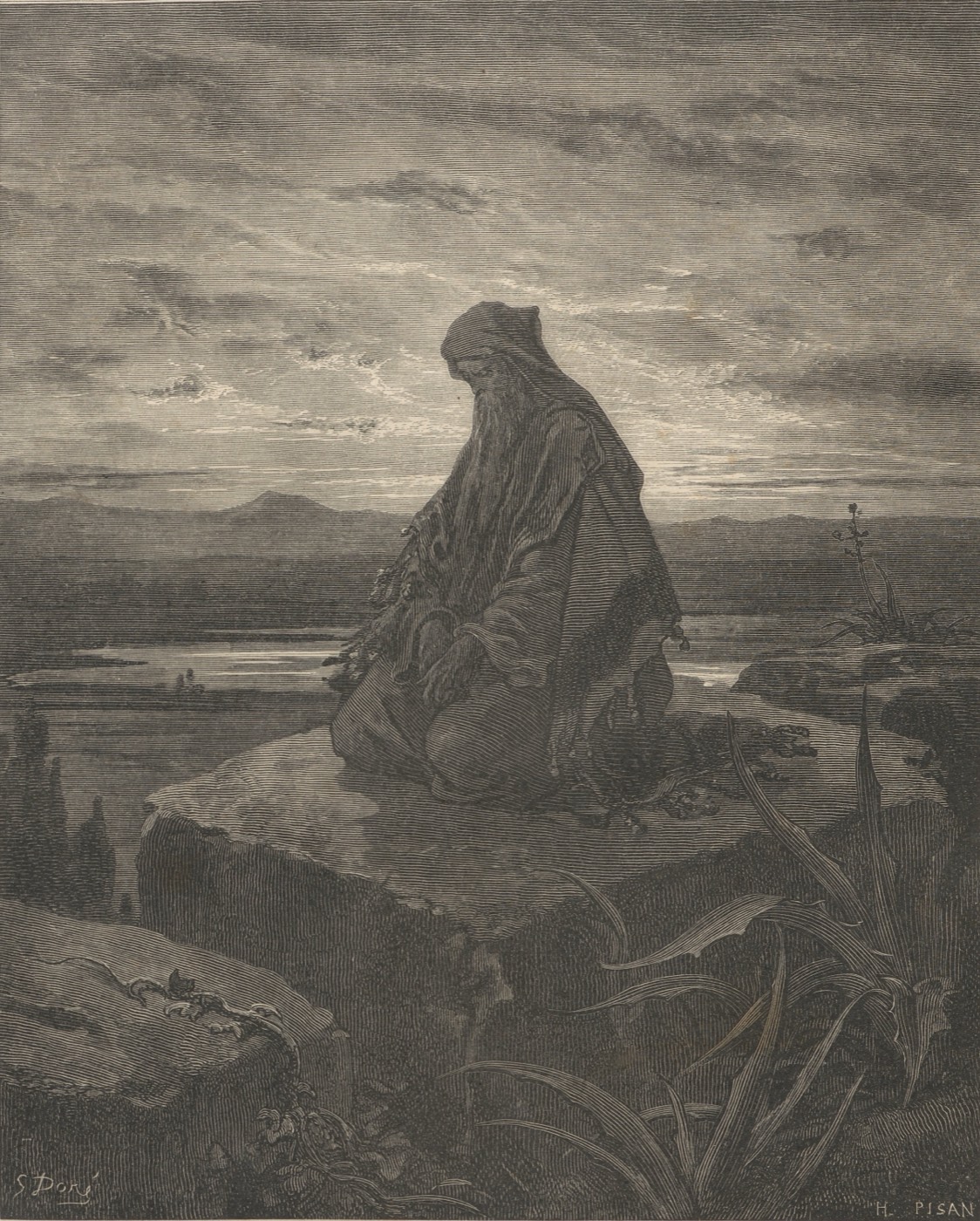
Isaiah son of Amoz was the great prophet of Jerusalem in the days of Uzziah, Jotham, Ahaz and Hezekiah, roughly 740–700 BC, and the prophet the New Testament quotes more than any other. In the year King Uzziah died he saw the Lord seated on a high and lofty throne, with seraphim calling to one another, «Holy, holy, holy is the LORD of Hosts». A burning coal from the altar touched his lips, and when the Lord asked whom He should send, Isaiah answered, «Here am I. Send me!»
When Aram and Israel marched on Jerusalem, Isaiah went out with his son Shear-jashub to tell Ahaz not to fear, and gave him the sign of the virgin who would bear a son named Immanuel; Matthew says this was fulfilled in the birth of Jesus. For three years Isaiah walked barefoot and stripped as a sign against Egypt and Cush. When Sennacherib's army threatened Jerusalem, he told Hezekiah that the Assyrian king would not enter the city, and that night the angel of the LORD struck down the Assyrian camp. To the dying Hezekiah he brought word that fifteen years had been added to his life, and as a sign the shadow went back ten steps on the stairway of Ahaz.
He rebuked Hezekiah for showing his treasures to envoys from Babylon and foretold that they would be carried there. Philip explained to the Ethiopian official that Isaiah's words of the Servant led like a lamb to the slaughter speak of Jesus. Chronicles says Isaiah also wrote the acts of Uzziah and of Hezekiah. By tradition he wrote the whole book; many scholars think chapters 40–66 come from later prophets. By a later Jewish tradition he was put to death under Manasseh.
Events of the life
Works of art
In the encyclopedia
The life in verses
Sources: Theographic Bible Metadata, CC BY-SA 4.0 · Tyndale Open Bible Dictionary © 2023 Tyndale House Publishers, CC BY-SA 4.0 — adapted and shortened; the original work is available for free at tyndaleopenresources.com · Sources and rights
Family
- Father Amoz 2 Kgs 19:2