Explore › Bible manuscripts › Gospel lectionary of Luke the Cypriot
Bible manuscripts
Gospel lectionary of Luke the Cypriot
Buzău, Wallachia, and Moscow · 1594–1596 · Greek · W.535
A lectionary: the Gospel readings in the order the church reads them through the year, starting at Easter with John. The Greek text was copied in 1594 by Luke the Cypriot, a calligrapher who was then bishop of Buzău in Wallachia, now in Romania. He took the book to Moscow, where Russian painters added the pictures by 1596; small notes to the painters in Church Slavonic can still be seen beside some of them.
11 pages
Pages
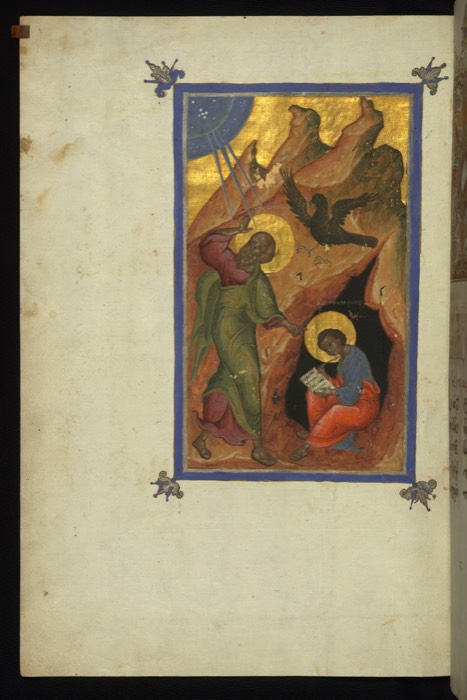
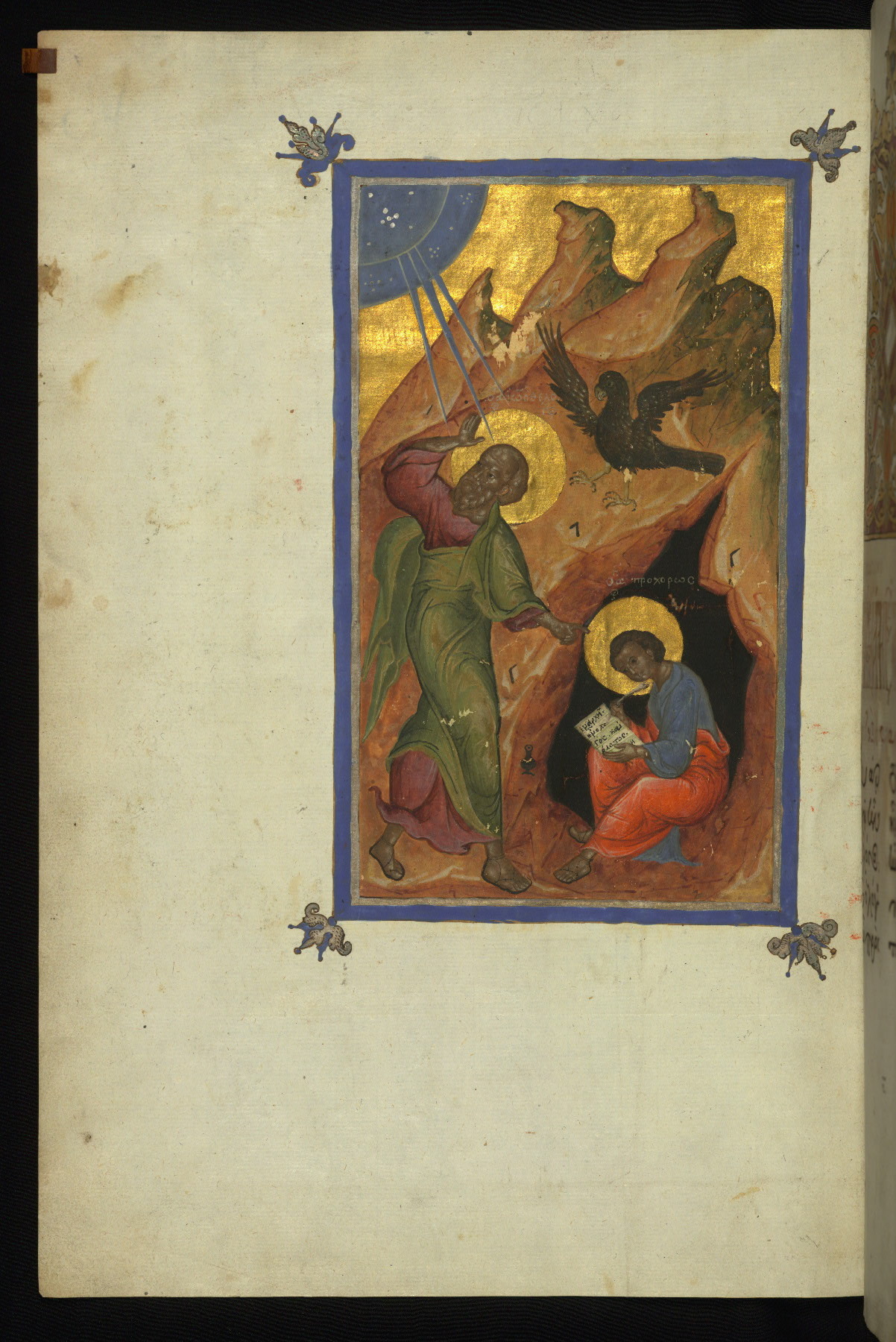
fol. 8v · John, turning toward a ray of light from heaven, dictates; his disciple Prochorus writes, sitting at the mouth of a cave. By tradition this happened on the island of Patmos.Walters Art Museum · W.535 · CC0 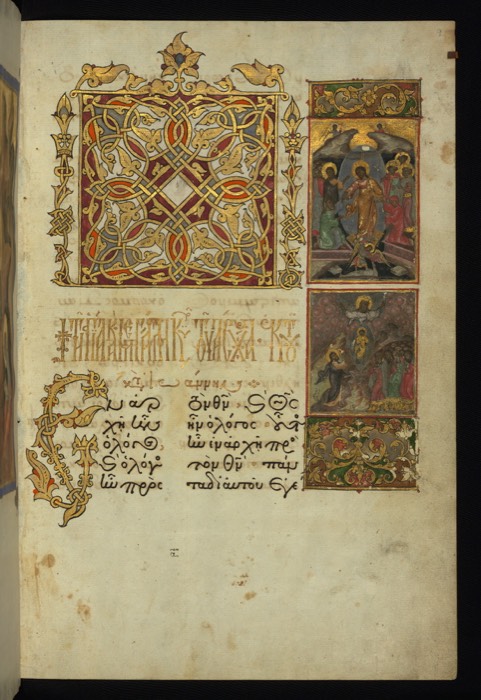
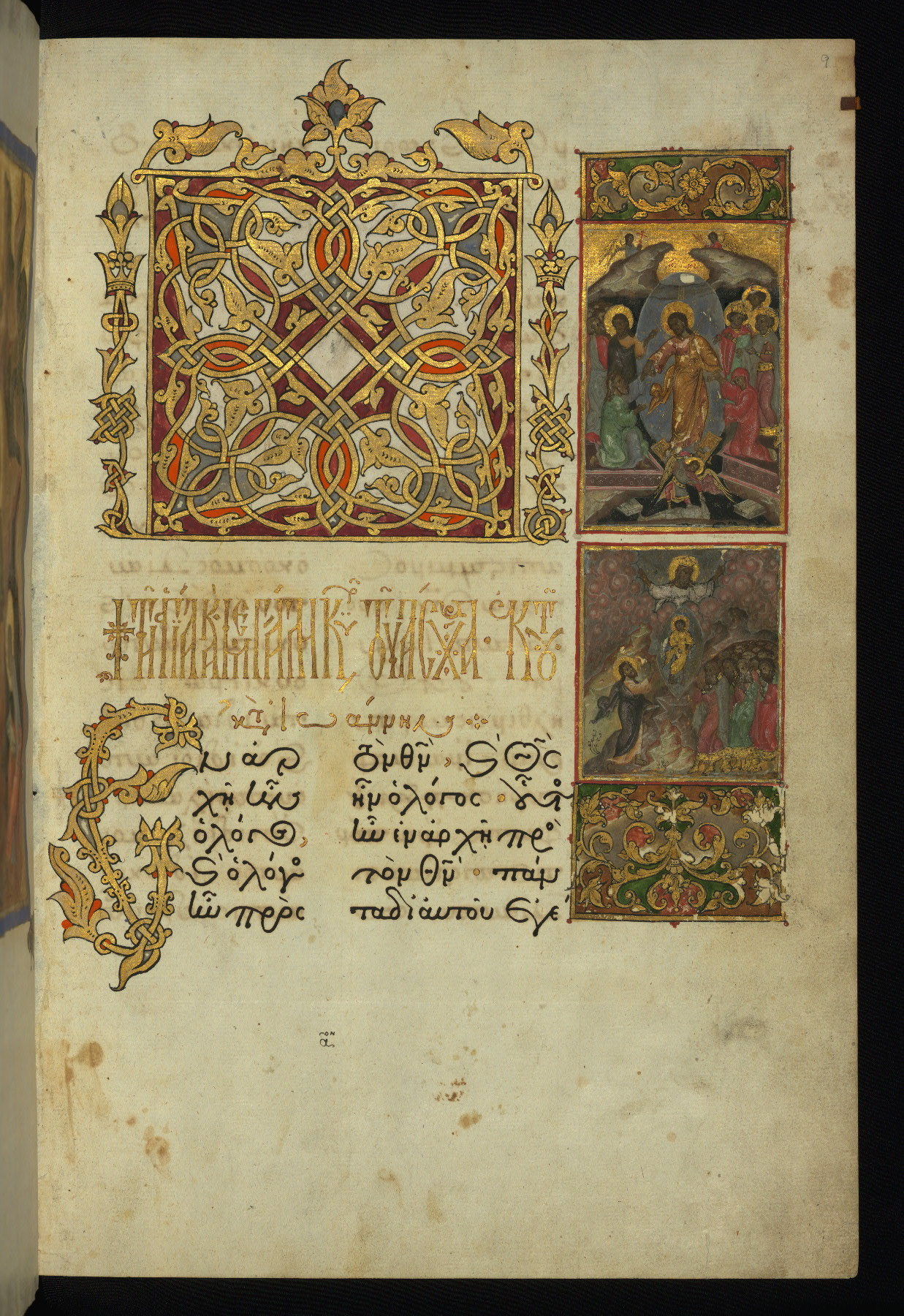
fol. 9r · The first reading of the year, at Easter: «In the beginning was the Word». Beside the gold headpiece, small pictures of the Resurrection, shown as Christ raising Adam and Eve, and of John the Baptist.Walters Art Museum · W.535 · CC0 John 1:1In the beginning was the Word, and the Word was with God, and the Word was God.
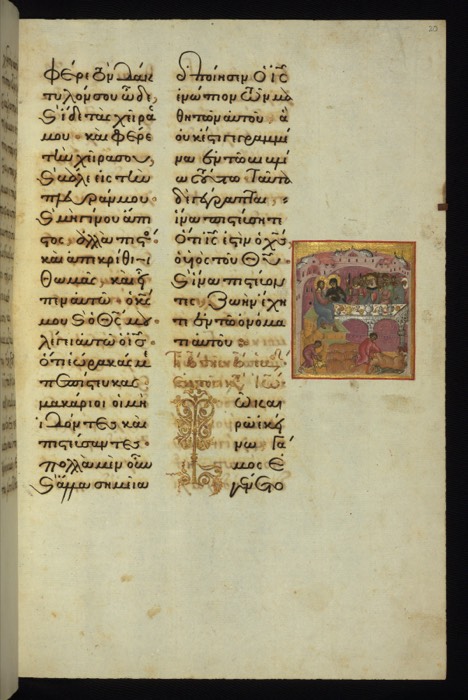
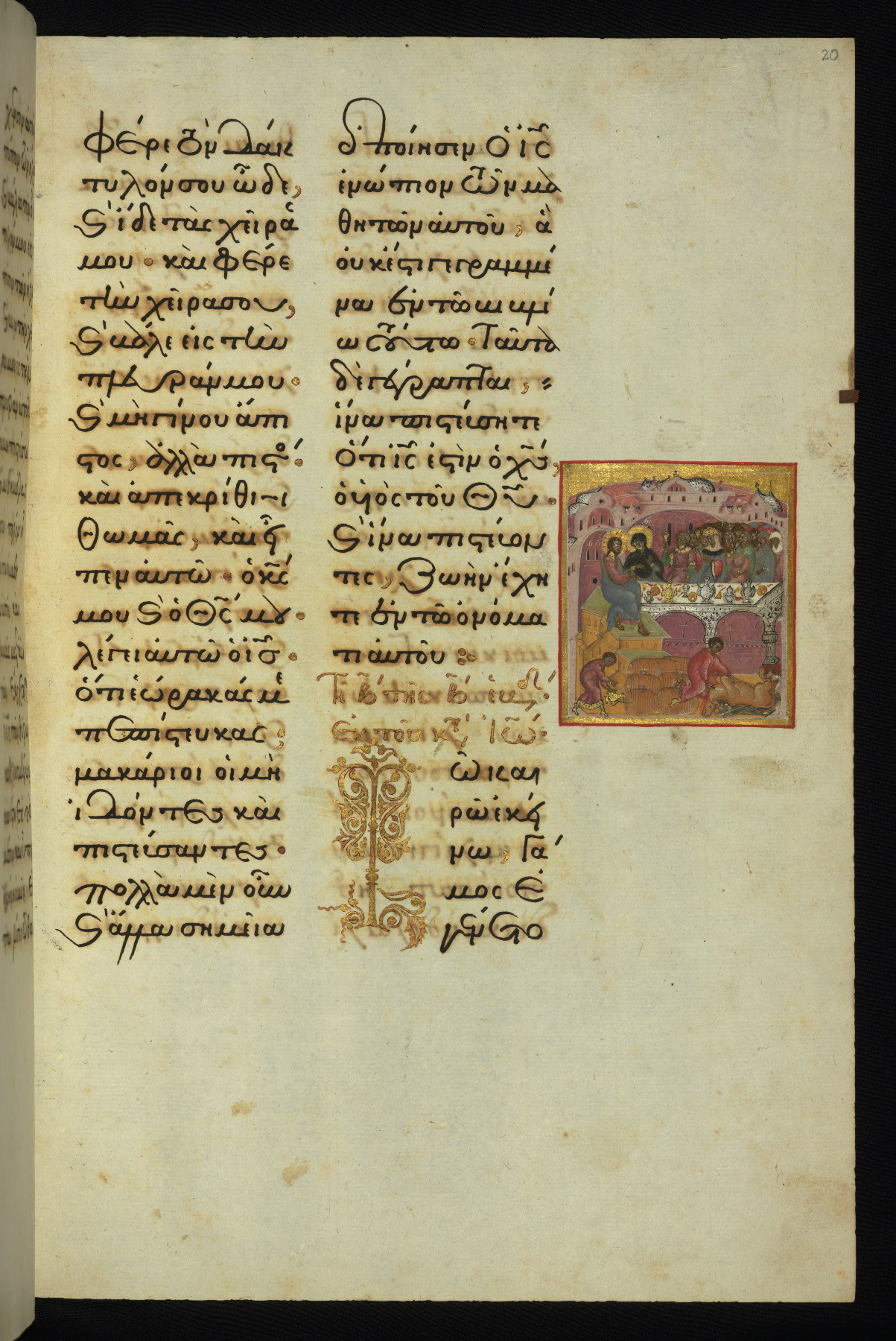
fol. 20r · A small picture of the wedding at Cana beside the reading that tells it: Jesus at the table and the servants filling the jars.Walters Art Museum · W.535 · CC0 John 2:7Jesus told the servants, “Fill the jars with water.” So they filled them to the brim.
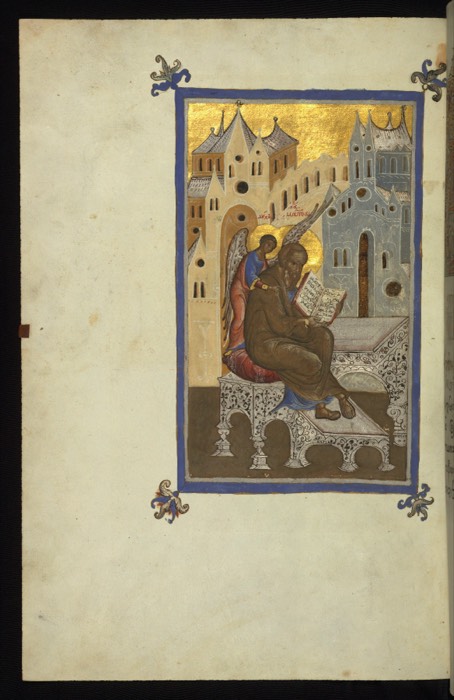
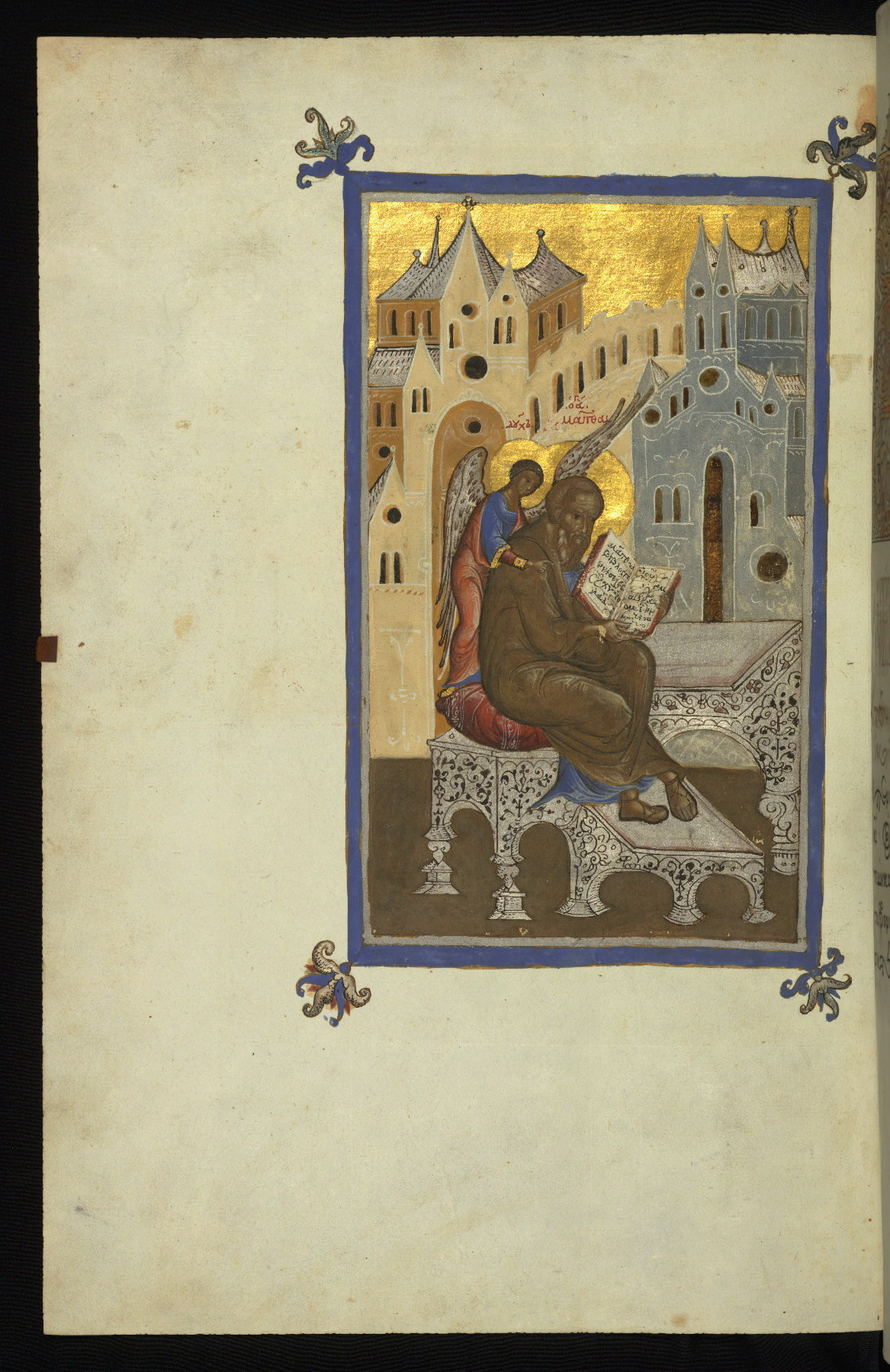
fol. 67v · Matthew writing, with a winged figure behind him — Wisdom, according to the Greek inscription — before the readings from Matthew that follow Pentecost.Walters Art Museum · W.535 · CC0 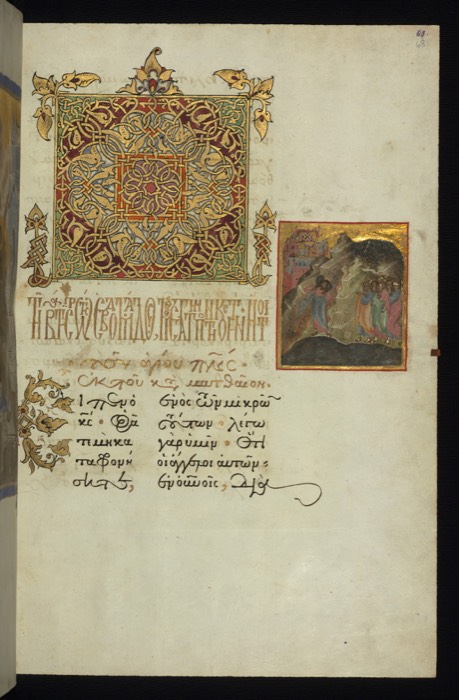
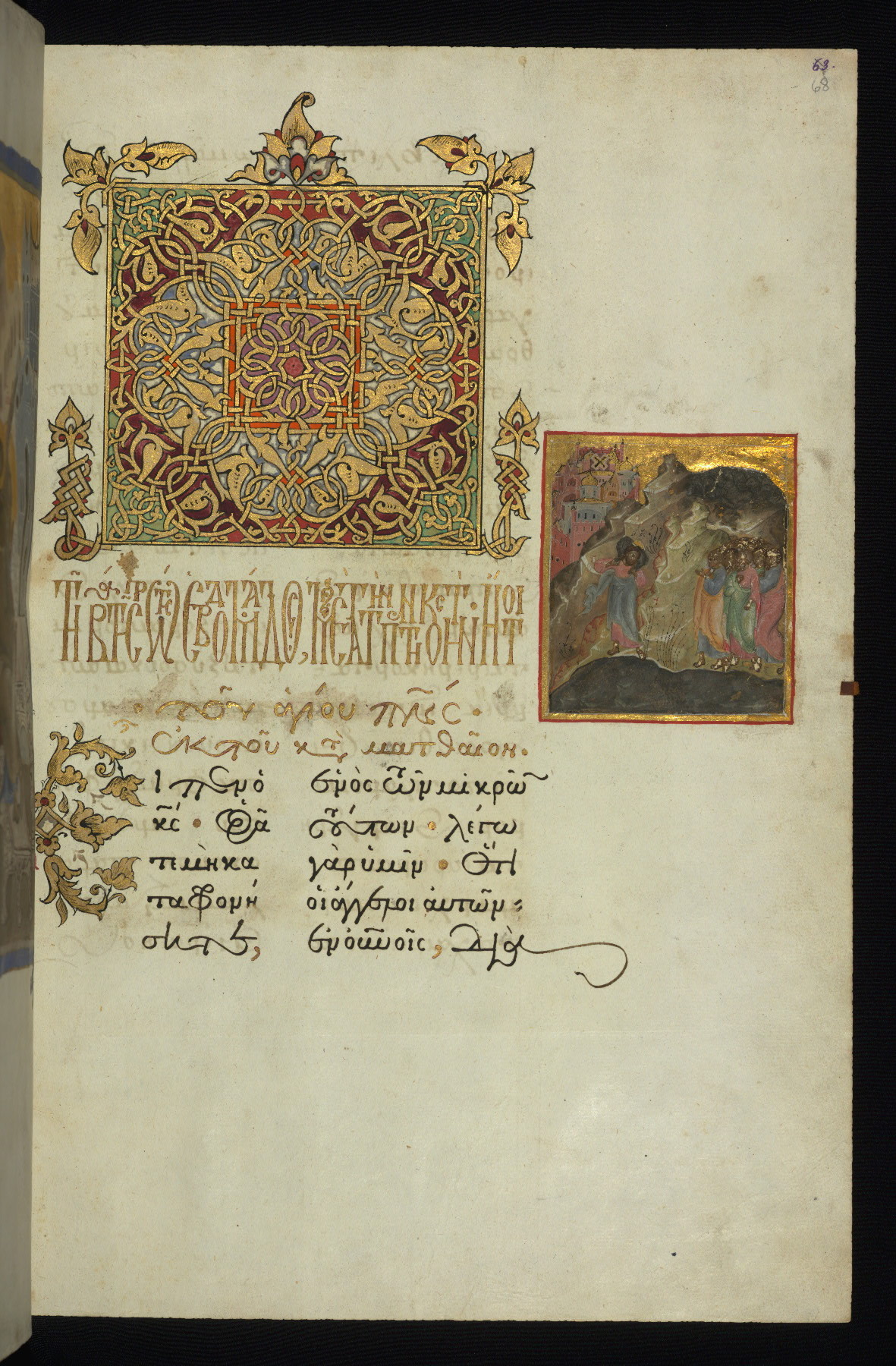
fol. 68r · The first reading from Matthew after Pentecost, under an interlaced gold headpiece; the small picture beside it is the parable of the lost sheep.Walters Art Museum · W.535 · CC0 Matt 18:12What do you think? If a man has a hundred sheep and one of them goes astray, will he not leave the ninety-nine on the hills and go out to search for the one that is lost?
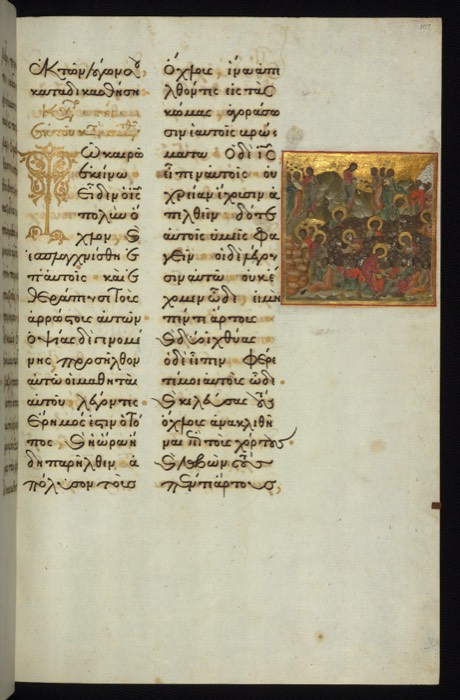
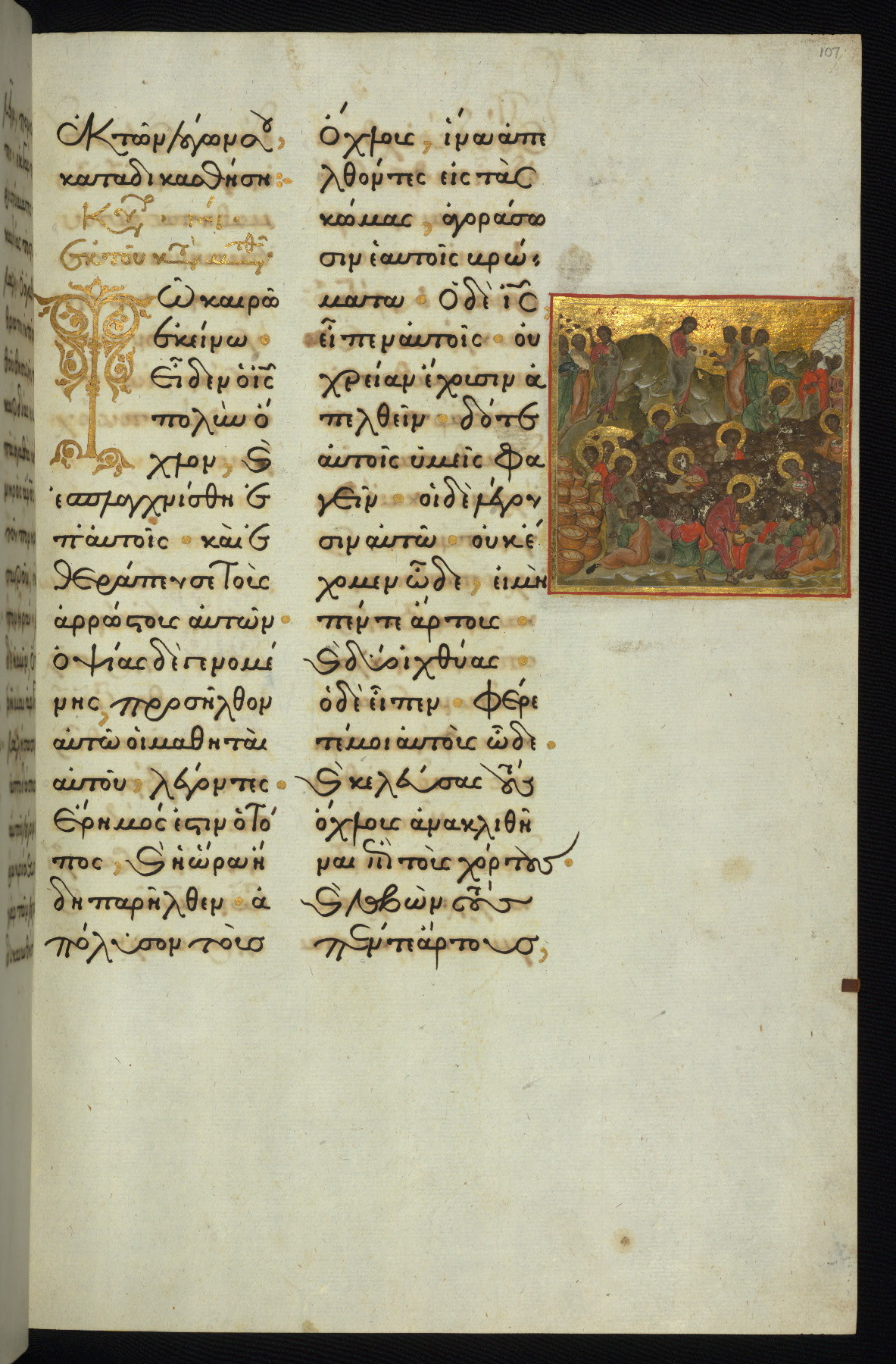
fol. 107r · The feeding of the five thousand beside its reading: the disciples hand out bread to the people sitting in groups.Walters Art Museum · W.535 · CC0 Matt 14:19And He directed the crowds to sit down on the grass. Taking the five loaves and the two fish and looking up to heaven, He spoke a blessing. Then He broke the loaves and gave them to the disciples, and the disciples gave them to the people.
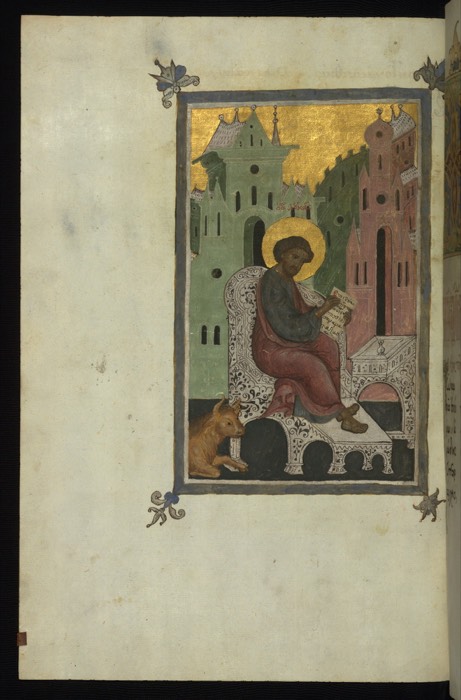
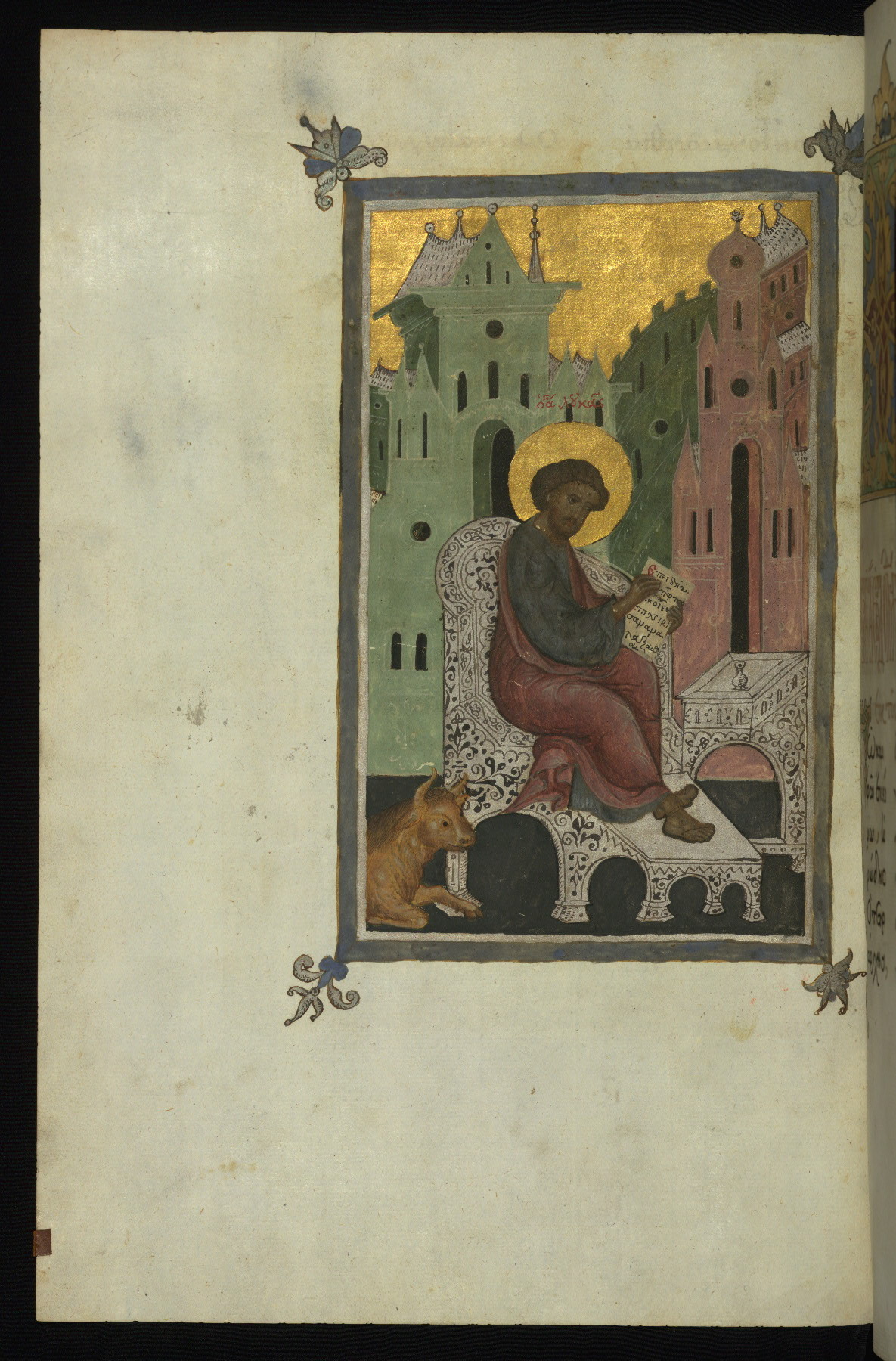
fol. 158v · Luke writing in a green and pink city, with his symbol, the calf, at his feet; the readings from Luke follow.Walters Art Museum · W.535 · CC0 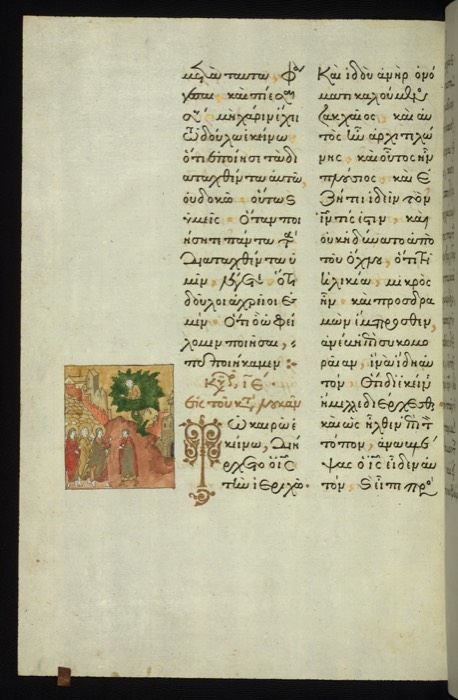
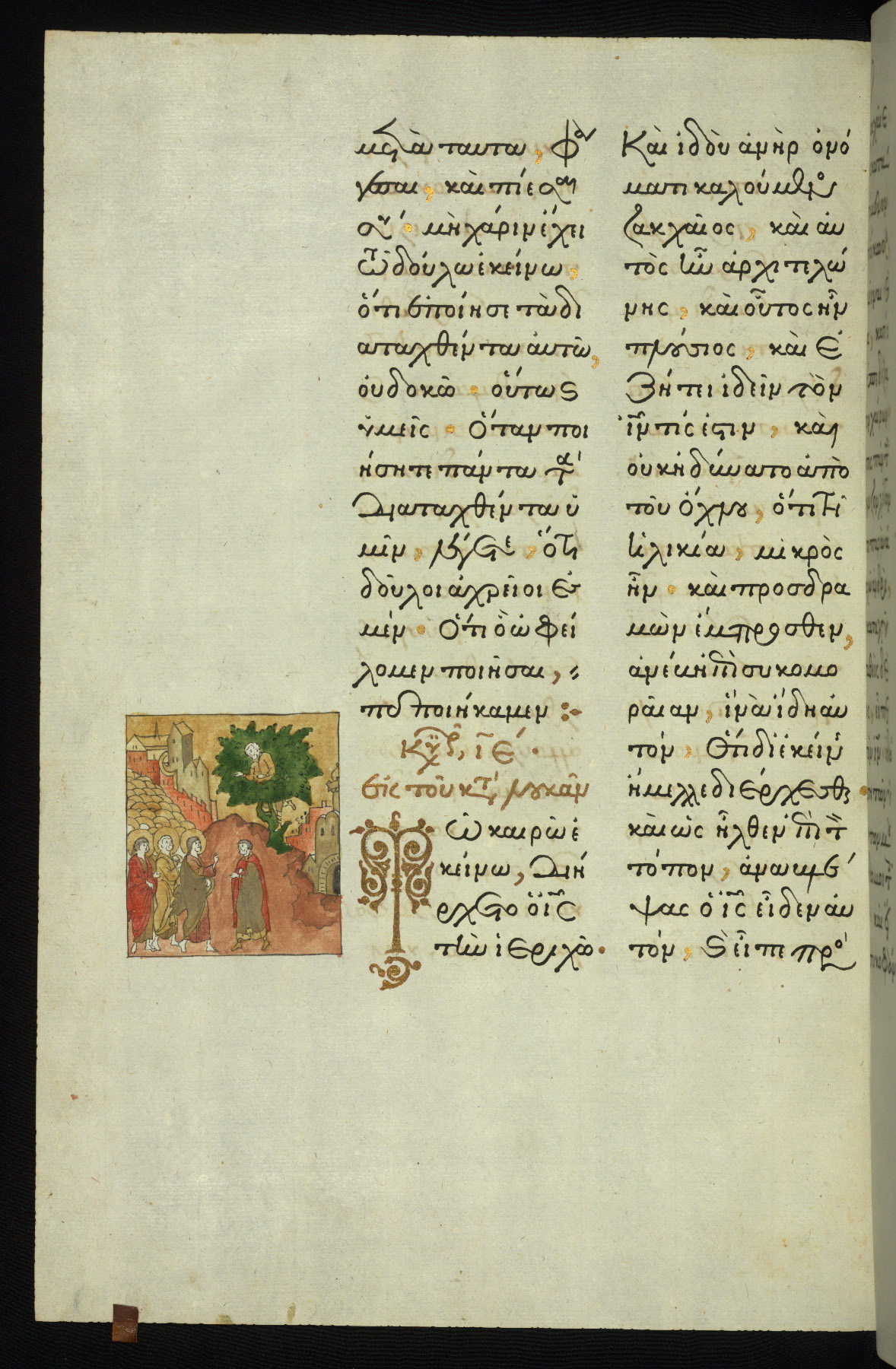
fol. 236v · Zacchaeus up in the sycamore tree as Jesus passes below, in a small picture beside the reading of the story.Walters Art Museum · W.535 · CC0 Luke 19:4So he ran on ahead and climbed a sycamore tree to see Him, since Jesus was about to pass that way.
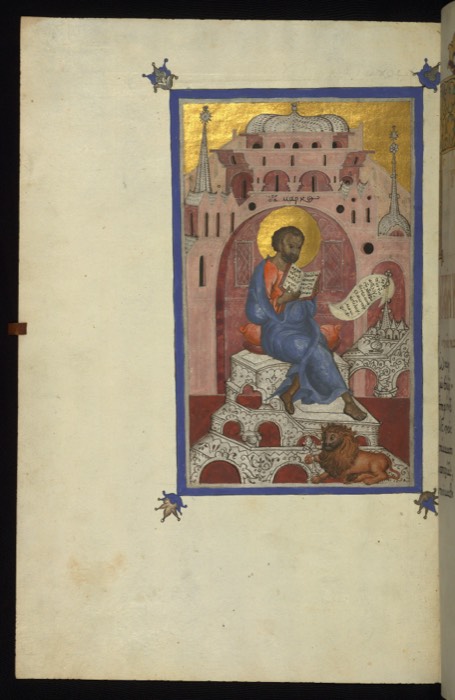
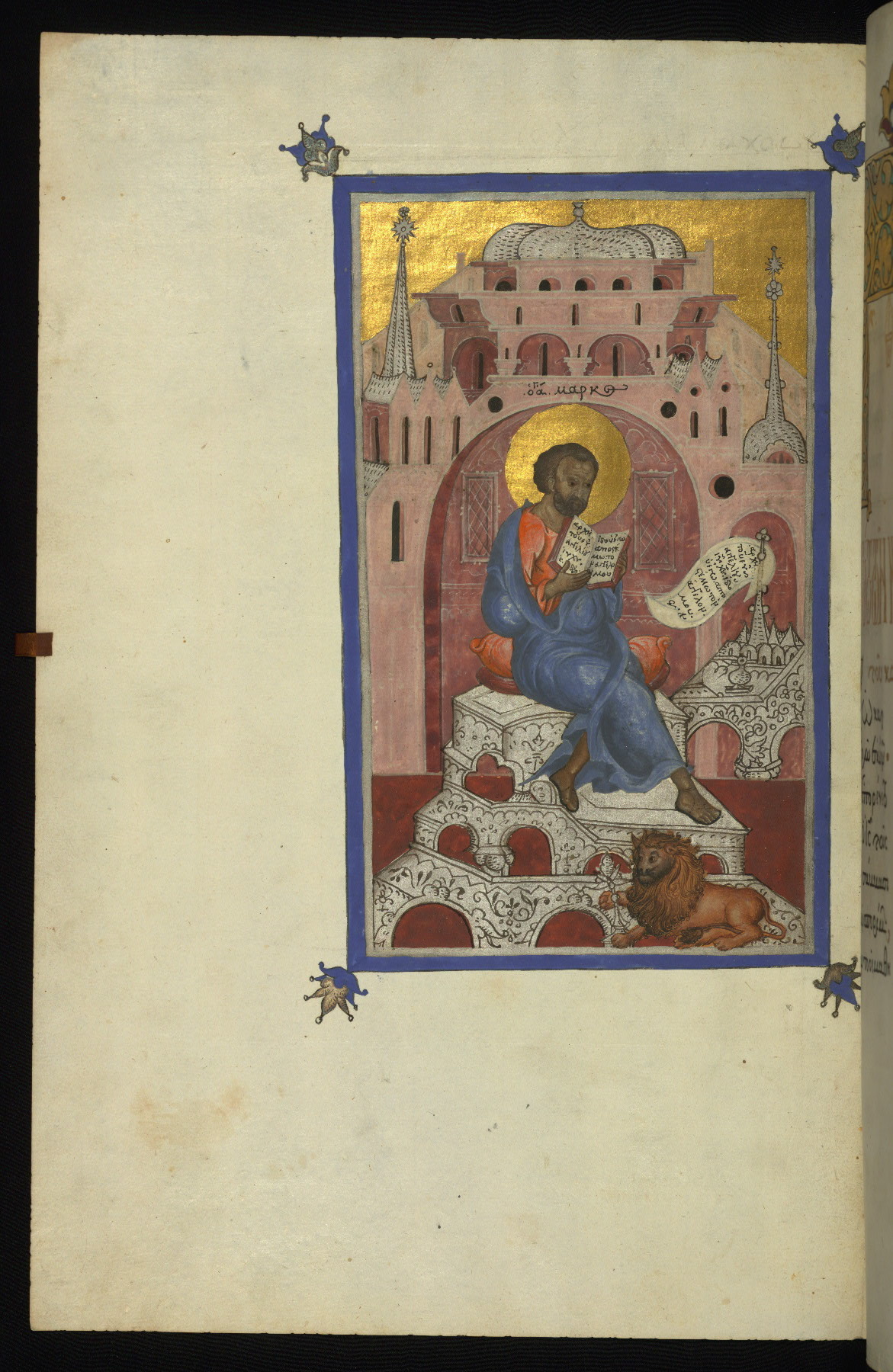
fol. 272v · Mark writing before a pink palace, his symbol, the lion, lying at his feet; the readings of Lent, mostly from Mark, follow.Walters Art Museum · W.535 · CC0 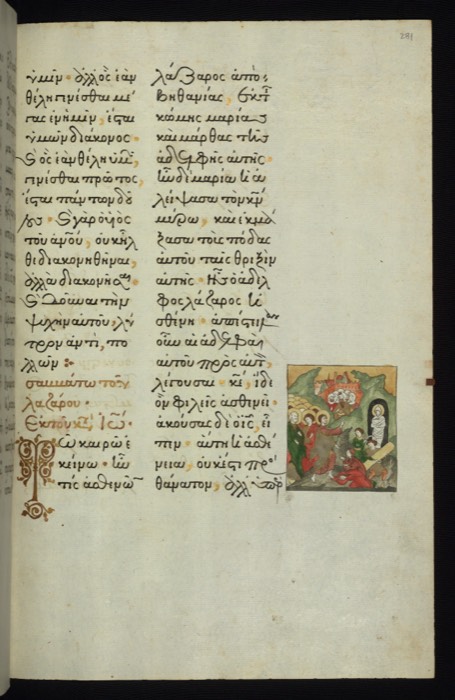
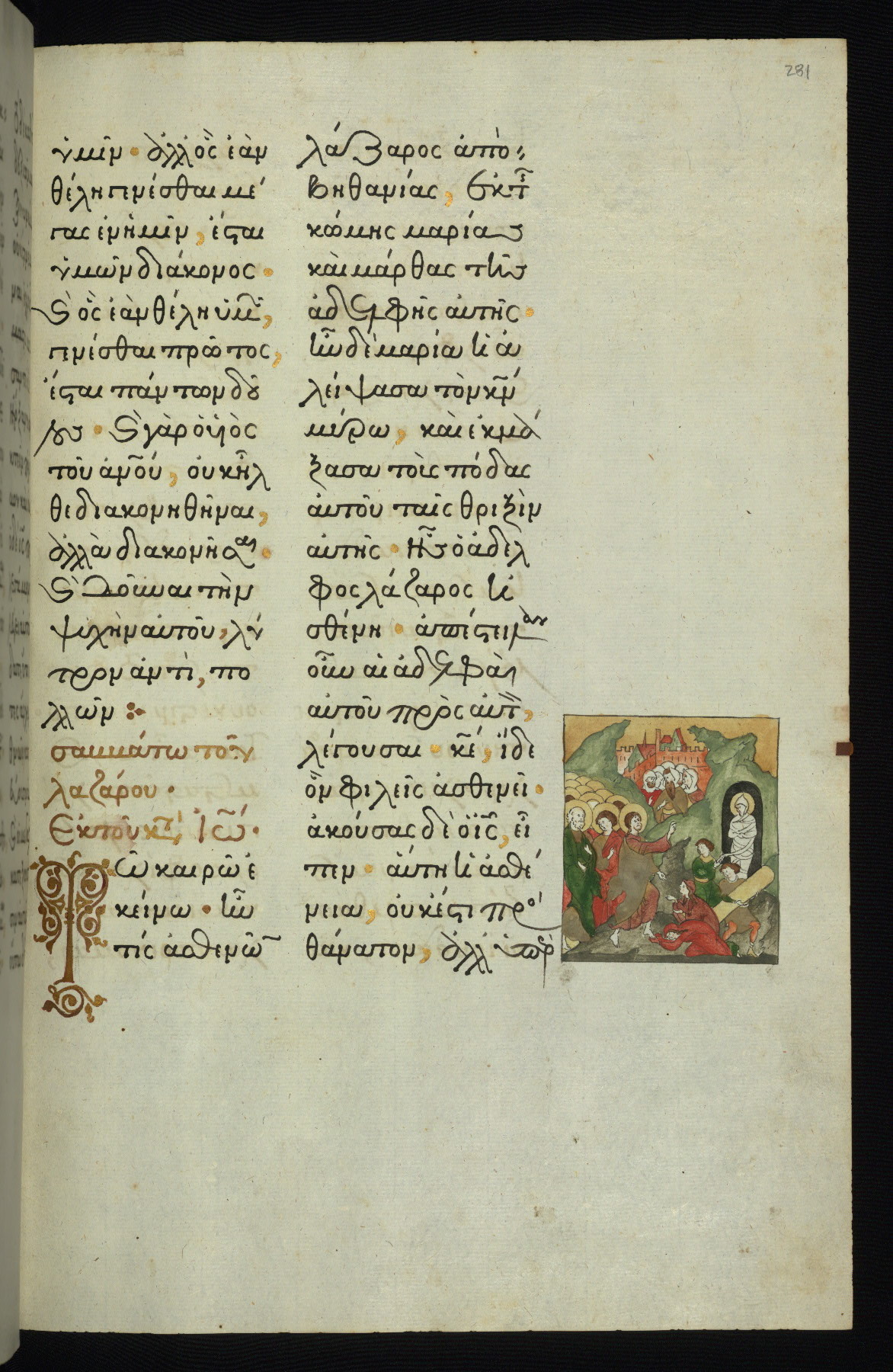
fol. 281r · The raising of Lazarus, beside the reading of the story: Lazarus stands in the tomb wrapped in grave cloths, and Jesus calls him out.Walters Art Museum · W.535 · CC0 John 11:43–44After Jesus had said this, He called out in a loud voice, “Lazarus, come out!” The man who had been dead came out with his hands and feet bound in strips of linen, and his face wrapped in a cloth. “Unwrap him and let him go,” Jesus told them.
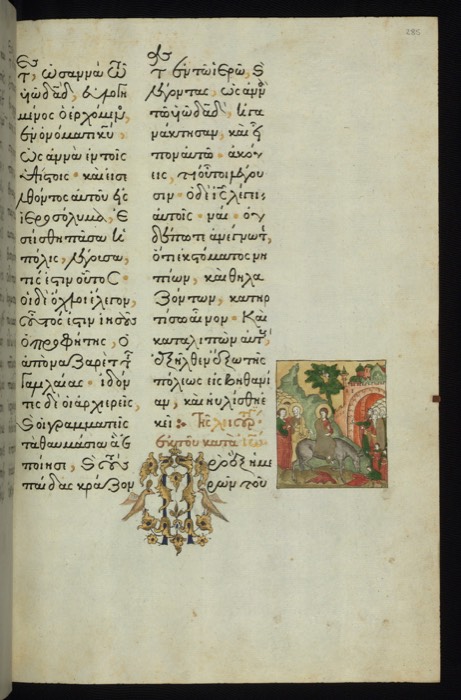
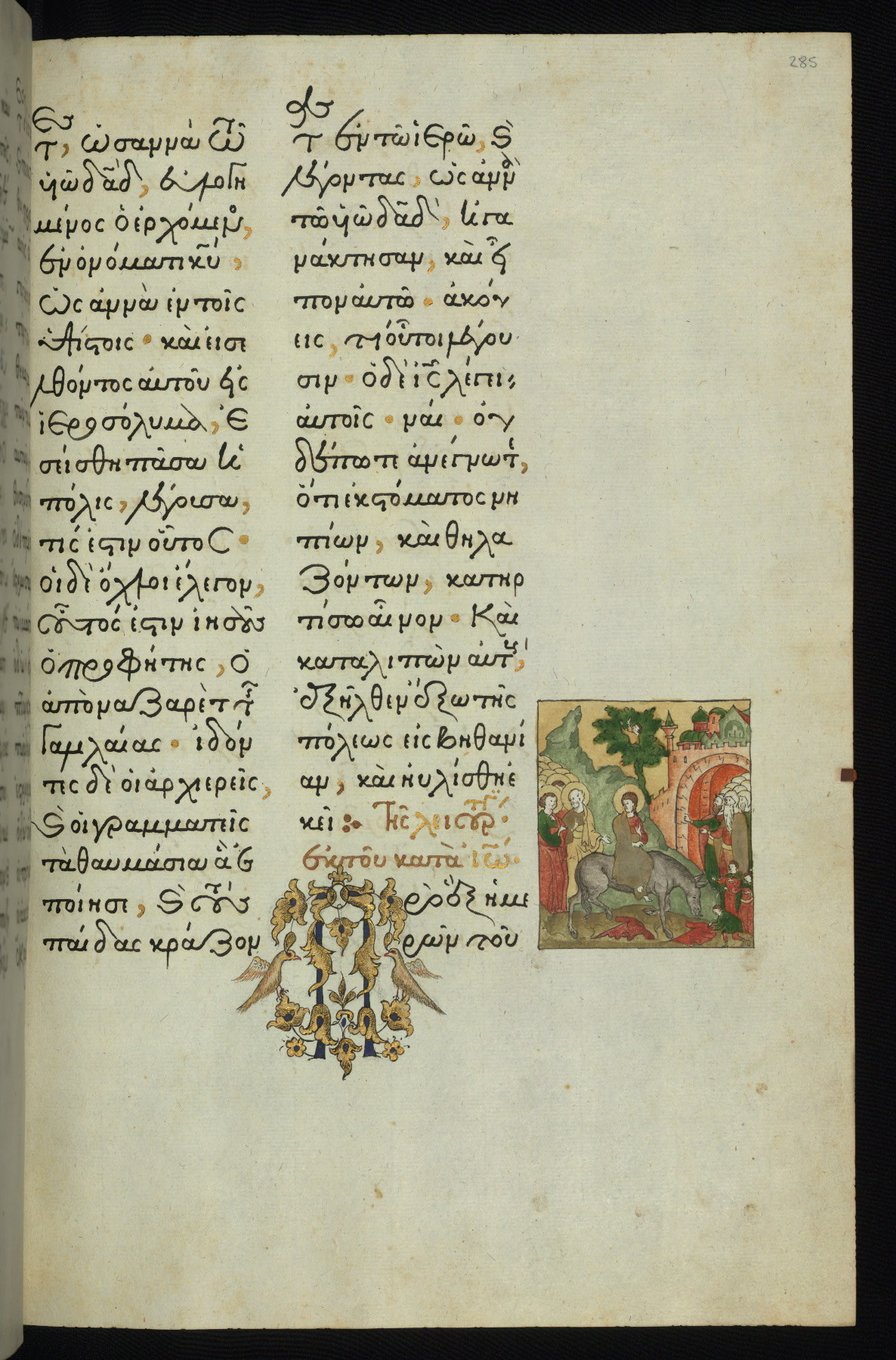
fol. 285r · The entry into Jerusalem, beside the reading for Palm Sunday: Jesus rides toward the city gate, where the people come out to meet him.Walters Art Museum · W.535 · CC0 John 12:13They took palm branches and went out to meet Him, shouting: “Hosanna!” “Blessed is He who comes in the name of the Lord!” “Blessed is the King of Israel!”
Walters Art Museum, Baltimore · images CC0, published by OPenn (University of Pennsylvania) · the texts are ours
Bible manuscripts