Encyclopedia › Weapons and warfare
Weapons and warfare
Ahab’s last battle at Ramoth-gilead
1 Kings 22 · Ahab and Jehoshaphat against Aram · Micaiah’s warning · an arrow at random
Ramoth-gilead, a walled town east of the Jordan, was fought over by Israel and the Arameans of Damascus. After three years of peace Ahab said, “Do you not know that Ramoth-gilead is ours, but we have failed to take it from the hand of the king of Aram?” (1 Kings 22:3), and Jehoshaphat of Judah joined him: “I am like you, my people are your people, and my horses are your horses” (1 Kings 22:4). Four hundred prophets promised victory. Micaiah son of Imlah, called at Jehoshaphat’s request, said, “I saw all Israel scattered on the hills like sheep without a shepherd” (1 Kings 22:17), and was put in prison.
Ahab went into battle in disguise, Jehoshaphat in his royal robes, and the king of Aram ordered his thirty-two chariot commanders to fight no one “except the king of Israel” (1 Kings 22:31). They turned on Jehoshaphat, then left him. “However, a certain man drew his bow without taking special aim, and he struck the king of Israel between the joints of his armor” (1 Kings 22:34). Ahab had himself held up in his chariot facing the Arameans until evening, and died that evening; the army went home. Not long before, the Kurkh Monolith of Shalmaneser III had named “Ahab the Israelite” among the allies of Damascus against Assyria at Qarqar, in 853 BC, with two thousand chariots. Jehu was later anointed king in the camp at Ramoth-gilead (2 Kings 9:1–6).
In art
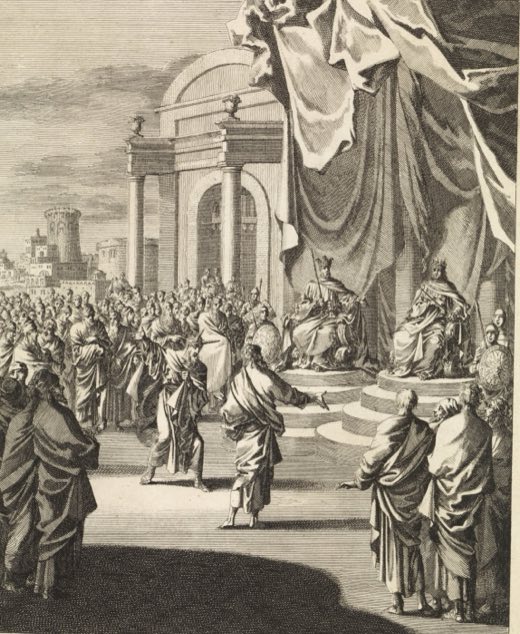 Micaiah before the Two Kings
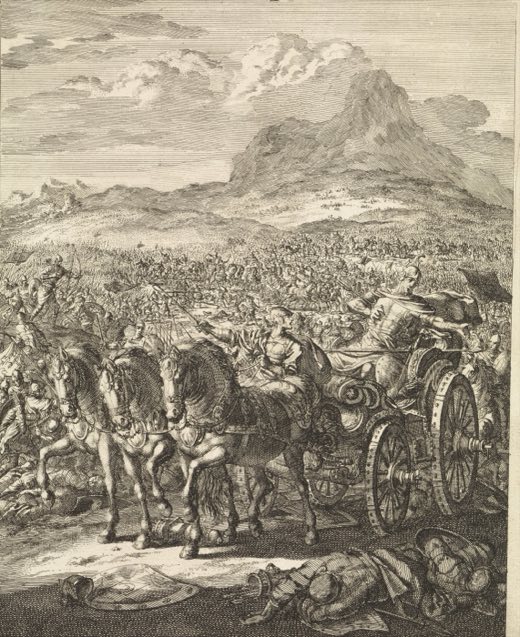 Ahab Is Struck by an Arrow
See also
- The Kurkh Monolith: Ahab at QarqarThe Bible in stone
- Bow and arrowWeapons and warfare
- Chariots and horsesWeapons and warfare
- Gilead and the land beyond the JordanThe land of the Bible
- ArameansPeoples and gods around Israel
- AhabPeople
- JehoshaphatPeople
- Micaiah, son of ImlahPeople
- Ramoth-gileadPlaces
Sources: Tyndale Open Bible Dictionary © 2023 Tyndale House Publishers, CC BY-SA 4.0 — adapted and shortened; the original work is available for free at tyndaleopenresources.com · Sources and rights