Virtues
Gratitude
Hebrew todah, thanks and thank offering · the ten lepers · “Give thanks in every circumstance”
The Hebrew todah means both “thanks” and the thank offering that a worshiper brought to the temple and shared at a meal. The psalms are full of it: “Enter His gates with thanksgiving and His courts with praise” (Psalm 100:4), and the refrain sung again and again, “Give thanks to the LORD, for He is good; His loving devotion endures forever” (Psalm 107:1). Psalm 107 calls on those who had been lost in the desert, imprisoned, sick and storm-tossed at sea to thank the LORD for bringing them through. In Babylon, even after the decree that could cost him his life, Daniel went home and three times a day “prayed, and gave thanks to his God, just as he had done before” (Daniel 6:10).
Luke tells of ten men with a skin disease who called out to Jesus from a distance. He sent them to the priests, and on the way they were cleansed. Only one came back, praising God in a loud voice, and “fell facedown at Jesus’ feet in thanksgiving to Him—and he was a Samaritan.” Jesus asked: “Were not all ten cleansed? … Where then are the other nine?” (Luke 17:16–17). Paul asks the churches to be thankful in every situation: “Give thanks in every circumstance” (1 Thessalonians 5:18). Eucharistia, the Greek for thanksgiving, gave its name to the Lord’s Supper in many churches.
In art
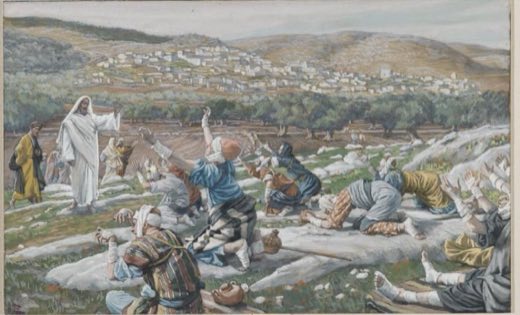 The Healing of Ten Lepers (Guérison de dix lépreux)
See also
Sources: Tyndale Open Bible Dictionary © 2023 Tyndale House Publishers, CC BY-SA 4.0 — adapted and shortened; the original work is available for free at tyndaleopenresources.com · Sources and rights