Encyclopedia › Roads and travel
Roads and travel
Abraham’s journeys
Ur → Haran → Canaan → Egypt and back · tents, flocks and altars
The story of Abraham is a story of roads. Terah took his family “from Ur of the Chaldeans for the land of Canaan”, but they settled in Haran (Genesis 11:31), far up the Euphrates — a journey of roughly a thousand kilometers. Most scholars place Ur at Tell el-Muqayyar in southern Iraq; some look for a northern Ur nearer Haran. From Haran “Abram departed, as the LORD had directed him”, at seventy-five (Genesis 12:4), with Sarai, Lot, flocks and servants, another six hundred kilometers and more to Canaan. Hebrews says he “went, without knowing where he was going” (Hebrews 11:8).
In Canaan he kept moving with his tents and flocks, from Shechem to the hills between Bethel and Ai, building an altar at each place, and then “journeyed on toward the Negev” (Genesis 12:9). Famine drove him down to Egypt, and he came back “from place to place toward Bethel” (Genesis 13:3) before settling by the oaks of Mamre at Hebron. Late in life he went with Isaac to the land of Moriah, “on the third day” seeing the place in the distance (Genesis 22:4). To find a wife for Isaac he sent his servant with ten camels back to his kin in Aram-naharaim (Genesis 24:10).
In art
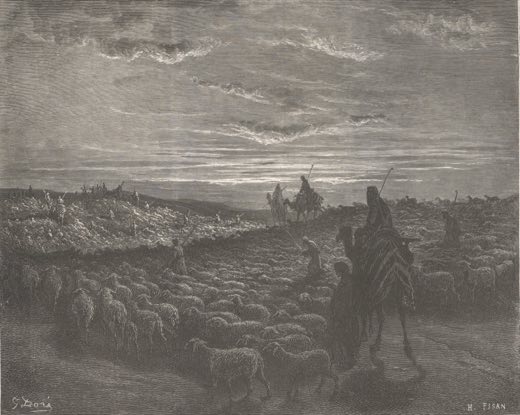 Abraham Journeying into the Land of CanaanGustave Doré
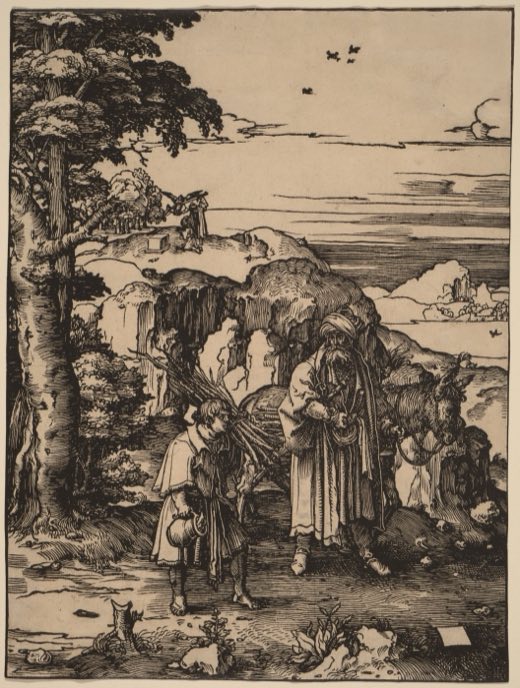 Abraham Going to Sacrifice IsaacLucas van Leyden
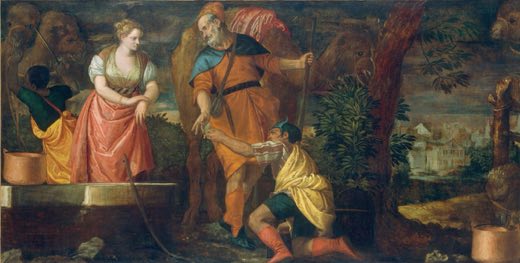 Rebecca at the WellVeronese and workshop
See also
- Ur: the city of the royal tombsCities of the Bible
- Haran: the crossroads city of the moon godCities of the Bible
- Jacob’s journeys: to Haran, home and down to EgyptRoads and travel
- Tents and desert peoplesThe desert
- Caravans, donkeys and camelsRoads and travel
- Four kings against five: Abram rescues LotWeapons and warfare
- RoutesExplore · Abraham, the Exodus, David, Paul’s journeys — stop by stop on the map
- AbrahamPeople
- UrPlaces
- HaranPlaces
- ShechemPlaces
- BethelPlaces
- MoriahPlaces
Scholars disagree
Sources: Tyndale Open Bible Dictionary © 2023 Tyndale House Publishers, CC BY-SA 4.0 — adapted and shortened; the original work is available for free at tyndaleopenresources.com · Sources and rights