Encyclopedia › Trade, craft and color
Trade, craft and color
Hearth and brazier
A fire on the floor, no chimney · charcoal braziers in winter · the Greek anthrakia
Most houses had no chimney. The fire burned in a shallow hollow or a ring of stones on the floor of the courtyard or the main room, and the smoke found its way out through the door and gaps in the roof — Hosea can compare a passing thing to “smoke through an open window” (Hosea 13:3). In winter, which in the hills brings cold rain and sometimes snow, the wealthy warmed their rooms with braziers, pans or pots of glowing charcoal that gave heat with little smoke.
Jeremiah’s scroll ended in such a fire. King Jehoiakim “was sitting in his winter quarters with a fire burning before him”, and as columns were read he cut them off and threw them “into the firepot” (Jeremiah 36:22–23). In the high priest’s courtyard on the night of Jesus’ arrest, servants and officers “were standing around a charcoal fire they had made to keep warm”, and Peter stood with them, warming himself — and there he denied being Jesus’ disciple (John 18:18, 25). After the resurrection the disciples landed by the lake and saw “a charcoal fire there with fish on it, and some bread” (John 21:9), and there the Lord asked Peter three times, “Do you love Me?” (John 21:15–17). The Greek word for this charcoal fire, anthrakia, is used in the New Testament only in these two places.
In art
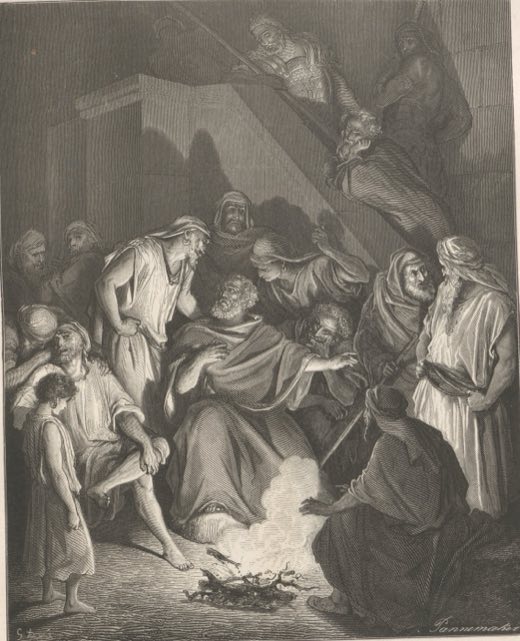 Peter Denies JesusGustave Doré
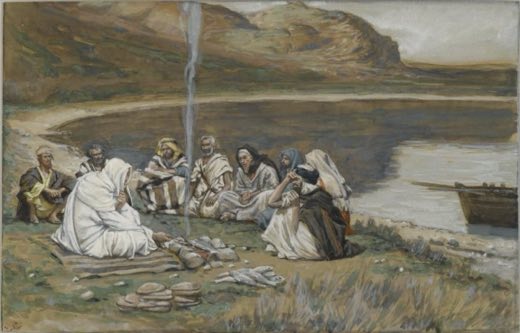 Meal of Our Lord and the Apostles (Repas de Notre-Seigneur et des apôtres)James Tissot
See also
- Kindling fireTrade, craft and color
- Fuel: wood, charcoal, dung and thornsTrade, craft and color
- Ovens and griddlesHome and family
- The houseHome and family
- Cooking: roasting, boiling and bakingFood and drink
- JehoiakimPeople
- PeterPeople
Sources: Tyndale Open Bible Dictionary © 2023 Tyndale House Publishers, CC BY-SA 4.0 — adapted and shortened; the original work is available for free at tyndaleopenresources.com · Sources and rights