Encyclopedia › The seven deadly sins
The seven deadly sins
Sorcery and divination
Deuteronomy 18:10–11 · the medium at Endor · Simon in Samaria · magic books at Ephesus
Israel’s neighbors tried to learn the future and to steer it: they read the livers of sacrificed animals, watched the flight of birds, called up the dead and cast spells. The Law forbids every kind: “Let no one be found among you who … practices divination or conjury, interprets omens, practices sorcery” or one who “casts spells, consults a medium or spiritist, or inquires of the dead” (Deuteronomy 18:10–11). “You must not turn to mediums or spiritists” (Leviticus 19:31).
King Saul had put the mediums out of the land, yet before his last battle, when the LORD did not answer him, he went in disguise to a woman of Endor and asked her to call up Samuel. The story tells that Samuel appeared, and the woman cried out when she saw him (1 Samuel 28:7–12); the next day Saul died on Mount Gilboa. In Samaria a magician named Simon, who had amazed the city, offered the apostles money for the power to give the Holy Spirit; Peter answered, “May your silver perish with you, because you thought you could buy the gift of God with money!” (Acts 8:20). At Ephesus many who had practiced magic burned their books in public, worth “fifty thousand drachmas” (Acts 19:19).
In art
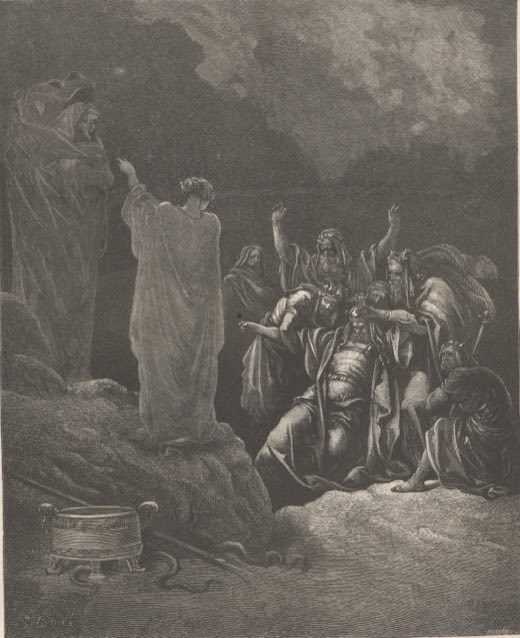 Saul and the Medium of Endor
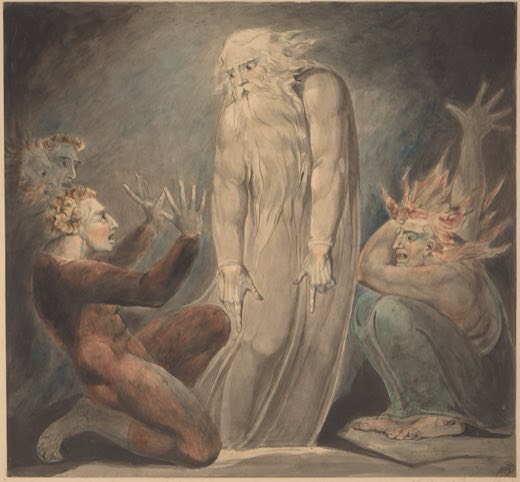 The Ghost of Samuel Appearing to Saul
See also
- Stargazers of BabylonThe sky of the Bible
- Oracles, magic and secret ritesThe Greek world of Paul
- Simon (Acts 8:9)People
- EndorPlaces
Sources: Tyndale Open Bible Dictionary © 2023 Tyndale House Publishers, CC BY-SA 4.0 — adapted and shortened; the original work is available for free at tyndaleopenresources.com · Sources and rights