Encyclopedia › The seven deadly sins
The seven deadly sins
Idolatry
“No other gods” · the golden calf · Jeroboam’s calves at Bethel and Dan
The first two commandments forbid serving other gods and making images to worship (Exodus 20:3–4), and the prophets count this as Israel’s first sin. While Moses was on the mountain, the people asked Aaron for a god to go before them. He made a calf of their gold, and they said, “These, O Israel, are your gods, who brought you up out of the land of Egypt!” (Exodus 32:4). Coming down with the tablets, Moses broke them at the foot of the mountain, burned the calf, ground it to powder and made the people drink it (Exodus 32:19–20).
After the kingdom divided, Jeroboam feared that his people would go back to Jerusalem to worship, so he made two golden calves, set one at Bethel and the other at Dan, and repeated the words of Sinai: “Here, O Israel, are your gods” (1 Kings 12:28–29). The books of Kings measure the kings of Israel by whether they turned from “the sins of Jeroboam”. The prophets mock idols as wood and metal that cannot speak or walk. In the New Testament, idolatry is close to greed: Paul calls “greed, which is idolatry” (Colossians 3:5), and the first letter of John ends: “Little children, keep yourselves from idols” (1 John 5:21).
In art
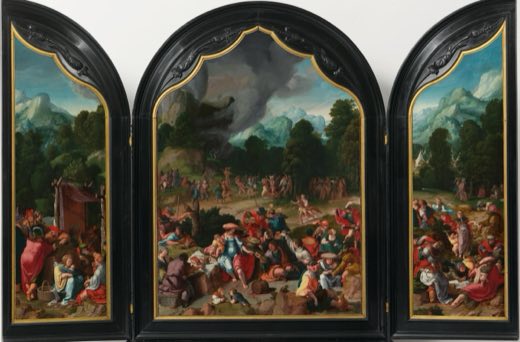 The Dance around the Golden CalfLucas van Leyden
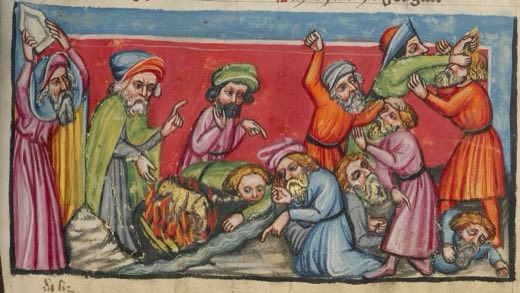 Moses Breaking the Tablets of the Law and Burning the Golden Calf (Ms. 33, fol. 88, from the Weltchronik)Unknown painter, Regensburg
See also
- The Ten CommandmentsThe seven deadly sins
- Idols and household godsTabernacle and temple
- The host of heavenThe sky of the Bible
- High placesTabernacle and temple
- Bethel: the house of God and the king’s sanctuaryCities of the Bible
- JeroboamPeople
Sources: Tyndale Open Bible Dictionary © 2023 Tyndale House Publishers, CC BY-SA 4.0 — adapted and shortened; the original work is available for free at tyndaleopenresources.com · Sources and rights