The sea
Sailors, captains and the pilot
Hebrew mallach · captain, pilot and owner · steering oars at the stern
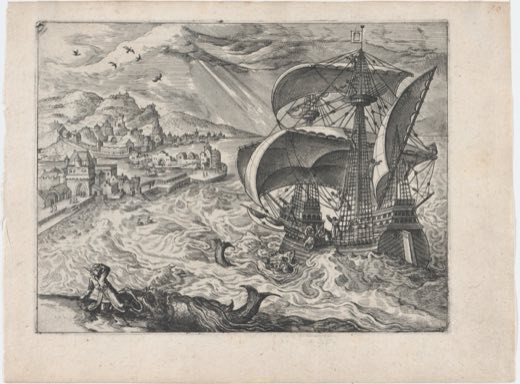
Israel had few sailors of its own. Solomon’s fleet at Ezion-geber was manned by Hiram’s servants, “men who knew the sea” (1 Kings 9:27), and Ezekiel’s ship of Tyre has oarsmen from Sidon and Arvad, captains from Tyre itself, and “the elders of Gebal were aboard as shipwrights, repairing your leaks” (Ezekiel 27:9). The usual Hebrew word for a sailor, mallach, is probably related to melach, “salt”. In the story of Jonah the crew come from many peoples, for “each cried out to his own god”, and it is the captain who wakes Jonah: “Get up and call upon your God” (Jonah 1:5–6).
A Roman merchant ship had several men in charge. On Paul’s voyage the centurion “was persuaded by the pilot and by the owner of the ship” (Acts 27:11) — the man who steered and found the way, and the man whose ship it was. Ships were not steered by a rudder hung on the stern but by one or two large steering oars at the sides near the stern; at Malta the crew “loosened the ropes that held the rudders” (Acts 27:40). James marvels that great ships, “driven by strong winds, they are steered by a very small rudder wherever the pilot is inclined” (James 3:4). Sailors found their way by the coast, the sun and the stars, so Paul’s shipmates lost hope “when neither sun nor stars appeared for many days” (Acts 27:20).
See also
- Tyre, Sidon and the ships of TarshishThe sea
- Jonah and the seaThe sea
- Mast, sail and oarsThe sea
- Anchors and soundingsThe sea
Sources: Tyndale Open Bible Dictionary © 2023 Tyndale House Publishers, CC BY-SA 4.0 — adapted and shortened; the original work is available for free at tyndaleopenresources.com · Sources and rights