Encyclopedia › Plants of the Bible
Plants of the Bible
Papyrus and bulrushes
Hebrew gome’, suf · KJV “bulrushes”, “flags” · Cyperus papyrus · Egypt’s paper plant
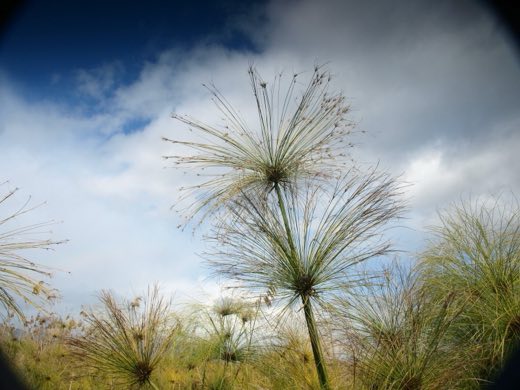
Papyrus is a giant sedge that grows in the shallow water of marshes and riverbanks, with thick, three-sided green stems up to four or five meters tall, each topped by a round tuft of thin rays like a mop. It grew thickly along the Nile and, in Bible times, also in the Huleh marshes north of the Sea of Galilee. The Egyptians used it for everything: its stems were tied into light boats and woven into mats, baskets, sandals and rope, and thin strips of the pith, laid crosswise and pressed, made the paper on which much of the ancient world wrote.
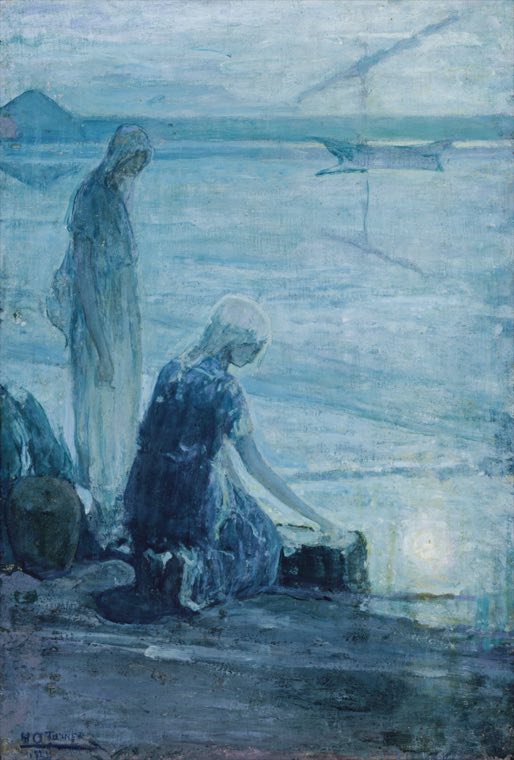
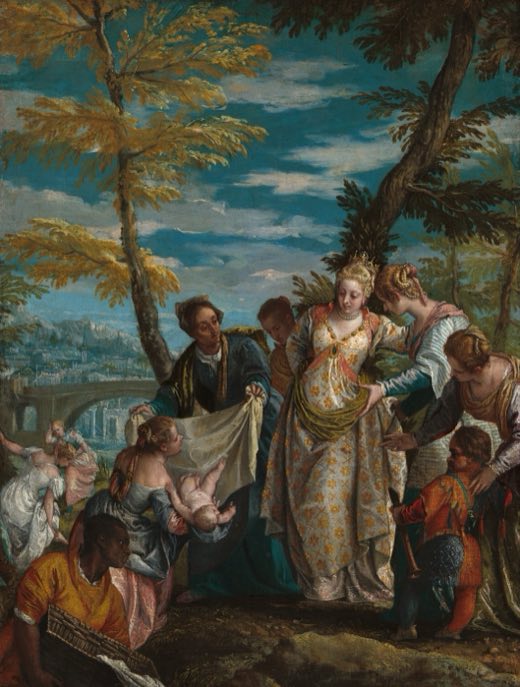
Moses’ mother made “a papyrus basket” for her baby, coated it with tar and pitch, and hid it “among the reeds” of the Nile (Exodus 2:3). Those reeds, suf, are a general word for water plants such as cattails and rushes; older Bibles say “bulrushes”. The same word gives the Hebrew name of the Red Sea, Yam Suf, often understood as “Sea of Reeds”. Isaiah mentions messengers from the Upper Nile who traveled “in papyrus vessels on the waters”.
In nature
In art
 Moses in the Bullrushes
 The Finding of Moses
Key verses
But when she could no longer hide him, she got him a papyrus basket and coated it with tar and pitch. Then she placed the child in the basket and set it among the reeds along the bank of the Nile.Soon the daughter of Pharaoh went down to bathe in the Nile, and her attendants were walking along the riverbank. And when she saw the basket among the reeds, she sent her maidservant to retrieve it.Does papyrus grow where there is no marsh? Do reeds flourish without water?which sends couriers by sea, in papyrus vessels on the waters. Go, swift messengers, to a people tall and smooth-skinned, to a people widely feared, to a powerful nation of strange speech, whose land is divided by rivers.The parched ground will become a pool, the thirsty land springs of water. In the haunt where jackals once lay, there will be grass and reeds and papyrus.All verses with this plant (12)
Where the Hebrew, Aramaic or Greek word for it stands in the text.
Exodus2
But when she could no longer hide him, she got him a papyrus basket and coated it with tar and pitch. Then she placed the child in the basket and set it among the reeds along the bank of the Nile.Soon the daughter of Pharaoh went down to bathe in the Nile, and her attendants were walking along the riverbank. And when she saw the basket among the reeds, she sent her maidservant to retrieve it.Job3
Does papyrus grow where there is no marsh? Do reeds flourish without water?They sweep by like boats of papyrus, like an eagle swooping down on its prey.Smoke billows from his nostrils as from a boiling pot over burning reeds.Isaiah6
So the LORD will cut off Israel’s head and tail, both palm branch and reed in a single day.which sends couriers by sea, in papyrus vessels on the waters. Go, swift messengers, to a people tall and smooth-skinned, to a people widely feared, to a powerful nation of strange speech, whose land is divided by rivers.The canals will stink; the streams of Egypt will trickle and dry up; the reeds and rushes will wither.There is nothing Egypt can do— head or tail, palm or reed.The parched ground will become a pool, the thirsty land springs of water. In the haunt where jackals once lay, there will be grass and reeds and papyrus.Is this the fast I have chosen: a day for a man to deny himself, to bow his head like a reed, and to spread out sackcloth and ashes? Will you call this a fast and a day acceptable to the LORD?Jonah1
The waters engulfed me to take my life; the watery depths closed around me; the seaweed wrapped around my head.See also
- ReedPlants of the Bible
- Flax and cottonPlants of the Bible
- Scrolls, papyrus and parchmentHow the Bible came to be
- Noah’s ark, Moses’ basket and raftsRoads and travel
- The Nile: the river that made EgyptThe land of the Bible
- The waters of Merom and the Huleh valleyThe land of the Bible
- The Nash PapyrusHow the Bible came to be
- The John Rylands fragmentHow the Bible came to be
Sources: Tyndale Open Bible Dictionary © 2023 Tyndale House Publishers, CC BY-SA 4.0 — adapted and shortened; the original work is available for free at tyndaleopenresources.com · Plants and Trees in the Bible © United Bible Societies 2025, adapted from R. Koops, Each According to its Kind © 2012 UBS, CC BY-SA 4.0 · Sources and rights