Encyclopedia › Peoples and gods around Israel
Peoples and gods around Israel
Jebusites
The people of Jerusalem before David · Jebus · Araunah’s threshing floor · they stayed on
The Jebusites held Jerusalem until David’s time, and the Bible sometimes calls the city by their name: a Levite traveling home came “opposite Jebus (that is, Jerusalem)” and would not stop at “the city of foreigners, where there are no Israelites” (Judges 19:10, 12). The tribes could not take it: “the descendants of Judah could not drive out the Jebusites living in Jerusalem” (Joshua 15:63). Outside the Bible the city is called Urusalim in the Amarna letters of the 14th century BC, and the name Jebus is not found; some scholars think it was the name of the people, not of the town. Where the Jebusites came from is not known. The name of Araunah, one of them, is not Semitic, and some compare it with a Hurrian word for “lord”.
When David marched on the city, the Jebusites taunted him: “You will never get in here. Even the blind and lame can repel you” (2 Samuel 5:6). David took the fortress of Zion and made it his capital, but the Jebusites were not wiped out. Late in his reign, to stop a plague, David bought “the threshing floor of Araunah the Jebusite” to build an altar there, insisting on paying, “for I will not offer to the LORD my God burnt offerings that cost me nothing” (2 Samuel 24:24). On that site, Chronicles says, Solomon built the temple (2 Chronicles 3:1). Their descendants were among the peoples Solomon put to forced labor (1 Kings 9:20–21).
In art
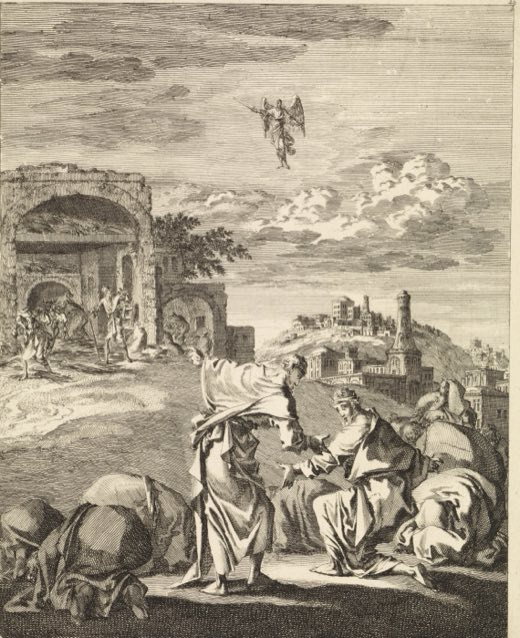 David Sees the Angel over Jerusalem
See also
- Jerusalem through the agesCities of the Bible
- Zion, Moriah and the hills of JerusalemThe land of the Bible
- Threshing floors in the Bible’s storiesField, orchard and water
- The Amarna lettersAncient texts beside the Bible
- The seven nations: Hivites, Perizzites, Girgashites and othersPeoples and gods around Israel
- OrnanPeople
- DavidPeople
- JerusalemPlaces
Sources: Tyndale Open Bible Dictionary © 2023 Tyndale House Publishers, CC BY-SA 4.0 — adapted and shortened; the original work is available for free at tyndaleopenresources.com · Sources and rights