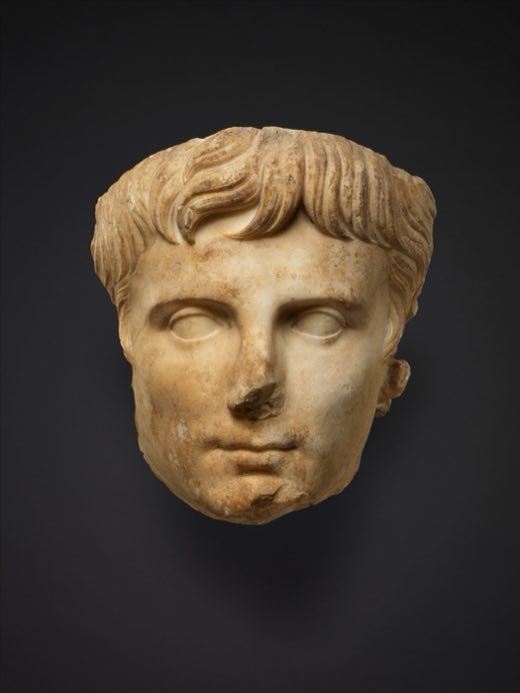
Claudius ruled the empire and added Britain to it after an invasion in AD 43. Acts 18:2 says that he had ordered all the Jews to leave Rome; the Roman writer Suetonius also mentions an expulsion.
Encyclopedia › Meanwhile in the world
In the Bible · c. AD 50 · Athens
Paul in Athens
Among the temples and philosophers of Athens, Paul speaks at the Areopagus about the “unknown god”.
Acts 17:16–34
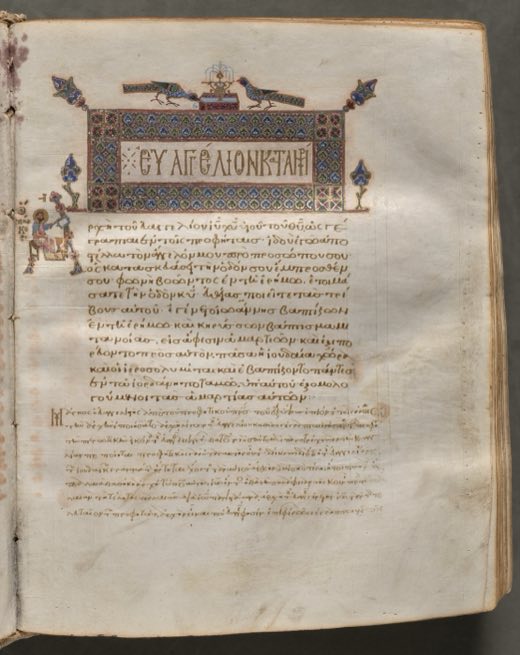
While Paul was waiting for them in Athens, he was deeply disturbed in his spirit to see that the city was full of idols. So he reasoned in the synagogue with the Jews and God-fearing Gentiles, and in the marketplace with those he met each day. Some Epicurean and Stoic philosophers also began to debate with him. Some of them asked, “What is this babbler trying to say?” Others said, “He seems to be advocating foreign gods.” They said this because Paul was proclaiming the good news of Jesus and the resurrection. So they took Paul and brought him to the Areopagus, where they asked him, “May we know what this new teaching is that you are presenting? For you are bringing some strange notions to our ears, and we want to know what they mean.” Now all the Athenians and foreigners who lived there spent their time doing nothing more than hearing and articulating new ideas. Then Paul stood up in the meeting of the Areopagus and said, “Men of Athens, I see that in every way you are very religious. For as I walked around and examined your objects of worship, I even found an altar with this inscription: TO AN UNKNOWN GOD. Therefore what you worship as something unknown, I now proclaim to you. The God who made the world and everything in it is the Lord of heaven and earth and does not live in temples made by human hands. Nor is He served by human hands, as if He needed anything, because He Himself gives everyone life and breath and everything else. From one man He made every nation of men, that they should inhabit the whole earth; and He determined their appointed times and the boundaries of their lands. God intended that they would seek Him and perhaps reach out for Him and find Him, though He is not far from each one of us. ‘For in Him we live and move and have our being.’ As some of your own poets have said, ‘We are His offspring.’ Therefore, being offspring of God, we should not think that the Divine Being is like gold or silver or stone, an image formed by man’s skill and imagination. Although God overlooked the ignorance of earlier times, He now commands all people everywhere to repent. For He has set a day when He will judge the world with justice by the Man He has appointed. He has given proof of this to everyone by raising Him from the dead.” When they heard about the resurrection of the dead, some began to mock him, but others said, “We want to hear you again on this topic.” At that, Paul left the Areopagus. But some joined him and believed, including Dionysius the Areopagite, a woman named Damaris, and others who were with them.At the same time in the world
Paul came to Athens around AD 50, on the journey that took him on to Corinth, where an inscription found at Delphi dates the proconsul Gallio to about AD 51–52 (Acts 18:12). Athens was by then a modest city of the Roman Empire, still famous for its philosophers. Here is the world of about AD 50.
Greece and RomeEmperor ClaudiusAD 41–54
Greece and RomeSenecac. 4 BC – AD 65
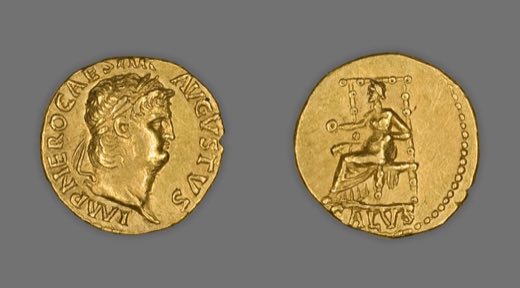
The Stoic philosopher Seneca, tutor of the young Nero, wrote essays on anger, on the shortness of life and on calm of mind. His elder brother was Gallio, the proconsul before whom Paul was brought in Corinth (Acts 18:12).
ChinaEnvoys from Japanreigned AD 25–57
Emperor Guangwu restored the Han dynasty and moved its capital to Luoyang. In his last year, AD 57, envoys came from Wa, in Japan; a gold seal found in Japan in 1784 is thought to be the one he gave them.
IndiaThomas in India (tradition)AD 52 (by tradition)
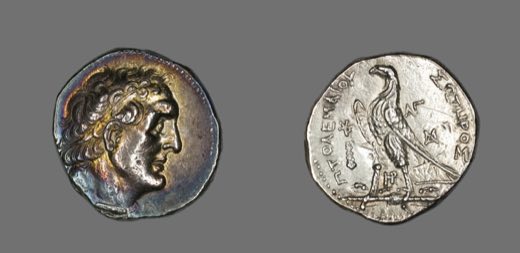
By the tradition of the St Thomas Christians of Kerala, the apostle Thomas landed near Muziris in AD 52. An older account, the Acts of Thomas, places him at the court of Gondophares, a king of north-western India whose coins have been found.
EgyptPhilo of Alexandriac. 20 BC – c. AD 50
In Alexandria the Jewish philosopher Philo explained the books of Moses in the language of Greek philosophy. In AD 40 he led an embassy of the city’s Jews to the emperor Caligula after riots against them.
ElsewhereThe queens of Meroë1st century AD
In Meroë, on the Nile in today’s Sudan, the kingdom of Kush was often ruled by queens who bore the title kandake — the “Candace” of Acts 8:27. Its rulers were buried under small, steep pyramids.
The AmericasThe Nazca linesc. 200 BC – AD 500
On the desert plain of southern Peru, the Nazca people drew huge lines and figures — a hummingbird, a monkey, a spider — by clearing away the dark surface stones. Many are best seen from the air or the nearby hills.