Encyclopedia › The land of the Bible
The land of the Bible
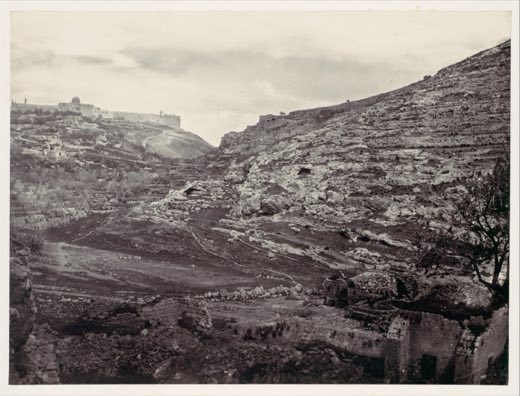
The Mount of Olives: the ridge east of the city
About 820 m at its highest · across the Kidron · olive groves and ancient tombs
The Mount of Olives is a ridge of soft limestone some three kilometres long, east of Jerusalem across the Kidron valley. It stands higher than the temple hill, so from its slope one looks straight down into the city. Its western side gets the rain and once carried the olive groves that gave it its name; at its foot lay Gethsemane, whose name means «oil press». Its eastern side falls away at once into the dry Judean wilderness, and the road from Jericho climbed over it past Bethany and Bethphage. Acts measures it as «a Sabbath day’s journey» from the city.
For three thousand years its slopes have been a burial ground: tombs of the time of the kings are cut into the rock of the village of Silwan, and the great Jewish cemetery still covers the western slope. In the Second Temple period, the Mishnah says, fire signals were lit on its top to announce the new month. In AD 70 a Roman legion camped on it during the siege. Jesus crossed it again and again. Coming down its slope on a colt, He was hailed, «Blessed is the King who comes in the name of the Lord!», and He wept over the city (Luke 19:37–41). He taught His disciples on it, prayed in Gethsemane at its foot, and from it He was taken up into heaven (Acts 1:9–12). From the 4th century churches marked these places.
In art
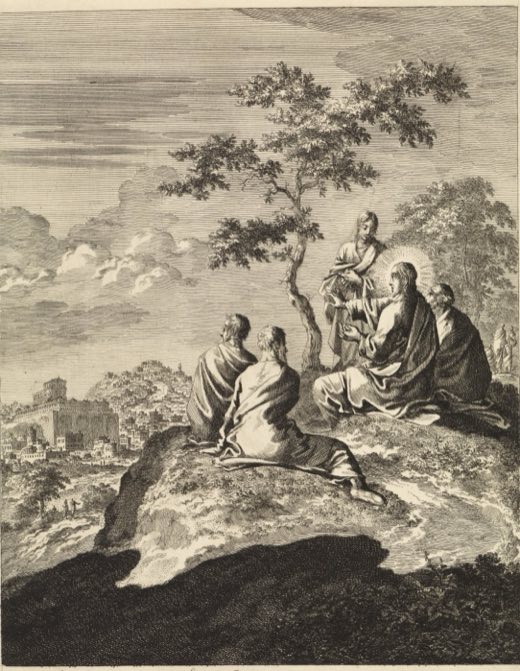 On the Mount of OlivesJan Luyken
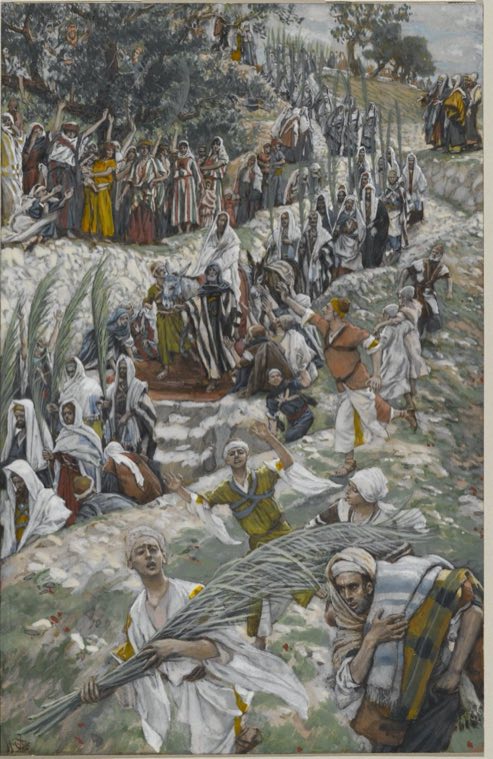 The Procession on the Mount of Olives (Le cortège sur le mont des Oliviers)James Tissot
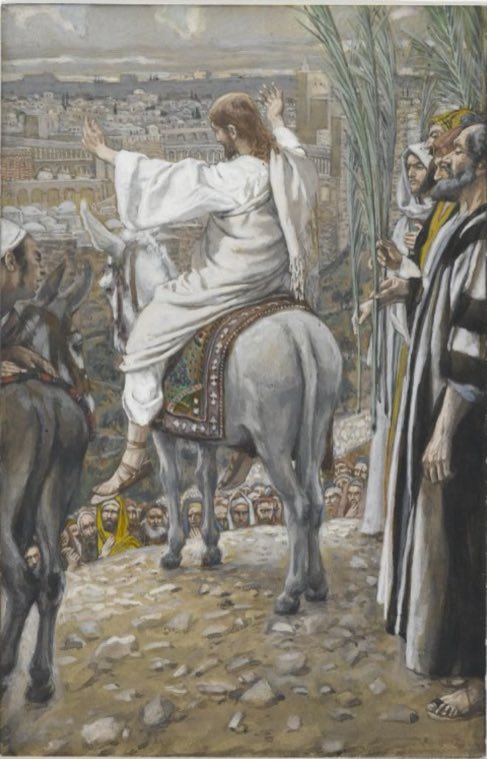 The Lord Wept (Le Seigneur pleura)James Tissot
See also
- Kidron and Hinnom: the valleys of JerusalemThe land of the Bible
- Zion, Moriah and the hills of JerusalemThe land of the Bible
- Olive treePlants of the Bible
- Olive presses and the name GethsemaneField, orchard and water
- DavidPeople
- Mount of OlivesPlaces
Sources: Tyndale Open Bible Dictionary © 2023 Tyndale House Publishers, CC BY-SA 4.0 — adapted and shortened; the original work is available for free at tyndaleopenresources.com · Sources and rights