Encyclopedia › The Bible in culture
The Bible in culture
Milton’s Paradise Lost
English epic by John Milton · 1667 in ten books, 1674 in twelve · Genesis 1–3
John Milton, blind since about 1652, dictated Paradise Lost to helpers and published it in 1667 in ten books; the second edition of 1674 divided it into twelve. In more than 10,000 lines of blank verse it tells the story of Genesis 1–3 at epic length: the fall of the rebel angels, the making of the world, Adam and Eve in the garden, the serpent’s temptation, the eating of the fruit and the expulsion from Eden. The poem ends as the two walk out of the garden hand in hand.
Milton keeps the outline of Genesis and fills it with speeches, councils and battles of his own invention, drawing on the rest of the Bible, on the epics of Homer and Virgil and on the learning of his time. In 1671 he published Paradise Regained, in four books, on the temptation of Jesus in the wilderness (Luke 4:1–13), together with Samson Agonistes, a tragedy on Samson’s last day (Judges 16). Paradise Lost shaped how English readers pictured the first chapters of the Bible; Haydn’s The Creation took part of its words from it, and William Blake and Gustave Doré illustrated it.
In art
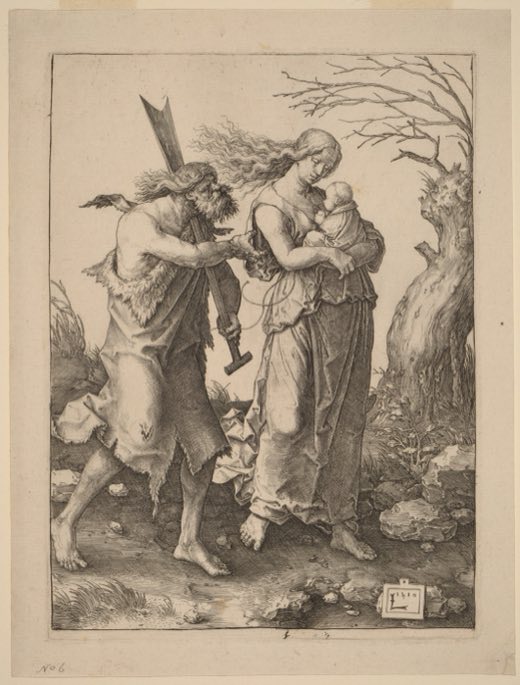 Adam and Eve after Their Expulsion from ParadiseLucas van Leyden
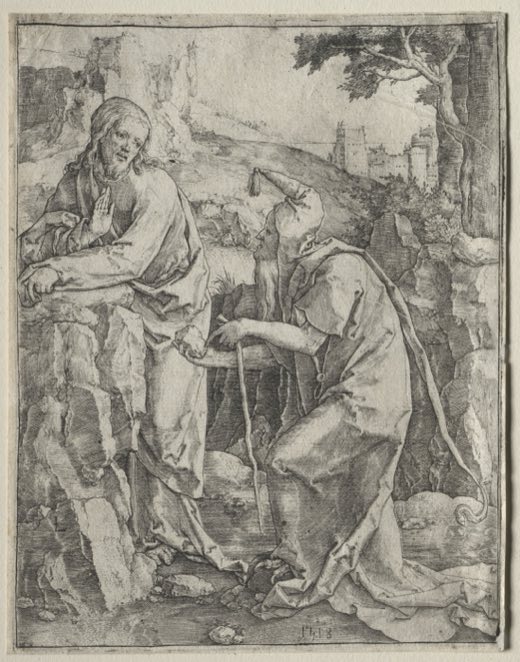 The Temptation of ChristLucas van Leyden