Encyclopedia › Cities of the Bible
Cities of the Bible
Pergamum: “where the throne of Satan sits”
A royal city on a steep hill · the altar of Zeus · parchment · emperor worship
Pergamum, in western Asia Minor, rose on a steep hill about 300 meters above the Caicus valley. It was the capital of the Attalid kings, who left their kingdom to Rome in 133 BC, and it remained a leading city of the province of Asia. Its library was said to rival Alexandria’s, and the word parchment, Greek pergamene, comes from its name; the story that it was invented there because Egypt stopped selling papyrus is told by Pliny but doubted today. Below the city lay the Asclepieion, a famous healing sanctuary where the physician Galen was born and worked.
The letter in Revelation says to the church there, “I know where you live, where the throne of Satan sits… even in the day when My faithful witness Antipas was killed among you” (Revelation 2:13). What the “throne” means is debated. Some point to the great altar of Zeus on the acropolis, carved with the battle of gods and giants, which German excavators took to Berlin in the 1880s and which stands in the Pergamon Museum; others to Asclepius, whose sign was a snake; most to the worship of the emperor, since Pergamum built the first temple to Augustus and Rome in Asia in 29 BC. The ruins of the acropolis, with one of the steepest theaters of the ancient world, overlook the Turkish town of Bergama.
In art
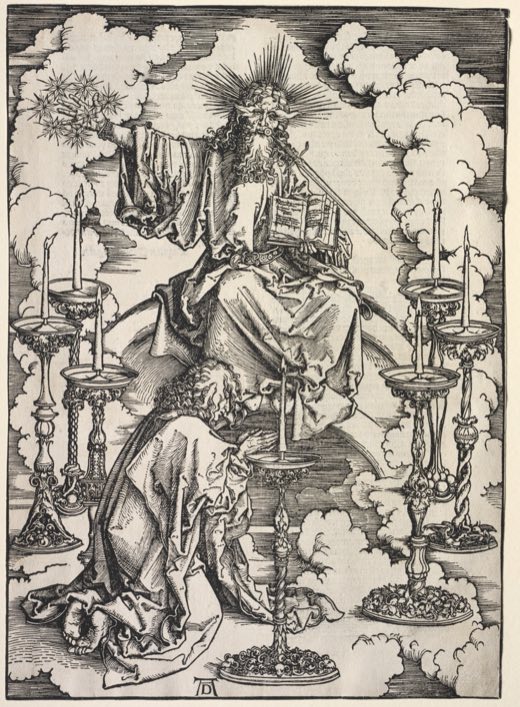 Revelation of St. John: St. John Beholding the Seven Candlesticks
See also
- Asiarchs and the worship of the emperorThe Greek world of Paul
- Ephesus: the city of ArtemisCities of the Bible
- Sardis: the city that was taken by surpriseCities of the Bible
- Laodicea: rich, and neither hot nor coldCities of the Bible
- Scrolls, papyrus and parchmentHow the Bible came to be
- AugustusRulers around the Bible
- AntipasPeople
- PergamumPlaces
Sources: Tyndale Open Bible Dictionary © 2023 Tyndale House Publishers, CC BY-SA 4.0 — adapted and shortened; the original work is available for free at tyndaleopenresources.com · Sources and rights