Encyclopedia › Cities of the Bible
Cities of the Bible
Ekron: the olive-oil city of the Philistines
Tel Miqne · Baal-zebub, “the god of Ekron” · oil presses · a royal inscription of 1996
Ekron was the northernmost of the five Philistine cities, on the edge of the Shephelah. It was identified with certainty in 1996, when excavators at Tel Miqne found a stone inscription that names the city and its kings: the temple dedication of Achish son of Padi, ruler of Ekron. Padi is known from Sennacherib’s annals of 701 BC, which say that the people of Ekron handed him over to Hezekiah of Judah and that Sennacherib restored him to his throne.
The excavations showed a city founded by the Philistines in the 12th century BC, with their own painted pottery, hearths and food, including pig bones. In the 7th century BC, under Assyrian rule, Ekron became one of the largest olive-oil centers of the ancient world: more than a hundred oil presses were found, able to produce hundreds of tons of oil a year. In the Bible the terrified Ekronites send the captured ark away — “They have brought us the ark of the God of Israel in order to kill us” (1 Samuel 5:10) — and later the injured king Ahaziah sends messengers to “inquire of Baal-zebub, the god of Ekron” (2 Kings 1:2), whose name is usually taken to mean “lord of the fly”. The city was destroyed by the Babylonians about 603 BC.
In art
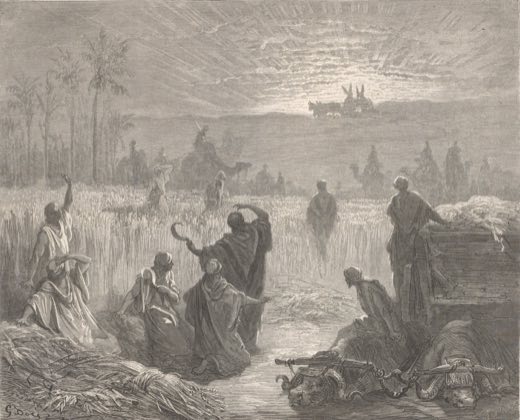 The Return of the Ark
See also
- The Ekron royal inscriptionThe Bible in stone
- PhilistinesPeoples and gods around Israel
- Ashdod: the city of DagonCities of the Bible
- Gath: Goliath’s cityCities of the Bible
- Olive oilFood and drink
- SennacheribRulers around the Bible
- EkronPlaces
Sources: Tyndale Open Bible Dictionary © 2023 Tyndale House Publishers, CC BY-SA 4.0 — adapted and shortened; the original work is available for free at tyndaleopenresources.com · Sources and rights