Encyclopedia › The Bible in stone
The Bible in stone
The Ekron royal inscription
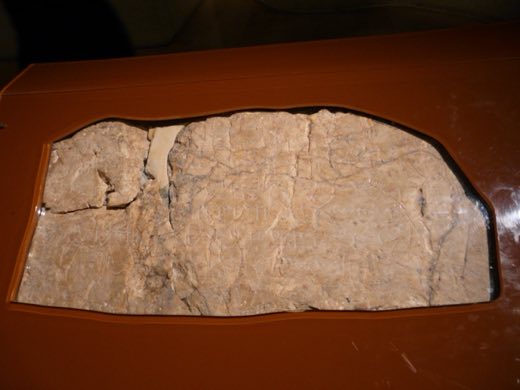
Limestone dedication of a temple · 7th century BC · found 1996 at Tel Miqne
Tel Miqne, on the edge of the coastal plain west of Jerusalem, had long been thought to be the Philistine city of Ekron, but nothing found there named it. In 1996 the excavators Seymour Gitin and Trude Dothan found a limestone block in a large temple of the 7th century BC, burned at the end of that century. Its five lines read: «The temple which Akhayus son of Padi, son of Ysd, son of Ada, son of Ya‘ir, ruler of Ekron, built for Ptgyh his lady. May she bless him and keep him and prolong his days and bless his land.» The name of the city settled the question of the site.
Two of these rulers are known from Assyrian records. Padi is the king of Ekron whom, Sennacherib says, his own people handed over to Hezekiah, and whom Sennacherib set back on his throne in 701 BC; Ikausu of Ekron appears among the vassals of Esarhaddon and Ashurbanipal. The name Akhayus resembles Achish, the Philistine king of Gath with whom David found refuge (1 Samuel 27:2); by one view it means “the Achaean”, a Greek, and recalls the Aegean origins of the Philistines. Who Ptgyh was is debated, perhaps a goddess with a Greek name.
The Bible counts Ekron among the five Philistine cities. The ark was sent there (1 Samuel 5:10), and its god was Baal-zebub (2 Kings 1:2). In the 7th century Ekron was a great center of olive oil: over a hundred oil presses have been found in the town.
See also
- PhilistinesPeoples and gods around Israel
- Sennacherib’s campaign of 701 BCWeapons and warfare
- Baal-zebub and BeelzebulPeoples and gods around Israel
- Ekron: the olive-oil city of the PhilistinesCities of the Bible
- EkronPlaces
Sources: Tyndale Open Bible Dictionary © 2023 Tyndale House Publishers, CC BY-SA 4.0 — adapted and shortened; the original work is available for free at tyndaleopenresources.com · Sources and rights