Encyclopedia › Cities of the Bible
Cities of the Bible
Caesarea: Herod’s harbour city
Built 22–10 BC on Strato’s Tower · Sebastos harbour of underwater concrete
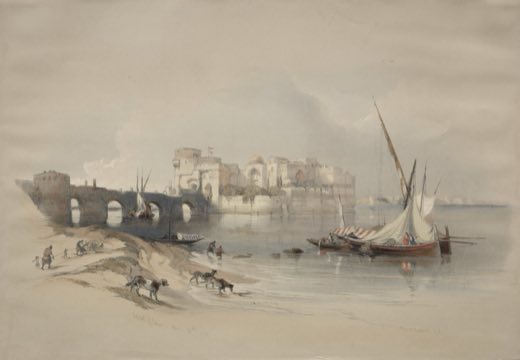
Where Caesarea stands there had been a small Phoenician harbour town, Strato’s Tower. Herod the Great rebuilt it between about 22 and 10 BC as a Greek-style city and named its harbour Sebastos, after Augustus. On a coast with no natural shelter his engineers built breakwaters out into the open sea, pouring concrete made with volcanic ash brought from Italy into wooden forms sunk under water — among the earliest such work known. On a platform above the harbour stood a temple of Rome and Augustus.
The city had a theatre, a hippodrome by the sea, a palace on a reef and an aqueduct bringing water from the foot of Mount Carmel. It became the seat of the Roman governors of Judea, and Josephus tells that the great Jewish revolt began there in AD 66 with a quarrel between Jews and Greeks over a synagogue. Later it was a centre of Christian learning, with the library of Origen and Eusebius.
Here, at Peter’s word, the centurion Cornelius and his household were baptized, the first Gentiles to receive the gospel (Acts 10), and Paul spent two years in prison here before sailing to Rome. Its ruins now form a seaside park; the harbour’s remains lie under the water.
See also
- Herod the GreatRulers around the Bible
- Pontius Pilate in historyRulers around the Bible
- Joppa: a harbour on a rocky hillCities of the Bible
- Archaeology under waterHow the Bible’s world is studied
- The Pilate StoneThe Bible in stone
- Harbors of the coastThe sea
- Philip and the Ethiopian’s chariotRoads and travel
- Cities named after kings and queensThe Greek world of Paul
- Caesarea Philippi: the springs of BaniasCities of the Bible
- Herod (Matthew)People
- CaesareaPlaces
Sources: Tyndale Open Bible Dictionary © 2023 Tyndale House Publishers, CC BY-SA 4.0 — adapted and shortened; the original work is available for free at tyndaleopenresources.com · Sources and rights