Encyclopedia › Buildings and structures
Buildings and structures
Judgment seats and platforms
Greek bēma, akroatērion · Hebrew kiyor, migdal · a raised stand for judges and speakers
A speaker or a judge stood or sat higher than the crowd. When Ezra read the law, he “stood on a high wooden platform built for this occasion” (Nehemiah 8:4), and Solomon prayed at the temple from “a bronze platform five cubits long, five cubits wide, and three cubits high” (2 Chronicles 6:13) — about 2.3 meters square and 1.4 high. In Greek and Roman towns the bēma was a raised stand of stone, reached by steps, from which officials addressed the people and magistrates gave judgment, seated on a chair placed on it.
Pilate “sat on the judgment seat at a place called the Stone Pavement” (John 19:13); at Caesarea Herod Agrippa I, in his royal robes, sat on his throne, the same bēma, and addressed the people (Acts 12:21). At Corinth Paul was brought “before the judgment seat” of the proconsul Gallio (Acts 18:12), and a large stone platform in the middle of the city’s forum has been excavated; many identify it with that bēma, though its date is debated. For formal hearings there were halls as well: Festus heard Paul in an auditorium at Caesarea, before Agrippa and Bernice (Acts 25:23).
In art
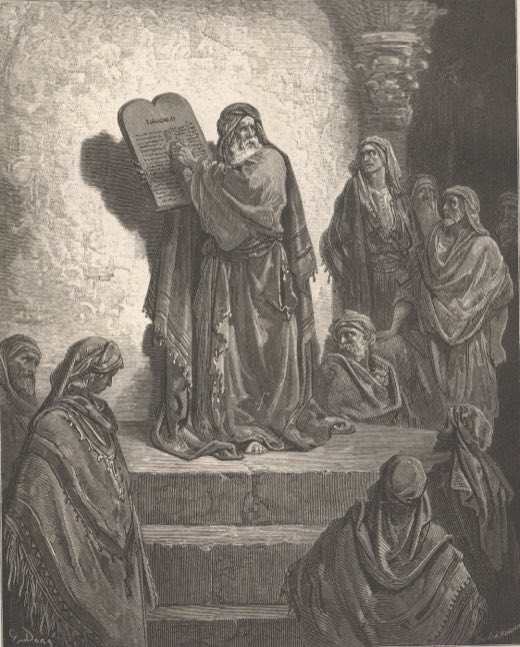 Ezra Reads the Law to the PeopleGustave Doré
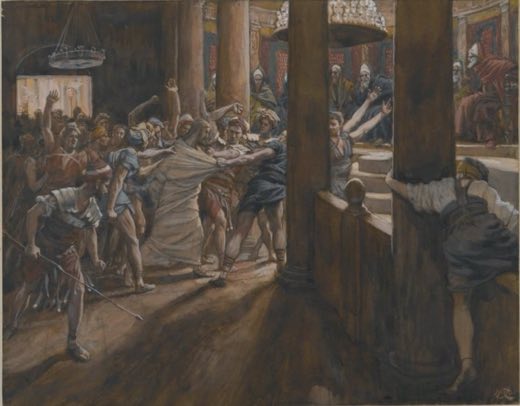 The Tribunal of Annas (Le tribunal d'Anne)James Tissot
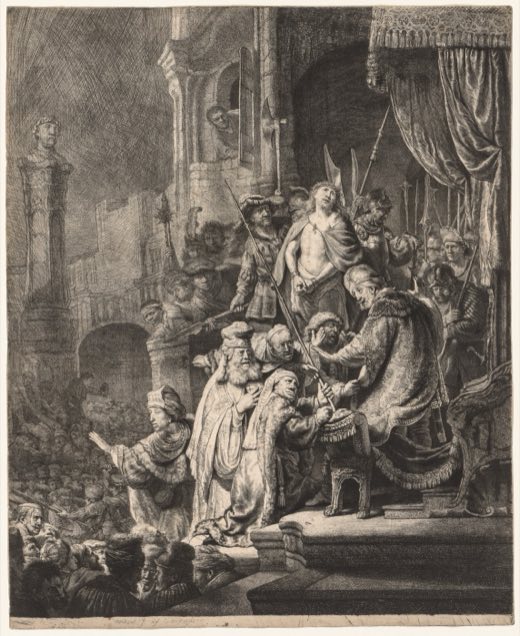 Christ Before Pilate: Large PlateRembrandt
All verses that name it (14)
Where the Hebrew, Aramaic or Greek word for it stands in the text.
2 Chronicles1
Now Solomon had made a bronze platform five cubits long, five cubits wide, and three cubits high, and had placed it in the middle of the courtyard. He stood on it, knelt down before the whole assembly of Israel, spread out his hands toward heaven,Nehemiah1
Ezra the scribe stood on a high wooden platform built for this occasion. At his right side stood Mattithiah, Shema, Anaiah, Uriah, Hilkiah, and Maaseiah, and at his left were Pedaiah, Mishael, Malchijah, Hashum, Hash-baddanah, Zechariah, and Meshullam.Matthew1
While Pilate was sitting on the judgment seat, his wife sent him this message: “Have nothing to do with that innocent man, for I have suffered terribly in a dream today because of Him.”John1
When Pilate heard these words, he brought Jesus out and sat on the judgment seat at a place called the Stone Pavement, which in Hebrew is Gabbatha.Acts8
On the appointed day, Herod donned his royal robes, sat on his throne, and addressed the people.While Gallio was proconsul of Achaia, the Jews coordinated an attack on Paul and brought him before the judgment seat.And he drove them away from the judgment seat.At this, the crowd seized Sosthenes the synagogue leader and beat him in front of the judgment seat. But none of this was of concern to Gallio.After spending no more than eight or ten days with them, Festus went down to Caesarea. The next day he sat on the judgment seat and ordered that Paul be brought in.Paul replied, “I am standing before the judgment seat of Caesar, where I ought to be tried. I have done nothing wrong to the Jews, as you yourself know very well.So when they came here with me, I did not delay. The next day I sat on the judgment seat and ordered that the man be brought in.The next day Agrippa and Bernice came with great pomp and entered the auditorium, along with the commanders and leading men of the city. And Festus ordered that Paul be brought in.Romans1
Why, then, do you judge your brother? Or why do you belittle your brother? For we will all stand before God’s judgment seat.2 Corinthians1
For we must all appear before the judgment seat of Christ, that each one may receive his due for the things done in the body, whether good or bad.See also
- Courtyards and pavementsBuildings and structures
- Throne and scepterBuildings and structures
- Gallio InscriptionThe Bible in stone
- Prisons, stocks and chainsBuildings and structures
- Theaters, stadiums and lecture hallsBuildings and structures
- The governor’s court and the appeal to CaesarJewish groups and the Roman world
- GallioRulers around the Bible
- Corinth: a Roman colony on the isthmusCities of the Bible
- The Pilate StoneThe Bible in stone
- CorinthPlaces
Sources: Tyndale Open Bible Dictionary © 2023 Tyndale House Publishers, CC BY-SA 4.0 — adapted and shortened; the original work is available for free at tyndaleopenresources.com · Human-made Things in the Bible © United Bible Societies 2025, adapted from R. Pritz, The Works of Their Hands: Man-made Things in the Bible © 2009 UBS, CC BY-SA 4.0 · Sources and rights