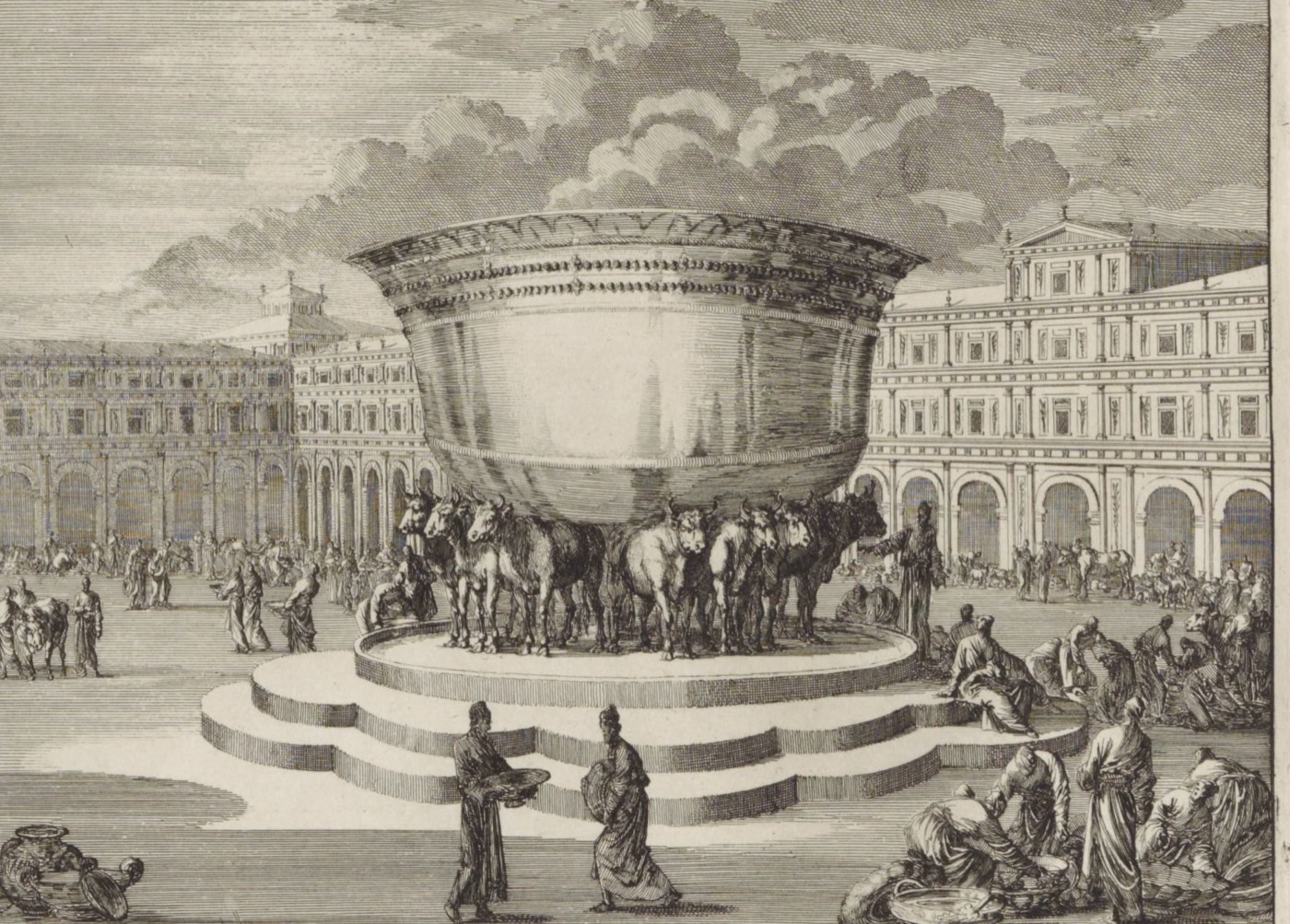
吕肯为彼得·莫尔蒂埃的《Icones Biblicae》(1708年)蚀刻的一块大铜版上的四个场景之一;说明称它为“De gegooten Zee, of het groot koper waschvat”。
在圣殿的院子里,巨大的铜盆立在铜牛上。祭司和帮手们绕着它底座的圆形台阶走过。
来自经文
他又铸一个铜海,径十肘(历代志下4:2)
有十二只铜牛驮海,每三只向一方(历代志下4:4)
艺术家自己的处理
带拱廊的庭院,像一座罗马宫殿
细节
铜盆
巨大的铸造盆,边缘向外卷曲。
十二只牛
铜牛用背驮着铜海。
祭司
人们端着盘子穿过院子。
Jan Luyken, Dutch, 1649–1712. Rijksmuseum, Amsterdam (RP-P-OB-67.892) · Etching
来源: 和合本 (1919,简体转换) · The 1919 text is in the public domain; the Chinese Wikisource transcription «聖經 (和合本)» by Chinese Wikisource contributors, CC BY-SA 4.0; changed: the edition's small notes and the marks of Old Testament quotations left out, a few characters put back to the 1919 print (zho1919.py), verses in the app's numbering. Simplified-character conversion of the 1919 text by Bible Explorer (OpenCC and reviewed lists; characters only, no word changed). · 来源与版权