Home › Explore › Scholars disagree › When was the book of Job written?
Who wrote it, and when?
When was the book of Job written?
In the age of the patriarchs, in the court of Solomon — or after the exile?
Job lives like Abraham — rich in flocks, a priest to his own family — but the book names no king and no event that can be dated. Readers have asked how old it is since the rabbis of the Talmud.
What the Bible says
A man in the land of Uz whose name was JobJob 1:1
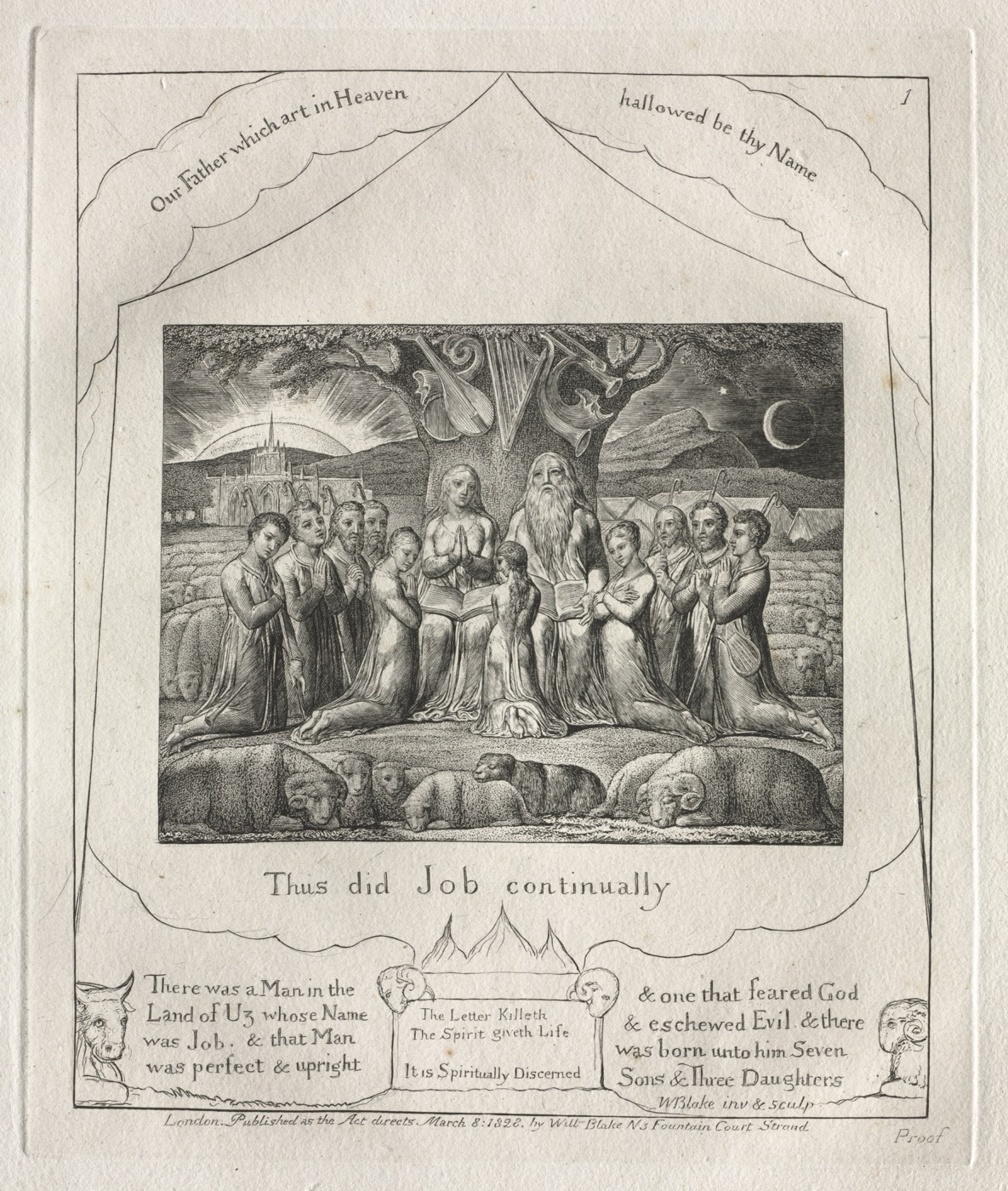
There was a man in the land of Uz whose name was Job. And this man was blameless and upright, fearing God and shunning evil.Job offers burnt offerings for his childrenJob 1:5
And when the days of feasting were over, Job would send for his children to purify them, rising early in the morning to offer burnt offerings for all of them. For Job thought, “Perhaps my children have sinned and cursed God in their hearts.” This was Job’s regular practice.Each friend gives him a piece of silver (qesitah)Job 42:11
All his brothers and sisters and prior acquaintances came and dined with him in his house. They consoled him and comforted him over all the adversity that the LORD had brought upon him. And each one gave him a piece of silver and a gold ring.Jacob buys land for a hundred qesitahGen 33:19
And the plot of ground where he pitched his tent, he purchased from the sons of Hamor, Shechem’s father, for a hundred pieces of silver.Job lives 140 years moreJob 42:16
After this, Job lived 140 years and saw his children and their children to the fourth generation.Ezekiel names Noah, Daniel and JobEzek 14:14
then even if these three men—Noah, Daniel, and Job—were in it, their righteousness could deliver only themselves, declares the Lord GOD.1View 1
A book from the age of the patriarchs
Ancient Jewish and Christian tradition; the Talmud names Moses as its writer.
- Job is head of his family and offers sacrifices himself, without priest or temple (1:5).
- His wealth is counted in flocks and herds, and he lives 140 years after his trial — a patriarch’s span (42:16).
- The coin his friends give him, the qesitah (42:11), is named elsewhere only in the days of Jacob and Joshua.
2View 2
Written in the age of Solomon
Many older commentators, among them Franz Delitzsch.
- Job belongs with Proverbs and Ecclesiastes to the wisdom writing that flourished at Solomon’s court.
- Its poetry is the most finished in the Hebrew Bible — the work of a mature literary age.
3View 3
Written in or after the exile
Many modern scholars.
- Its Hebrew has many Aramaic words, which became common in the later centuries.
- The Accuser — ‘the satan’ — appears in the heavenly council as in Zechariah 3, written after the exile.
- Its great question, why the righteous suffer, was felt most sharply after Jerusalem fell.
What we know for sure
The story is set in the land of Uz, outside Israel, among Edomite and Arabian names; Ezekiel already knew Job as a righteous man of old (Ezekiel 14:14).
Sources
- Babylonian Talmud, Bava Batra 14b–15b
- Franz Delitzsch, Biblical Commentary on the Book of Job (1864; English 1866)
- Francis I. Andersen, Job: An Introduction and Commentary (1976)
- Marvin H. Pope, Job (Anchor Bible, 1965)