Encyclopedia › Work and trades
Work and trades
Herding another man’s flock
Jacob and Laban · wages in lambs · the torn animal · the hired hand
Many shepherds did not own the animals they kept. Jacob worked for his uncle Laban twenty years, and when it came to wages he asked for no silver: “remove from them every speckled or spotted sheep, every dark-colored lamb, and every spotted or speckled goat. These will be my wages” (Genesis 30:32). Paying a herdsman with a share of the young was usual in the ancient Near East, and the laws of Hammurabi, written about 1750 BC, set out what a hired herdsman owed the owner and when he had to pay for lost animals.
The Law of Moses had its own rules. If an animal in a neighbor’s care died or was stolen “while no one is watching”, an oath settled the case; if it was stolen from him, he paid; but “if the animal was torn to pieces, he shall bring it as evidence” and owed nothing (Exodus 22:10–13). Jacob reproached Laban for asking more of him: “I did not bring you anything torn by wild beasts; I bore the loss myself. And you demanded payment from me for what was stolen by day or night” (Genesis 31:39). “The heat consumed me by day and the frost by night,” he said, “and you have changed my wages ten times!” (Genesis 31:40–41). Jesus used the hired herdsman as the opposite of the true shepherd: “The hired hand is not the shepherd, and the sheep are not his own. When he sees the wolf coming, he abandons the sheep and runs away” (John 10:12).
In art
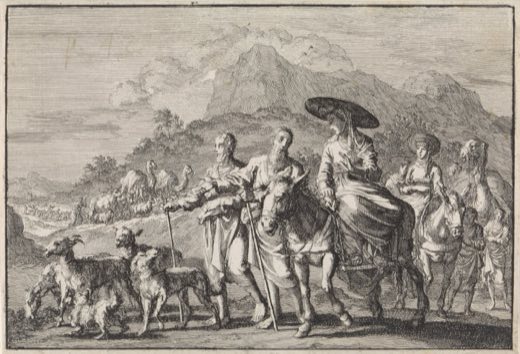 Jacob Leaves Laban
See also
- ShepherdWork and trades
- The laws of HammurabiAncient texts beside the Bible
- WolfAnimals of the Bible
- What things cost: prices and wagesMoney and measures
- JacobPeople
- LabanPeople
Sources: Tyndale Open Bible Dictionary © 2023 Tyndale House Publishers, CC BY-SA 4.0 — adapted and shortened; the original work is available for free at tyndaleopenresources.com · Sources and rights