Encyclopedia › Roads and travel
Roads and travel
Seeing travelers off
Walking with the guest · blessings, songs and tears · Greek propempō, “send on the way”
A guest was not simply let go. When the three visitors left Abraham, he “walked along with them to see them off” (Genesis 18:16). Rebekah’s family sent her away with her nurse and blessed her (Genesis 24:59–60). Laban complained that Jacob had slipped away: “I would have sent you away with joy and singing, with tambourines and harps. But you did not even let me kiss my grandchildren and my daughters goodbye” (Genesis 31:27–28). Jonathan parted from David with tears and the words “Go in peace” (1 Samuel 20:42).
The first Christians kept such farewells. At Miletus the elders of Ephesus knelt and prayed with Paul, “wept openly as they embraced Paul and kissed him”, and “accompanied him to the ship” (Acts 20:37–38). At Tyre whole families walked with him out of the city and knelt to pray on the beach (Acts 21:5). The Greek word for sending someone on his way meant more than goodbye: it meant giving food, money and often company for the next part of the road. So Paul hopes that the Romans will “equip me for my journey” to Spain (Romans 15:24), and John writes to Gaius that he will do well to send traveling teachers “on their way in a manner worthy of God” (3 John 1:6).
In art
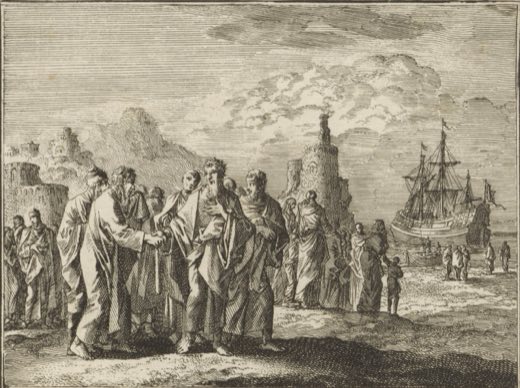 Paul’s Farewell at Miletus
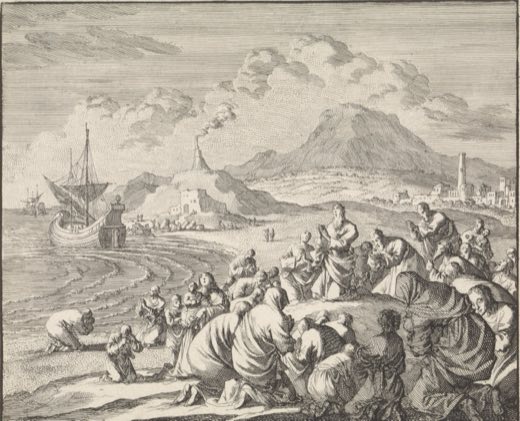 Prayer on the Beach at Tyre
See also
- HospitalityHome and family
- Greetings on the roadRoads and travel
- Letters of recommendationTrade, craft and color
- Paul on foot: the journeys by landRoads and travel
- Who carried the apostles’ lettersTrade, craft and color
Sources: Tyndale Open Bible Dictionary © 2023 Tyndale House Publishers, CC BY-SA 4.0 — adapted and shortened; the original work is available for free at tyndaleopenresources.com · Sources and rights