The sea
When ships sailed: seasons and winds
Open sea from spring to autumn · winter in harbor · “after the Fast” · the Northeaster
In the eastern Mediterranean the summer brings steady winds from the northwest and clear skies; from autumn to spring come gales, rain and cloud that hide the sun and stars by which sailors found their way. Ships therefore crossed the open sea from spring to autumn and spent the winter in harbor. The Roman writer Vegetius counts the safe season from late May to mid-September; from about November to March the open sea was held to be closed. Travelers planned around this. Paul writes to Corinth, “Perhaps I will stay with you awhile, or even spend the winter” (1 Corinthians 16:6), tells Titus that he has “decided to winter” at Nicopolis (Titus 3:12), and asks Timothy to come “before winter” (2 Timothy 4:21).
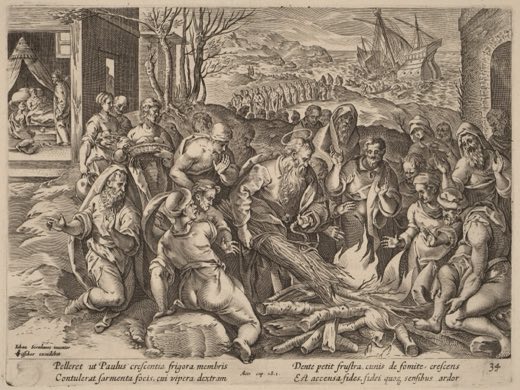
Paul’s voyage to Rome shows the danger of the turning season. When the ship reached Crete, “the voyage had already become dangerous because it was after the Fast” (Acts 27:9) — the Day of Atonement, in September or October. Fair Havens was “unsuitable to winter in”, so the crew tried for Phoenix, farther west (Acts 27:12). “When a gentle south wind began to blow” they set out, but soon “a cyclone called the Northeaster swept down across the island” (Acts 27:13–14). After the wreck the travelers waited three months on Malta and sailed on in a ship “that had wintered in the island” (Acts 28:11). The Bible’s poets knew the power of the wind at sea: “With a wind from the east You wrecked the ships of Tarshish” (Psalm 48:7).
See also
- Ships and sea voyagesRoads and travel
- Summer and winter: the two seasonsWeather and the forces of nature
- The east wind: sirocco and khamsinWeather and the forces of nature
- Paul’s voyage to Rome, port by portThe sea
Scholars disagree
Sources: Tyndale Open Bible Dictionary © 2023 Tyndale House Publishers, CC BY-SA 4.0 — adapted and shortened; the original work is available for free at tyndaleopenresources.com · Sources and rights