Encyclopedia › Plants of the Bible
Plants of the Bible
Tamarisk
Hebrew ’eshel · KJV “grove”, “tree” · Tamarix aphylla · a shade tree of desert and dunes
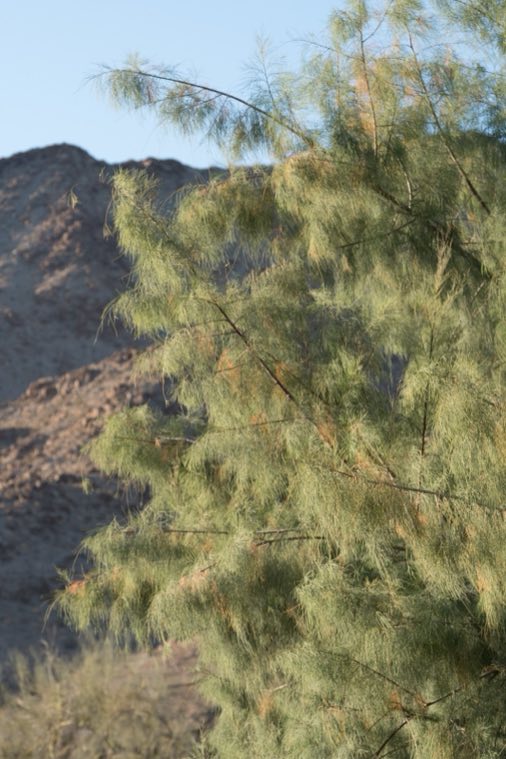
Tamarisks are small trees and shrubs with feathery gray-green twigs covered in tiny scale-like leaves, and clusters of small white or pink flowers. They grow fast in deserts, dunes and salty soils, tapping water deep in dry riverbeds, which earns them the name “salt cedar”. The leafless tamarisk can become a tree of up to ten meters, and it was one of the few trees that gave real shade and timber in the Negev and the Arabah. On some tamarisks in Sinai a small insect produces sweet drops that the Bedouin gather and call man, and some have connected them with manna.
Abraham “planted a tamarisk tree in Beersheba” after making a covenant over a well there (Genesis 21:33). Saul held court sitting under the tamarisk on the hill at Gibeah. After Saul and his sons fell on Mount Gilboa, the men of Jabesh-gilead took their bones and “buried them under the tamarisk tree in Jabesh” (1 Samuel 31:13) — the same tree is called an oak in the parallel account in Chronicles.
In nature
All verses with this plant (3)
Where the Hebrew, Aramaic or Greek word for it stands in the text.
Genesis1
And Abraham planted a tamarisk tree in Beersheba, and there he called upon the name of the LORD, the Eternal God.1 Samuel2
Soon Saul learned that David and his men had been discovered. At that time Saul was in Gibeah, sitting under the tamarisk tree on the hill at Gibeah, with his spear in hand and all his servants standing around him.Then they took their bones and buried them under the tamarisk tree in Jabesh, and they fasted seven days.See also
- AcaciaPlants of the Bible
- OakPlants of the Bible
- Broom, acacia and tamariskThe desert
- PlacesExplore · How it looked in the 1890s
Sources: Tyndale Open Bible Dictionary © 2023 Tyndale House Publishers, CC BY-SA 4.0 — adapted and shortened; the original work is available for free at tyndaleopenresources.com · Plants and Trees in the Bible © United Bible Societies 2025, adapted from R. Koops, Each According to its Kind © 2012 UBS, CC BY-SA 4.0 · Sources and rights