Encyclopedia › Peoples and gods around Israel
Peoples and gods around Israel
Arabs, Ishmaelites and Kedar
The twelve sons of Ishmael · Ishmaelite caravans · the tents of Kedar · Geshem the Arab
The deserts east and south of Israel were home to many tribes of herders and caravan traders. Genesis traces several of them to Ishmael, Abraham’s son by Hagar: “Nebaioth the firstborn of Ishmael, then Kedar, Adbeel, Mibsam, Mishma, Dumah, Massa, Hadad, Tema, Jetur, Naphish, and Kedemah”, “twelve princes of their tribes” (Genesis 25:13–16). Some of these names are known from Assyrian and Arabian inscriptions as tribes and oases, such as Kedar and Tema. Joseph’s brothers sold him to “a caravan of Ishmaelites coming from Gilead”, whose camels carried “spices, balm, and myrrh” to Egypt (Genesis 37:25).
The word Arab first appears in an Assyrian inscription about the battle of Qarqar in 853 BC, where “Gindibu the Arab” brought a thousand camels. In the Bible, Arabs paid tribute to Jehoshaphat in flocks (2 Chronicles 17:11), and the black goat-hair tents of Kedar were proverbial: “I am dark, yet lovely … like the tents of Kedar” (Song of Songs 1:5). Among Nehemiah’s opponents was “Geshem the Arab” (Nehemiah 2:19); a silver bowl from Egypt names “Qaynu son of Geshem, king of Kedar”, and many identify the two Geshems. In the New Testament Arabs were present at Pentecost (Acts 2:11), and after his conversion Paul “went into Arabia” (Galatians 1:17), probably the Nabatean kingdom.
In art
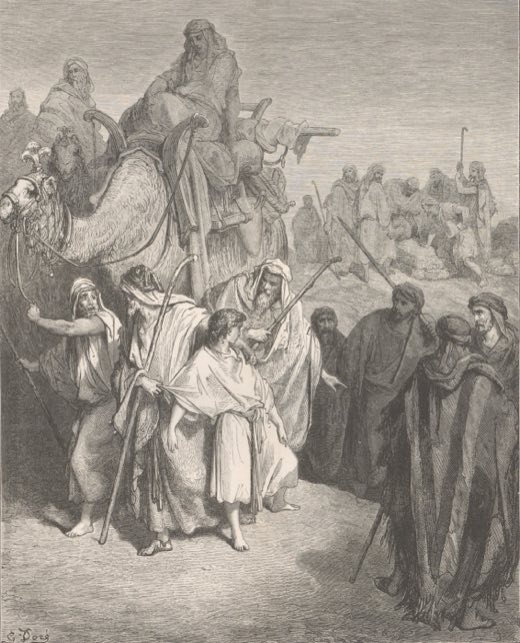 Joseph Sold by His Brothers
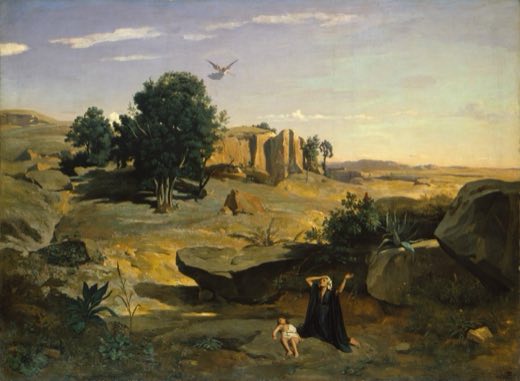 Hagar in the Wilderness
See also
- NabateansPeoples and gods around Israel
- MidianitesPeoples and gods around Israel
- Hagar and Ishmael in the desertThe desert
- Paul in ArabiaThe desert
- The incense roadTrade, craft and color
- Caravans, donkeys and camelsRoads and travel
- Tents and desert peoplesThe desert
- Ishmael, son of AbrahamPeople
- GeshemPeople
- queen of ShebaPeople
- KedarPlaces
- ArabiaPlaces
Sources: Tyndale Open Bible Dictionary © 2023 Tyndale House Publishers, CC BY-SA 4.0 — adapted and shortened; the original work is available for free at tyndaleopenresources.com · Sources and rights