Encyclopedia › Music and instruments
Music and instruments
The first musicians
Jubal, “father of all who play the harp and flute” · music at farewells and feasts
Genesis names the first musician in the list of Cain’s descendants, beside the first herdsmen and the first smiths: “his brother’s name was Jubal; he was the father of all who play the harp and flute” (Genesis 4:21). The two instruments stand for strings and pipes, the two great families of melody; the name Jubal sounds like yovel, a ram’s horn. The list does not say how music began, only that it belonged from early on to settled human life alongside herding and metalwork.
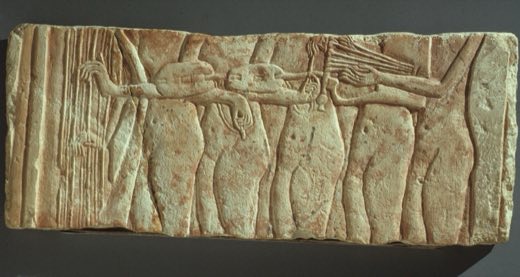
Archaeology agrees that music is very old in the region. Bone flutes far older than writing are known from many places, lyres were buried in the royal tombs of Ur about 2500 BC, and an Egyptian tomb painting at Beni Hasan, about 1900 BC, shows Semitic travelers, one of them carrying a lyre.
In the stories of the patriarchs music marks the turning points of family life. Laban complains that Jacob slipped away with his daughters secretly: “I would have sent you away with joy and singing, with tambourines and harps” (Genesis 31:27). Job pictures the households of the prosperous, whose “children skip about, singing to the tambourine and lyre and making merry at the sound of the flute” (Job 21:11–12). Solomon is remembered as a poet whose “songs numbered a thousand and five” (1 Kings 4:32).
See also
- LyreMusic and instruments
- Pipe and fluteMusic and instruments
- Smiths, furnaces and bellowsWork and trades
- David the musicianMusic and instruments
Sources: Tyndale Open Bible Dictionary © 2023 Tyndale House Publishers, CC BY-SA 4.0 — adapted and shortened; the original work is available for free at tyndaleopenresources.com · Sources and rights