Encyclopedia › Money and measures
Money and measures
The sanctuary shekel, the king’s weight and the merchants’ standard
Twenty gerahs to the shekel · “according to the royal standard” · inscribed stone weights
Weights were not the same everywhere, so a sum often comes with its standard. Abraham weighed out four hundred shekels “according to the standard of the merchants” (Genesis 23:16), the weight in common use among traders. Offerings were reckoned “according to the sanctuary shekel, which weighs twenty gerahs” (Exodus 30:13), a standard kept at the sanctuary and defined by its smallest unit, the gerah. A third standard appears with Absalom’s hair, cut once a year and weighed: “two hundred shekels, according to the royal standard” (2 Samuel 14:26). Ezekiel, looking to a restored order, fixes the sizes again: “The shekel will consist of twenty gerahs,” and sixty shekels make a mina (Ezekiel 45:12).
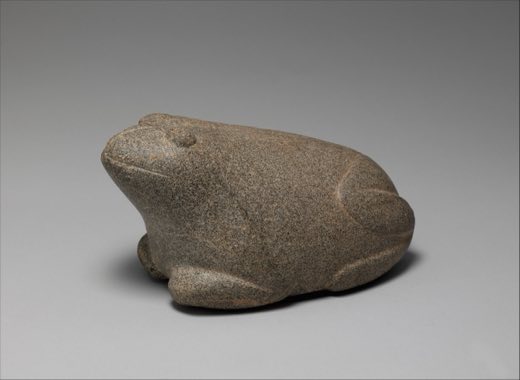
Excavations in Judah have brought up hundreds of small dome-shaped stone weights of the 8th and 7th centuries BC, marked with a sign for the shekel and a number of units — 1, 2, 4, 8, 16, 24 — and others marked nesef, pim and beka for parts of a shekel. Their weights show a shekel of about 11.3 to 11.5 grams, though no two match exactly. In Mesopotamia too there were “heavy” and “light” minas and a king’s standard. Measuring by an agreed standard was a matter of justice: “You shall maintain honest scales and weights” (Leviticus 19:36).
See also
- ShekelMoney and measures
- Gerah, beka and pimMoney and measures
- Scales and weightsMoney and measures
- Mina and poundMoney and measures
- AbsalomPeople
Sources: Tyndale Open Bible Dictionary © 2023 Tyndale House Publishers, CC BY-SA 4.0 — adapted and shortened; the original work is available for free at tyndaleopenresources.com · Sources and rights