Encyclopedia › Money and measures
Money and measures
A bowshot and a stone’s throw
Hagar “about a bowshot away” · Gethsemane · two thousand cubits behind the ark
Short distances in the Bible’s stories are often given by what a person could do. Hagar, sure that her son would die in the desert, “went off and sat down nearby, about a bowshot away” (Genesis 21:16) — far enough not to see, near enough to hear him; a bow could carry two or three hundred metres. In Gethsemane Jesus “withdrew about a stone’s throw beyond them, where He knelt down and prayed” (Luke 22:41): close enough for the disciples to see, a few dozen metres.
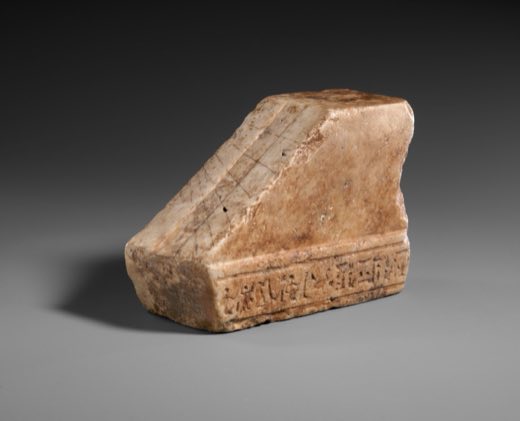
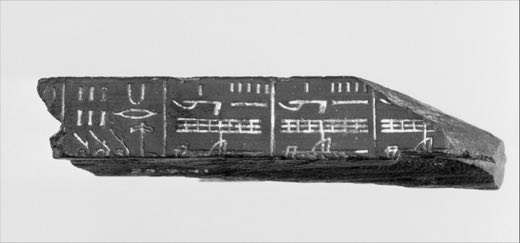
Other distances are given in cubits. When Israel crossed the Jordan the people were to keep “a distance of about two thousand cubits” between themselves and the ark (Joshua 3:4), close to a kilometre — the same length that later Jewish practice set as the limit of a Sabbath day’s walk. After the resurrection the disciples were fishing “only about a hundred yards” from land, two hundred cubits (John 21:8). When distance is uncertain the text says so: Rachel died “some distance from Ephrath” (Genesis 35:16), and Naaman had “traveled a short distance” when Gehazi ran after him (2 Kings 5:19). A voice reached a long way across the hill country: Jotham shouted his fable to the men of Shechem from the top of Mount Gerizim (Judges 9:7).
In art
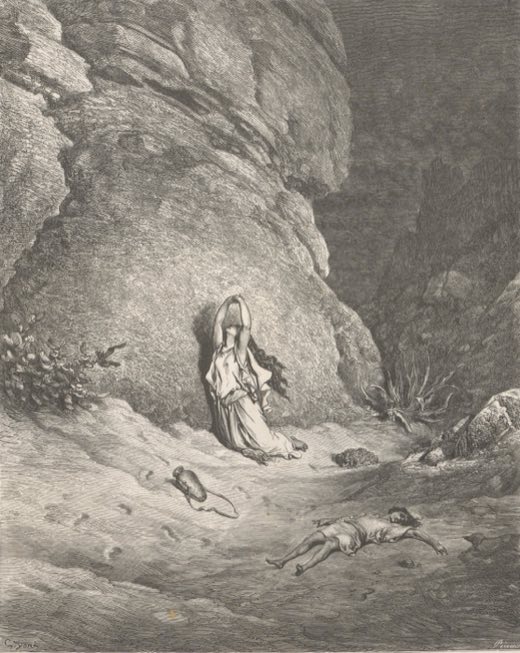 Hagar and Ishmael in the WildernessGustave Doré
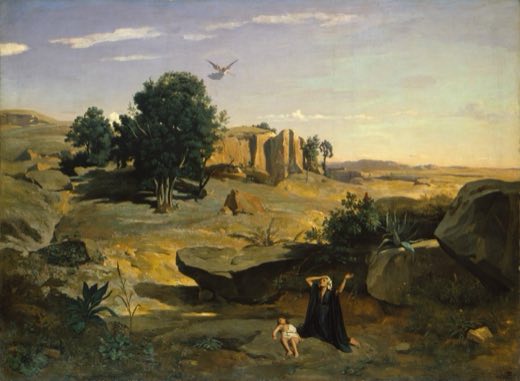 Hagar in the WildernessCorot
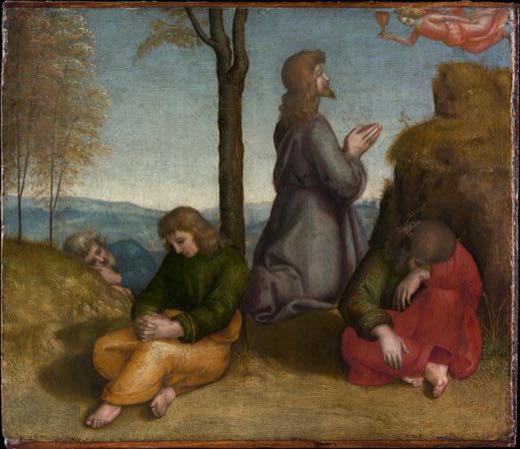 The Agony in the GardenRaphael
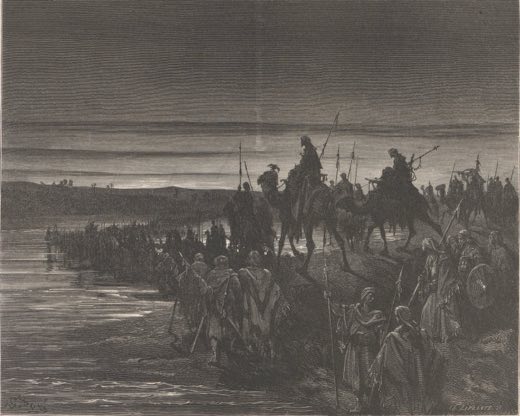 The Israelites Cross the JordanGustave Doré
See also
- CubitMoney and measures
- Stadion and mileMoney and measures
- A day’s journeyRoads and travel
- Bow and arrowWeapons and warfare
- Ebal and Gerizim: two mountains over ShechemThe land of the Bible
- HagarPeople
- GethsemanePlaces
Sources: Tyndale Open Bible Dictionary © 2023 Tyndale House Publishers, CC BY-SA 4.0 — adapted and shortened; the original work is available for free at tyndaleopenresources.com · Sources and rights