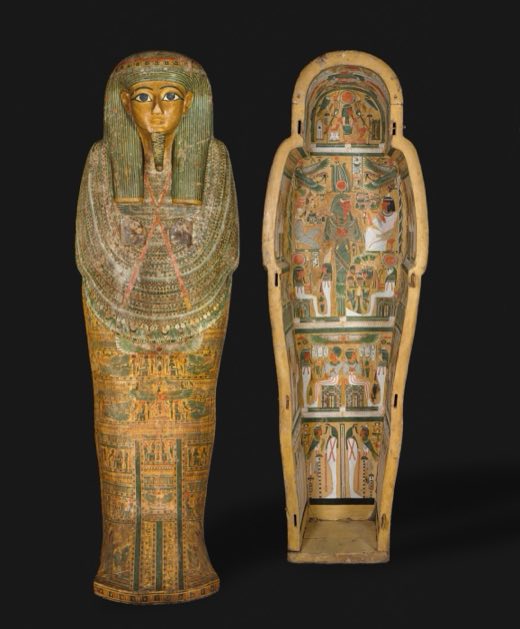
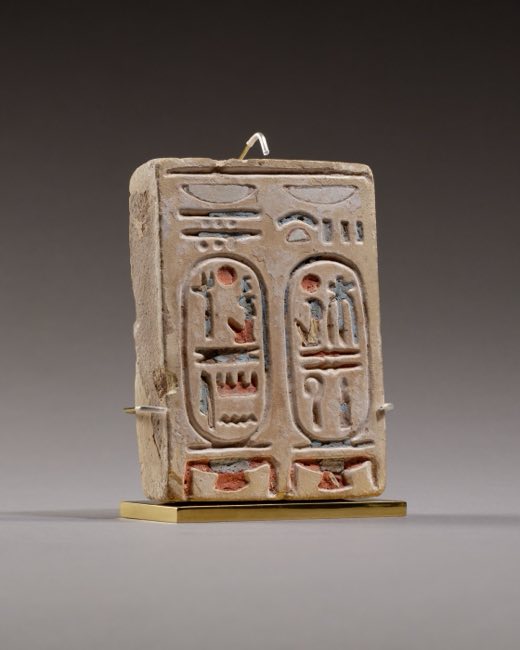
A Libyan general, Shoshenq I, became pharaoh and founded a new dynasty. He is usually identified with Shishak, who attacked Jerusalem in the fifth year of Solomon’s son Rehoboam (1 Kings 14:25). At Karnak he listed the towns of his campaign in Canaan.
Encyclopedia › Meanwhile in the world
In the Bible · c. 960 BC · Jerusalem
Solomon builds the temple
In the fourth year of his reign Solomon begins the temple in Jerusalem. The building takes seven years.
1 Kgs 6:1–14
In the four hundred and eightieth year after the Israelites had come out of the land of Egypt, in the month of Ziv, the second month of the fourth year of Solomon’s reign over Israel, he began to build the house of the LORD. The house that King Solomon built for the LORD was sixty cubits long, twenty cubits wide, and thirty cubits high. The portico at the front of the main hall of the temple was twenty cubits long, extending across the width of the temple and projecting out ten cubits in front of the temple. He also had narrow windows framed high in the temple. Against the walls of the temple and the inner sanctuary, Solomon built a chambered structure around the temple, in which he constructed the side rooms. The bottom floor was five cubits wide, the middle floor six cubits, and the third floor seven cubits. He also placed offset ledges around the outside of the temple, so that nothing would be inserted into its walls. The temple was constructed using finished stones cut at the quarry, so that no hammer or chisel or any other iron tool was heard in the temple while it was being built. The entrance to the bottom floor was on the south side of the temple. A stairway led up to the middle level, and from there to the third floor. So Solomon built the temple and finished it, roofing it with beams and planks of cedar. He built chambers all along the temple, each five cubits high and attached to the temple with beams of cedar. Then the word of the LORD came to Solomon, saying: “As for this temple you are building, if you walk in My statutes, carry out My ordinances, and keep all My commandments by walking in them, I will fulfill through you the promise I made to your father David. And I will dwell among the Israelites and will not abandon My people Israel.” So Solomon built the temple and finished it.At the same time in the world
1 Kings 6:1 dates the start of the temple to the fourth year of Solomon’s reign; by the usual reckoning of the kings’ reigns that is around 966–960 BC. No inscription naming Solomon has been found, and how large and rich his kingdom was is debated by historians and archaeologists. Here is the world of the 10th century BC.
EgyptShishakreigned c. 943–922 BC
Mesopotamia and the Near EastA farmer’s calendar10th century BC
A small limestone tablet found at Gezer lists the farming year month by month: olive harvest, sowing, late planting, flax, barley, harvest, pruning vines and summer fruit. Perhaps a writing exercise, it is one of the oldest inscriptions in Hebrew or a closely related language; it is now in Istanbul.
Mesopotamia and the Near EastAssyria rises againfrom 911 BC
After two centuries of weakness, King Adad-nirari II began yearly campaigns that rebuilt the power of Assyria. The Neo-Assyrian Empire would dominate the Near East for three hundred years, until 609 BC — the empire of Jonah’s and Isaiah’s time.
ChinaThe oldest Chinese songsc. 1000–600 BC
The oldest poems of the Book of Songs, China’s first collection of poetry, come from these centuries: songs of farming, courtship, feasts, hunting and war, sung at the Zhou court and in the villages.
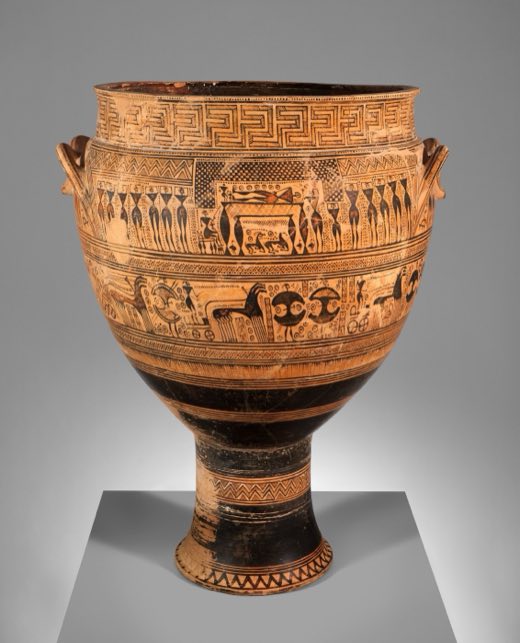
Greece and RomeA rich burial at Lefkandic. 950 BC
At Lefkandi on the Greek island of Euboea, a man and a woman were buried under a long building with four horses, gold jewelry and goods from Cyprus and the Near East — a sign that trade went on even in Greece’s “Dark Age”.
The AmericasEarly Maya plazasc. 1000 BC
At Ceibal in Guatemala, early Maya people laid out a ceremonial plaza and platform around 1000 BC, before they lived in large towns — among the oldest known Maya public buildings.