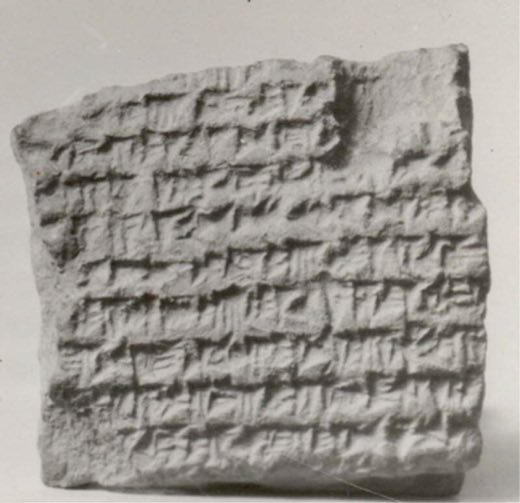
Shalmaneser III of Assyria fought an alliance of kings at Qarqar on the Orontes, in Syria. His inscription on the Kurkh Monolith, now in the British Museum, lists “Ahab the Israelite” with 2,000 chariots and 10,000 soldiers. Shalmaneser claimed victory, but did not advance further for years.
Encyclopedia › Meanwhile in the world
In the Bible · c. 860 BC · Mount Carmel
Elijah on Mount Carmel
In the days of King Ahab, Elijah challenges the prophets of Baal on Mount Carmel, above the Mediterranean coast.
1 Kgs 18:20–40
So Ahab summoned all the Israelites and assembled the prophets on Mount Carmel. Then Elijah approached all the people and said, “How long will you waver between two opinions? If the LORD is God, follow Him. But if Baal is God, follow him.” But the people did not answer a word. Then Elijah said to the people, “I am the only remaining prophet of the LORD, but Baal has four hundred and fifty prophets. Get two bulls for us. Let the prophets of Baal choose one bull for themselves, cut it into pieces, and place it on the wood but not light the fire. And I will prepare the other bull and place it on the wood but not light the fire. Then you may call on the name of your god, and I will call on the name of the LORD. The God who answers by fire, He is God.” And all the people answered, “What you say is good.” Then Elijah said to the prophets of Baal, “Since you are so numerous, choose for yourselves one bull and prepare it first. Then call on the name of your god, but do not light the fire.” And they took the bull that was given them, prepared it, and called on the name of Baal from morning until noon, shouting, “O Baal, answer us!” But there was no sound, and no one answered as they leaped around the altar they had made. At noon Elijah began to taunt them, saying, “Shout louder, for he is a god! Perhaps he is deep in thought, or occupied, or on a journey. Perhaps he is sleeping and must be awakened!” So they shouted louder and cut themselves with knives and lances, as was their custom, until the blood gushed over them. Midday passed, and they kept on raving until the time of the evening sacrifice. But there was no response; no one answered, no one paid attention. Then Elijah said to all the people, “Come near to me.” So all the people approached him, and he repaired the altar of the LORD that had been torn down. And Elijah took twelve stones, one for each tribe of the sons of Jacob, to whom the word of the LORD had come and said, “Israel shall be your name.” And with the stones, Elijah built an altar in the name of the LORD. Then he dug a trench around the altar large enough to hold two seahs of seed. Next, he arranged the wood, cut up the bull, placed it on the wood, and said, “Fill four waterpots and pour the water on the offering and on the wood.” “Do it a second time,” he said, and they did it a second time. “Do it a third time,” he said, and they did it a third time. So the water ran down around the altar and even filled the trench. At the time of the evening sacrifice, Elijah the prophet approached the altar and said, “O LORD, God of Abraham, Isaac, and Israel, let it be known this day that You are God in Israel and that I am Your servant and have done all these things at Your command. Answer me, O LORD! Answer me, so that this people will know that You, the LORD, are God, and that You have turned their hearts back again.” Then the fire of the LORD fell and consumed the sacrifice, the wood, the stones, and the dust, and it licked up the water in the trench. When all the people saw this, they fell facedown and said, “The LORD, He is God! The LORD, He is God!” Then Elijah ordered them, “Seize the prophets of Baal! Do not let a single one escape.” So they seized them, and Elijah brought them down to the Kishon Valley and slaughtered them there.At the same time in the world
Elijah’s contest on Mount Carmel is set in the reign of Ahab, king of Israel (c. 874–853 BC). Ahab is the first king of Israel named in a text from outside the Bible: an Assyrian inscription lists his chariots at the battle of Qarqar. Here is the world of the mid-9th century BC.
Mesopotamia and the Near EastAhab at Qarqar853 BC
Mesopotamia and the Near EastThe Moabite king’s stonec. 840 BC
King Mesha of Moab set up a stone at Dibon telling how Omri, king of Israel, and his son had oppressed Moab, and how he freed it. 2 Kings 3 tells of a war with Mesha from Israel’s side. The stone is in the Louvre.
ElsewhereCarthage814 BC (traditional date)
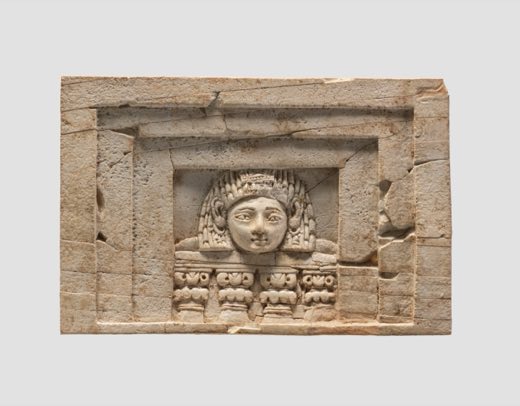
By tradition, settlers from Tyre led by Princess Elissa, better known as Dido, founded Carthage in today’s Tunisia in 814 BC. Ahab’s queen Jezebel came from the same Phoenician coast: she was the daughter of Ethbaal, king of the Sidonians (1 Kings 16:31).
Greece and RomeGeometric potteryc. 900–700 BC
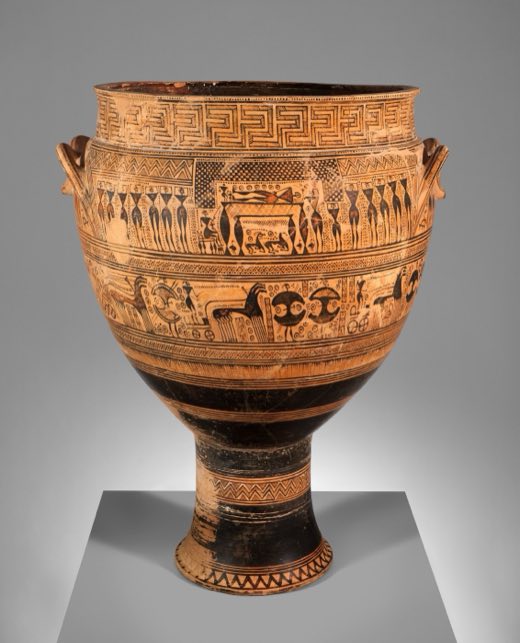
In Athens potters painted vases with bands of meanders, zigzags and circles, and later with small figures of mourners, horses and chariots. Great vases of this style stood as markers over graves.
EgyptA pharaoh’s jar in Samariareigned c. 872–837 BC
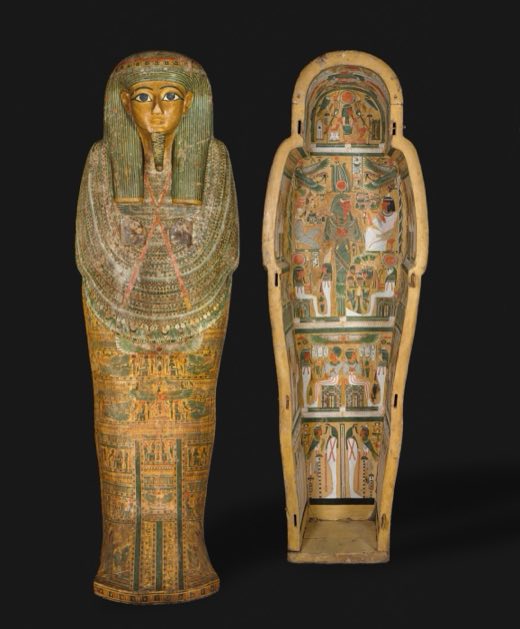
Egypt was ruled by kings of Libyan descent from Tanis and Bubastis. Osorkon II built a festival hall in the temple of Bubastis; a fragment of an alabaster jar with his name was found in the royal palace of Samaria, where Ahab ruled.
ChinaThe first exact date in China841 BC
The people of the Zhou capital rose against the harsh King Li and drove him out. With this year the historian Sima Qian begins his year-by-year tables of Chinese history; it is the first exact date in Chinese records.
The AmericasThe temple at Chavínc. 900–200 BC
High in the Andes of Peru, the people of Chavín de Huántar built a stone temple with dark galleries inside and carved heads of fierce creatures on its outer walls; pilgrims came to it from far away.