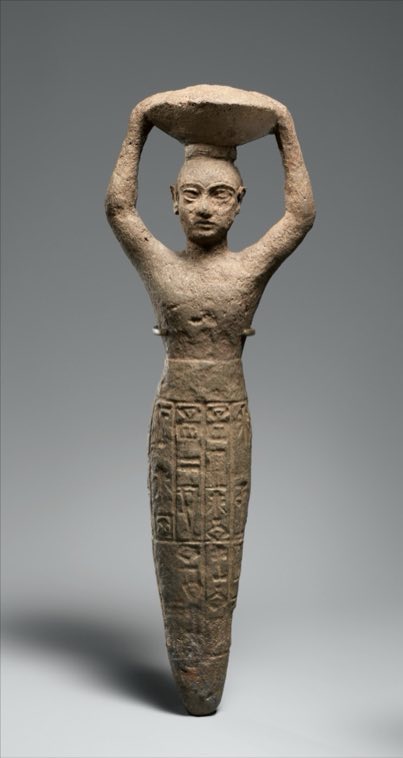
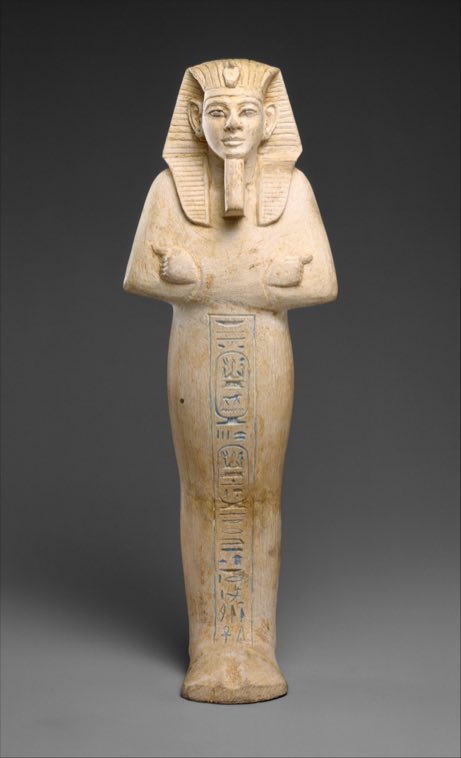
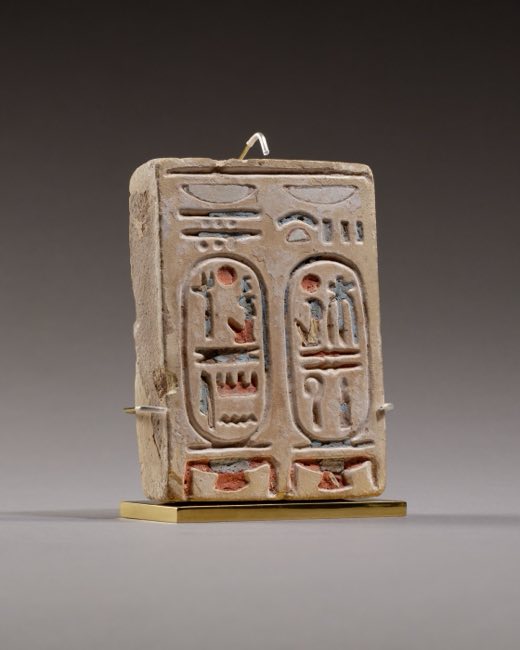
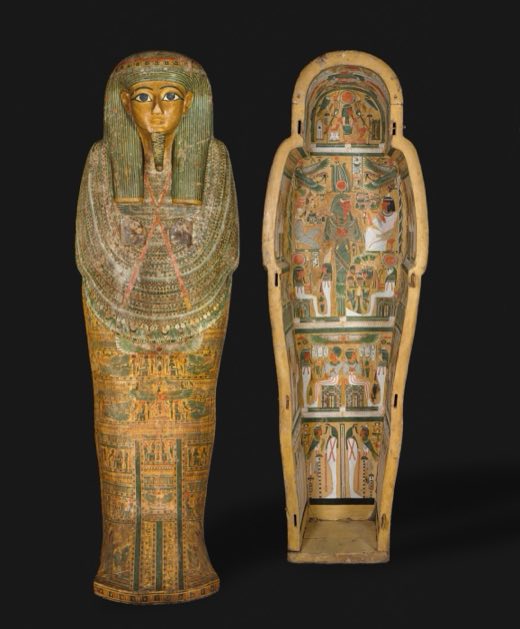
At Avaris in the eastern Nile delta, archaeologists have found houses, tombs and pottery of people from Canaan and Syria who settled there from about 1800 BC. Later their rulers, the Hyksos, governed northern Egypt from this town.
Encyclopedia › Meanwhile in the world
In the Bible · c. 1900–1700 BC (traditional dating) · Egypt
Joseph in Pharaoh’s court
After interpreting Pharaoh’s dreams, Joseph is put in charge of Egypt and stores grain for seven years of famine.
Gen 41:37–57
This proposal pleased Pharaoh and all his officials. So Pharaoh asked them, “Can we find anyone like this man, in whom the Spirit of God abides?” Then Pharaoh said to Joseph, “Since God has made all this known to you, there is no one as discerning and wise as you. You shall be in charge of my house, and all my people are to obey your commands. Only with regard to the throne will I be greater than you.” Pharaoh also told Joseph, “I hereby place you over all the land of Egypt.” Then Pharaoh removed the signet ring from his finger, put it on Joseph’s finger, clothed him in garments of fine linen, and placed a gold chain around his neck. He had Joseph ride in his second chariot, with men calling out before him, “Bow the knee!” So he placed him over all the land of Egypt. And Pharaoh declared to Joseph, “I am Pharaoh, but without your permission, no one in all the land of Egypt shall lift his hand or foot.” Pharaoh gave Joseph the name Zaphenath-paneah, and he gave him Asenath daughter of Potiphera, priest of On, to be his wife. And Joseph took charge of all the land of Egypt. Now Joseph was thirty years old when he entered the service of Pharaoh king of Egypt. And Joseph left Pharaoh’s presence and traveled throughout the land of Egypt. During the seven years of abundance, the land brought forth bountifully. During those seven years, Joseph collected all the excess food in the land of Egypt and stored it in the cities. In every city he laid up the food from the fields around it. So Joseph stored up grain in such abundance, like the sand of the sea, that he stopped keeping track of it; for it was beyond measure. Before the years of famine arrived, two sons were born to Joseph by Asenath daughter of Potiphera, priest of On. Joseph named the firstborn Manasseh, saying, “God has made me forget all my hardship and all my father’s household.” And the second son he named Ephraim, saying, “God has made me fruitful in the land of my affliction.” When the seven years of abundance in the land of Egypt came to an end, the seven years of famine began, just as Joseph had said. And although there was famine in every country, there was food throughout the land of Egypt. When extreme hunger came to all the land of Egypt and the people cried out to Pharaoh for food, he told all the Egyptians, “Go to Joseph and do whatever he tells you.” When the famine had spread over all the land, Joseph opened up all the storehouses and sold grain to the Egyptians; for the famine was severe in the land of Egypt. And every nation came to Joseph in Egypt to buy grain, because the famine was severe over all the earth.At the same time in the world
By traditional dating, Joseph rose to power in Egypt between about 1900 and 1700 BC. The Bible does not name the pharaoh, and historians date the story in different ways; some place it later. Those centuries saw Egypt’s Middle Kingdom and, in the Nile delta, a growing number of settlers from Canaan and Syria. Here is the world of those centuries.
EgyptNewcomers from Canaan at Avarisc. 1800–1550 BC
EgyptFarmland in the Faiyumreigned c. 1860–1814 BC
Kings of the 12th dynasty, above all Amenemhat III, turned the marshy Faiyum basin west of the Nile into rich farmland by controlling the water that flowed into it. Amenemhat III also built a pyramid at Hawara, beside the Faiyum.
Mesopotamia and the Near EastHammurabi’s lawsreigned 1792–1750 BC
Hammurabi of Babylon united southern Mesopotamia and had nearly 300 laws carved on a black stone stele, now in the Louvre: on wages, loans, marriage, farming and theft. These are the usual dates; by other reckonings he ruled some decades later.
Greece and RomeThe first palaces of Cretec. 1900–1700 BC
On Crete the Minoans built their first great palaces, at Knossos, Phaistos and Malia, with storerooms of tall jars for grain, oil and wine. Around 1700 BC they were destroyed, perhaps by an earthquake, and then rebuilt on a grander scale.
ChinaShimao, a city of stonec. 2300–1800 BC
On the Loess Plateau of northern China, Shimao was ringed by stone walls several kilometers long around a stepped central platform decorated with carved stone faces. One of the largest settlements of its time in China, it was abandoned around 1800 BC.
IndiaThe Indus cities emptyc. 1900–1300 BC
In the Indus valley the great cities were slowly abandoned, and people moved east and south into smaller farming villages; shifting rivers and a drier climate are among the causes scholars suggest. At Harappa, people of the later Cemetery H culture buried their dead in painted jars.
The AmericasEarthworks at Poverty Pointc. 1700–1100 BC
In today’s Louisiana, people who lived by hunting, fishing and gathering raised great earthen ridges and mounds at Poverty Point — one of the largest earthworks of its time in North America, built without farming.
ElsewhereThe Nebra sky discc. 1800–1600 BC
In central Germany a bronze disc inlaid with gold showed the sun or full moon, a crescent and stars, among them perhaps the Pleiades. It is the oldest known picture of the night sky; it was buried around 1600 BC.