Encyclopedia › Jewish groups and the Roman world
Jewish groups and the Roman world
Pharisees
Hebrew perushim, probably “separated ones” · mostly laymen · tradition of the elders · Hillel, Shammai, Gamaliel
The Pharisees appear in the 2nd century BC and were above all a movement of laymen devoted to keeping the Law exactly: tithing every crop (Luke 18:12 has a Pharisee who fasts twice a week and tithes all he acquires), observing the Sabbath and eating in ritual purity. Beside the written Law they kept “the tradition of the elders” (Mark 7:3), rulings handed down by teachers, which they held to be binding. Their name probably comes from the Hebrew for “separated”: by one view from impurity, by another from those who did not keep the Law as strictly. Josephus says they believed in the resurrection and in angels (compare Acts 23:8), that all happens by providence and yet people choose, and that they were honored by the townspeople.
Their best-known teachers were Hillel and Shammai, about the turn of the era, whose schools differed on many rulings, and Gamaliel, a teacher “honored by all the people” (Acts 5:34). Paul calls himself “as to the law, a Pharisee” (Philippians 3:5); Nicodemus was one (John 3:1). The Gospels show Pharisees debating Jesus about the Sabbath and washing, but also inviting him to dinner (Luke 7:36) and warning him of Herod (Luke 13:31).
In art
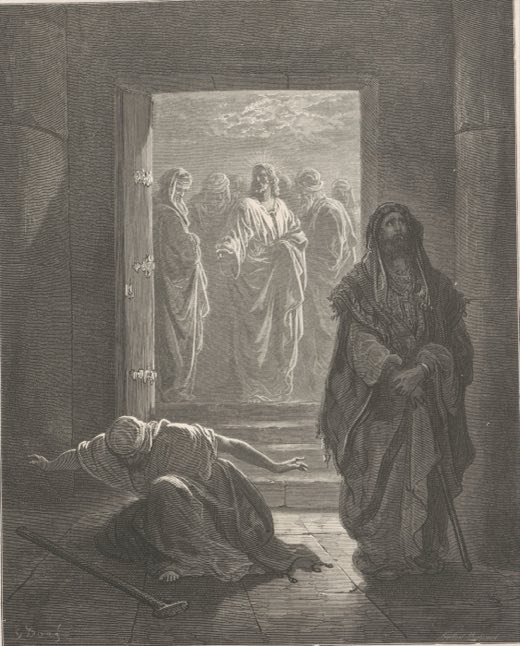 The Pharisee and the Tax Collector
See also
- The parties of JudaismJewish groups and the Roman world
- SadduceesJewish groups and the Roman world
- Teachers of the Law and rabbisJewish groups and the Roman world
- The SanhedrinJewish groups and the Roman world
- The Mishnah and the TalmudAncient texts beside the Bible
- The Sabbath in the GospelsFeasts and festivals
- HypocrisyThe seven deadly sins
- The people of the landJewish groups and the Roman world
- The council of JerusalemJewish groups and the Roman world
- Divorce in the Law and the GospelsHuman life in Bible times
- Gamaliel (Acts)People
- NicodemusPeople
Sources: Tyndale Open Bible Dictionary © 2023 Tyndale House Publishers, CC BY-SA 4.0 — adapted and shortened; the original work is available for free at tyndaleopenresources.com · Sources and rights