Encyclopedia › Jewish groups and the Roman world
Jewish groups and the Roman world
High priests and chief priests
Appointed by Herod and the Romans · Annas, AD 6–15 · Caiaphas, about AD 18–36
By the Law the high priest served for life, but under Herod and the Romans he was appointed and removed by the ruler of the day. Josephus counts 28 high priests from the time of Herod to the temple’s fall in AD 70. Annas was appointed by Quirinius, the governor of Syria, in AD 6 and removed about AD 15; five of his sons held the office after him, and his son-in-law Caiaphas held it from about AD 18 to 36 — the longest of the period. So Luke can date John the Baptist “during the high priesthood of Annas and Caiaphas” (Luke 3:2), and John has Jesus brought “first to Annas” (John 18:13). In 1990 a family tomb with an ossuary inscribed “Joseph son of Caiaphas” was found south of Jerusalem’s Old City; many link it with the high priest’s family.
The “chief priests” of the Gospels are the former high priests and the leading men of a few priestly families, who controlled the temple and its treasury. The high priest presided over the council and alone entered the Most Holy Place on the Day of Atonement. Ananias, who had Paul struck (Acts 23:2), held office about AD 47–59.
In art
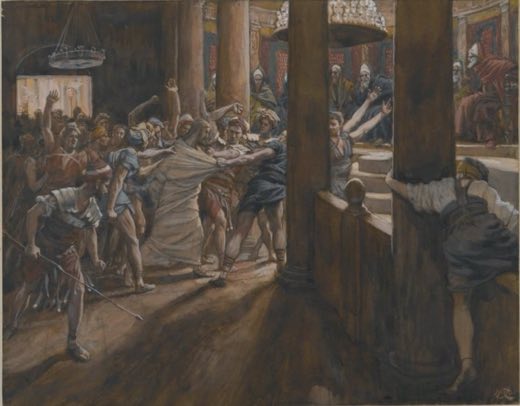 The Tribunal of Annas (Le tribunal d'Anne)James Tissot
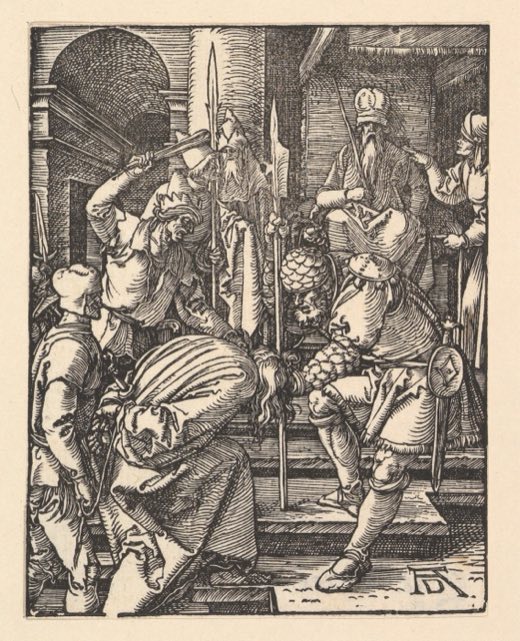 Christ before AnnasAlbrecht Dürer
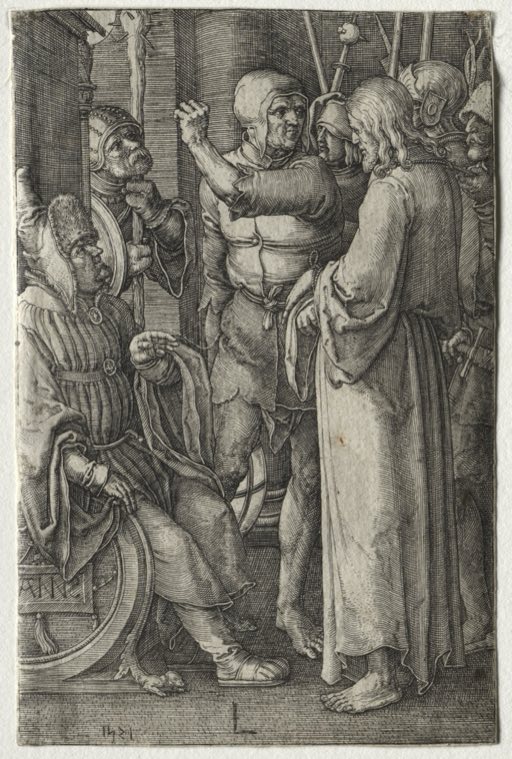 The Passion: Christ Before the High PriestLucas van Leyden
See also
- Priests and LevitesTabernacle and temple
- The SanhedrinJewish groups and the Roman world
- SadduceesJewish groups and the Roman world
- Gatekeepers and the temple guardTabernacle and temple
- The Caiaphas family tombThe Bible in stone
- AnnasPeople
- CaiaphasPeople
- Ananias (Acts 23:2)People
Sources: Tyndale Open Bible Dictionary © 2023 Tyndale House Publishers, CC BY-SA 4.0 — adapted and shortened; the original work is available for free at tyndaleopenresources.com · Sources and rights