Encyclopedia › Clothing and adornment
Clothing and adornment
Garments of skin and hair
Hebrew ‘or (skin), ’addereth (mantle) · Greek mēlōtē (sheepskin) · the prophet’s hairy cloak
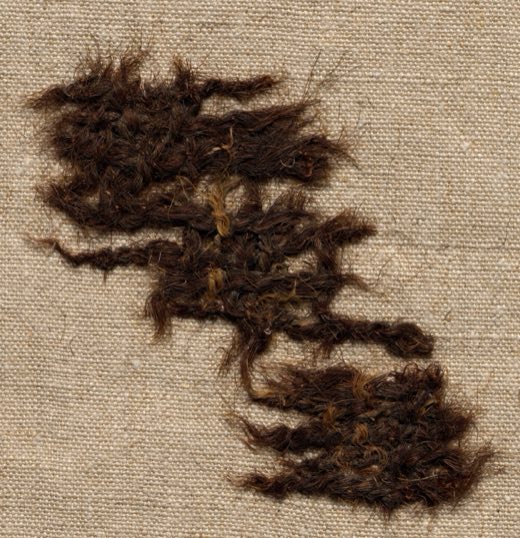
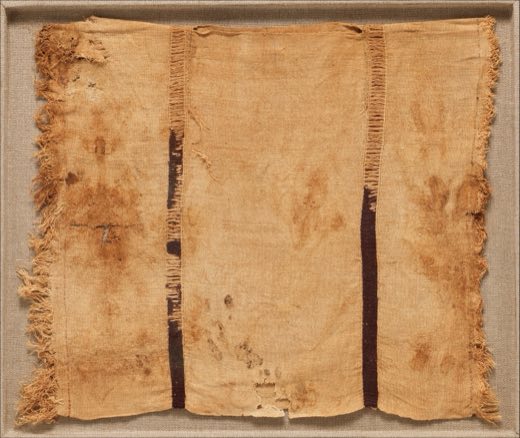
Before wool was spun and woven, people wore the skins of animals, and shepherds and the poor went on doing so. Genesis tells that after the first disobedience “the LORD God made garments of skin for Adam and his wife, and He clothed them” (Genesis 3:21). A sheepskin or goatskin with the wool left on was warm at night and shed the rain, and coarse cloth woven of goat or camel hair was nearly as tough.
Such rough clothing became the mark of prophets who lived in the wilderness. When the messengers of King Ahaziah described a stranger as “a hairy man … with a leather belt around his waist”, the king knew at once: “It was Elijah the Tishbite” (2 Kings 1:8). Elijah’s mantle, the ’addereth, passed to Elisha, who “picked up the cloak that had fallen from Elijah” (2 Kings 2:13). Zechariah looks to a day when false prophets will no longer “put on a hairy cloak in order to deceive” (Zechariah 13:4).
John the Baptist dressed in the same way: “John was clothed in camel’s hair, with a leather belt around his waist” (Mark 1:6). The Letter to the Hebrews remembers the faithful who “went around in sheepskins and goatskins, destitute, oppressed, and mistreated” (Hebrews 11:37).
All verses that name it (83)
Where the Hebrew, Aramaic or Greek word for it stands in the text.
Genesis2
And the LORD God made garments of skin for Adam and his wife, and He clothed them.She also put the skins of the young goats on his hands and on the smooth part of his neck.Exodus11
because his cloak is the only covering he has for his body. What else will he sleep in? And if he cries out to Me, I will hear, for I am compassionate.ram skins dyed red and fine leather; acacia wood;Also make a covering for the tent out of ram skins dyed red, and over that a covering of fine leather.But burn the flesh of the bull and its hide and dung outside the camp; it is a sin offering.And when Moses came down from Mount Sinai with the two tablets of the Testimony in his hands, he was unaware that his face had become radiant from speaking with the LORD.Aaron and all the Israelites looked at Moses, and behold, his face was radiant. And they were afraid to approach him.and the Israelites would see that the face of Moses was radiant. So Moses would put the veil back over his face until he went in to speak with the LORD.ram skins dyed red and fine leather; acacia wood;Everyone who had blue, purple, or scarlet yarn, or fine linen, goat hair, ram skins dyed red, or articles of fine leather, brought them.Additionally, he made for the tent a covering of ram skins dyed red, and over that a covering of fine leather.the covering of ram skins dyed red, the covering of fine leather, and the veil of the covering;Leviticus44
But the hide of the bull and all its flesh, with its head and legs and its entrails and dung—As for the priest who presents a burnt offering for anyone, the hide of that offering belongs to him.But the bull with its hide, flesh, and dung he burned outside the camp, as the LORD had commanded him.But he burned up the flesh and the hide outside the camp.When one of them dies and falls on something, that article becomes unclean; any article of wood, clothing, leather, sackcloth, or any implement used for work must be rinsed with water and will remain unclean until evening; then it will be clean.“When someone has a swelling or rash or bright spot on his skin that could become an infectious skin disease, he must be brought to Aaron the priest or to one of his sons who is a priest.The priest is to examine the infection on his skin, and if the hair in the infection has turned white and the sore appears to be deeper than the skin, it is a skin disease. After the priest examines him, he must pronounce him unclean.If, however, the spot on his skin is white and does not appear to be deeper than the skin, and the hair in it has not turned white, the priest shall isolate the infected person for seven days.On the seventh day the priest is to reexamine him, and if he sees that the infection is unchanged and has not spread on the skin, the priest must isolate him for another seven days.The priest will examine him again on the seventh day, and if the sore has faded and has not spread on the skin, the priest shall pronounce him clean; it is a rash. The person must wash his clothes and be clean.But if the rash spreads further on his skin after he has shown himself to the priest for his cleansing, he must present himself again to the priest.The priest will reexamine him, and if the rash has spread on the skin, the priest must pronounce him unclean; he has a skin disease.The priest will examine him, and if there is a white swelling on the skin that has turned the hair white, and there is raw flesh in the swelling,it is a chronic skin disease and the priest must pronounce him unclean. He need not isolate him, for he is unclean.But if the skin disease breaks out all over his skin so that it covers all the skin of the infected person from head to foot, as far as the priest can see,When a boil appears on someone’s skin and it heals,The priest shall examine it, and if it appears to be beneath the skin and the hair in it has turned white, the priest shall pronounce him unclean; it is a diseased infection that has broken out in the boil.But when the priest examines it, if there is no white hair in it, and it is not beneath the skin and has faded, the priest shall isolate him for seven days.If it spreads any further on the skin, the priest must pronounce him unclean; it is an infection.When there is a burn on someone’s skin and the raw area of the burn becomes reddish-white or white,the priest must examine it. If the hair in the spot has turned white and the spot appears to be deeper than the skin, it is a disease that has broken out in the burn. The priest must pronounce him unclean; it is a diseased infection.But if the priest examines it and there is no white hair in the spot, and it is not beneath the skin but has faded, the priest shall isolate him for seven days.On the seventh day the priest is to reexamine him, and if it has spread further on the skin, the priest must pronounce him unclean; it is a diseased infection.But if the spot is unchanged and has not spread on the skin but has faded, it is a swelling from the burn, and the priest is to pronounce him clean; for it is only the scar from the burn.the priest shall examine the infection, and if it appears to be deeper than the skin and the hair in it is yellow and thin, the priest must pronounce him unclean; it is a scaly outbreak, an infectious disease of the head or chin.But if the priest examines the scaly infection and it does not appear to be deeper than the skin, and there is no black hair in it, the priest shall isolate the infected person for seven days.On the seventh day the priest is to reexamine the infection, and if the scaly outbreak has not spread and there is no yellow hair in it, and it does not appear to be deeper than the skin,On the seventh day the priest shall examine the scaly outbreak, and if it has not spread on the skin and does not appear to be deeper than the skin, the priest is to pronounce him clean. He must wash his clothes, and he will be clean.If, however, the scaly outbreak spreads further on the skin after his cleansing,the priest is to examine him, and if the scaly outbreak has spread on the skin, the priest need not look for yellow hair; the person is unclean.When a man or a woman has white spots on the skin,the priest shall examine them, and if the spots are dull white, it is a harmless rash that has broken out on the skin; the person is clean.The priest is to examine him, and if the swelling of the infection on his bald head or forehead is reddish-white like a skin disease,any weave or knit of linen or wool, or any article of leather—and if the mark in the fabric, leather, weave, knit, or leather article is green or red, then it is contaminated with mildew and must be shown to the priest.On the seventh day the priest shall reexamine it, and if the mildew has spread in the fabric, weave, knit, or leather, then regardless of how it is used, it is a harmful mildew; the article is unclean.He is to burn the fabric, weave, or knit, whether the contaminated item is wool or linen or leather. Since the mildew is harmful, the article must be burned up.But when the priest reexamines it, if the mildew has not spread in the fabric, weave, knit, or leather article,If the priest examines it and the mildew has faded after it has been washed, he must cut the contaminated section out of the fabric, leather, weave, or knit.But if it reappears in the fabric, weave, or knit, or on any leather article, it is spreading. You must burn the contaminated article.If the mildew disappears from the fabric, weave, or knit, or any leather article after washing, then it is to be washed again, and it will be clean.This is the law concerning a mildew contamination in wool or linen fabric, weave, or knit, or any leather article, for pronouncing it clean or unclean.”Any clothing or leather on which there is an emission of semen must be washed with water, and it will remain unclean until evening.The bull for the sin offering and the goat for the sin offering, whose blood was brought into the Most Holy Place to make atonement, must be taken outside the camp; and their hides, flesh, and dung must be burned up.Numbers8
They are to place over this a covering of fine leather, spread a solid blue cloth over it, and insert its poles.And they shall spread a scarlet cloth over them, cover them with fine leather, and insert the poles.Then they shall wrap it and all its utensils inside a covering of fine leather and put it on the carrying frame.Over the gold altar they are to spread a blue cloth, cover it with fine leather, and insert the poles.They are to take all the utensils for serving in the sanctuary, place them in a blue cloth, cover them with fine leather, and put them on the carrying frame.and place on it all the vessels used to serve there: the firepans, meat forks, shovels, and sprinkling bowls—all the equipment of the altar. They are to spread over it a covering of fine leather and insert the poles.Then the heifer must be burned in his sight. Its hide, its flesh, and its blood are to be burned, along with its dung.And purify every garment and leather good, everything made of goat’s hair, and every article of wood.”2 Kings1
“He was a hairy man,” they answered, “with a leather belt around his waist.” “It was Elijah the Tishbite,” said the king.Job8
“Skin for skin!” Satan replied. “A man will give up all he owns in exchange for his life.My flesh is clothed with worms and encrusted with dirt; my skin is cracked and festering.You clothed me with skin and flesh, and knit me together with bones and sinews.It devours patches of his skin; the firstborn of death devours his limbs.My skin and flesh cling to my bones; I have escaped by the skin of my teeth.Even after my skin has been destroyed, yet in my flesh I will see God.My skin grows black and peels, and my bones burn with fever.Can you fill his hide with harpoons or his head with fishing spears?Jeremiah1
Can the Ethiopian change his skin, or the leopard his spots? Neither are you able to do good— you who are accustomed to doing evil.Lamentations3
He has worn away my flesh and skin; He has shattered my bones.But now their appearance is blacker than soot; they are not recognized in the streets. Their skin has shriveled on their bones; it has become as dry as a stick.Our skin is as hot as an oven with fever from our hunger.Ezekiel2
I will attach tendons to you and make flesh grow upon you and cover you with skin. I will put breath within you so that you will come to life. Then you will know that I am the LORD.’”As I looked on, tendons appeared on them, flesh grew, and skin covered them; but there was no breath in them.Micah2
You hate good and love evil. You tear the skin from my people and strip the flesh from their bones.You eat the flesh of my people after stripping off their skin and breaking their bones. You chop them up like flesh for the cooking pot, like meat in a cauldron.”Hebrews1
They were stoned, they were sawed in two, they were put to death by the sword. They went around in sheepskins and goatskins, destitute, oppressed, and mistreated.See also
- Leather and skinsAnimals of the Bible
- Tunic and cloakClothing and adornment
- Belts and sashesClothing and adornment
- SackclothClothing and adornment
- CamelAnimals of the Bible
Sources: Tyndale Open Bible Dictionary © 2023 Tyndale House Publishers, CC BY-SA 4.0 — adapted and shortened; the original work is available for free at tyndaleopenresources.com · Human-made Things in the Bible © United Bible Societies 2025, adapted from R. Pritz, The Works of Their Hands: Man-made Things in the Bible © 2009 UBS, CC BY-SA 4.0 · Sources and rights