Encyclopedia › Buildings and structures
Buildings and structures
Torture in the ancient world
Greek tumpanon, trochos, streblē, katapeltēs · the rack, the wheel and other instruments
Greek and Roman law let slaves be questioned under torture, and rulers used it on prisoners. Rome flogged men before crucifixion (Matthew 27:26; John 19:1) and flogged suspects to make them talk. When the commander in Jerusalem ordered Paul examined this way, Paul asked the centurion, “Is it lawful for you to flog a Roman citizen without a trial?” (Acts 22:24–25). The books of Maccabees, in Orthodox and Catholic Bibles but not in Protestant ones, name harsher instruments. On the rack the victim lay with hands and feet tied to a wheel or roller at each end, turned to pull the limbs until the joints gave way. The wheel (trochos) stretched the body the same way, often over fire. The tumpanon, literally “drum,” was probably a frame for stretching and beating.
Under the Seleucid king Antiochus IV, about 167 BC, Jews were forced to eat pork. The old scribe Eleazar refused, went to the tumpanon of his own accord and died there (2 Maccabees 6). Seven brothers were tortured to death before their mother — scourged, tongues cut out, scalped, maimed, roasted in pans — and then she died (2 Maccabees 7). Hebrews says “others were tortured and refused their release, so that they might gain a better resurrection” (Hebrews 11:35); its verb comes from tumpanon, and the verse is often connected with these martyrs.
In art
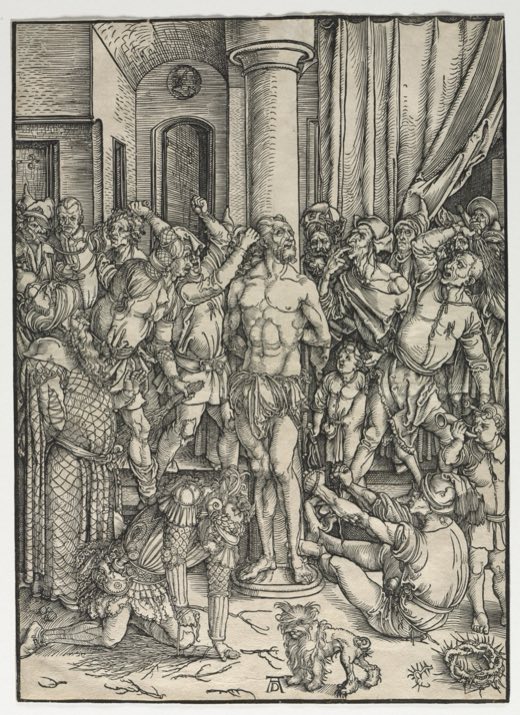 The Flagellation
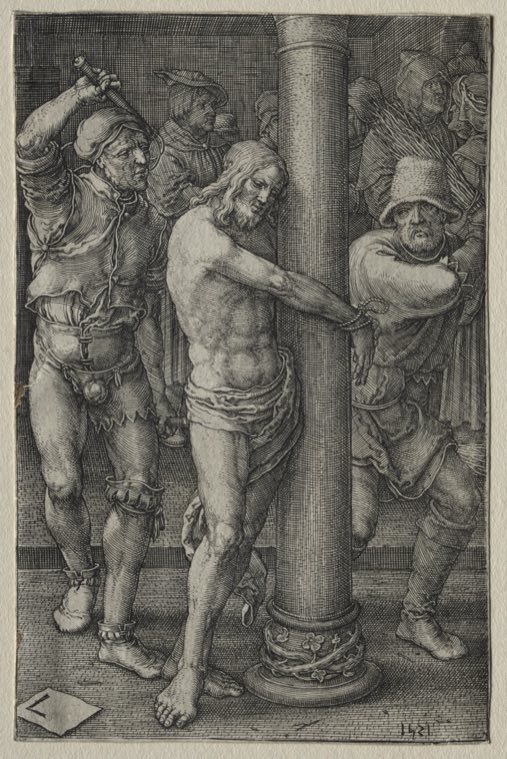 The Passion: The Flagellation
See also
Sources: Tyndale Open Bible Dictionary © 2023 Tyndale House Publishers, CC BY-SA 4.0 — adapted and shortened; the original work is available for free at tyndaleopenresources.com · Human-made Things in the Bible © United Bible Societies 2025, adapted from R. Pritz, The Works of Their Hands: Man-made Things in the Bible © 2009 UBS, CC BY-SA 4.0 · Sources and rights